

New Delhi | In a significant step towards curbing dust pollution and improving urban road aesthetics, the Delhi Public Works Department (Delhi PWD) is set to appoint specialised horticulture and landscaping agencies to develop and maintain green spaces along major roads, medians, footpaths, and central verges across the Capital.
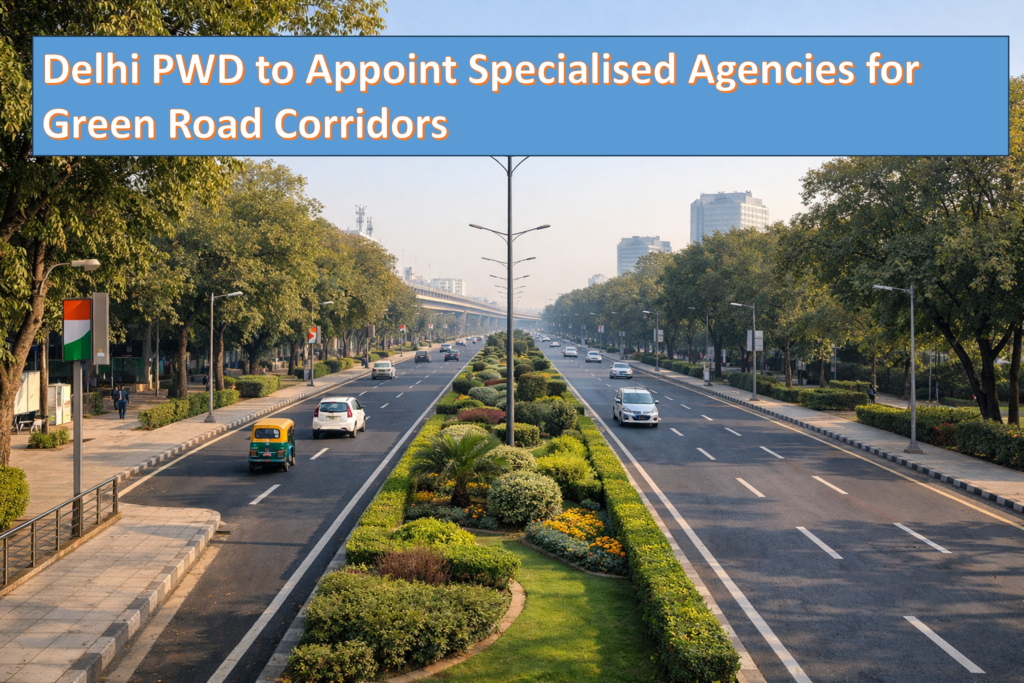
The move comes as Delhi prepares to host international delegates for the upcoming AI Impact Summit at Bharat Mandapam later this month, and reflects a broader push to present cleaner, greener urban infrastructure while addressing chronic air and dust pollution concerns.
Zone-wise Green Infrastructure Model
PWD currently maintains nearly 1,400 kilometres of road infrastructure, including flyovers, underpasses, and arterial corridors that experience heavy vehicular movement daily. Officials acknowledge that dust generated from these stretches remains a persistent challenge.
Under the new system, horticulture-related tenders—earlier issued division-wise—will now be floated zone-wise, covering North-West, North, and South Delhi. Each selected agency will be responsible not only for plantation but also for long-term maintenance, ensuring accountability and consistent quality across entire zones.
According to PWD officials, this shift was necessitated after internal assessments revealed that green patches developed by the department’s own horticulture wing often suffered from poor upkeep and uneven implementation.
Focus Areas and Timelines
The specialised agencies are expected to be appointed for all 11 PWD circles by March 2026. Key corridors identified for large-scale greening include:
- Ring Road
- Mathura Road
- Airport Road
- Dhaula Kuan
- Raj Ghat
- Vikas Marg
- Mehrauli Road
The initiative will also address degraded and “brown” patches along roads, aiming for visually continuous green corridors rather than fragmented plantations.
Circular Economy & Public Spaces
Beyond roadside greening, PWD plans to establish recycling units to convert pruned plant and tree waste into organic fertiliser, which will be reused for further plantation across the city—introducing a circular economy model within urban horticulture operations.
Additionally, the department has proposed the beautification of 41 traffic roundabouts, along with landscaped development under flyovers and foot-over-bridges. Consultants have already been appointed for these works.
CSR Participation in Urban Beautification
The initiative is being supplemented through Corporate Social Responsibility (CSR) partnerships. Several infrastructure and corporate groups have adopted road stretches and flyovers for upkeep and enhancement, including areas such as Azad Market–Inderlok Metro corridor, Chirag Delhi, Punjabi Bagh, Mukarba Chowk, and Karampura.
Officials confirmed that multiple companies have committed to maintaining selected stretches as part of long-term urban stewardship programmes.
Planning Perspective
Urban planners note that sustained roadside greening—when combined with proper paving, drainage, and maintenance—can significantly reduce resuspended dust, moderate microclimates, and improve pedestrian experience. The success of the programme, however, will depend on enforcement, design quality, and ecological appropriateness of plantation choices.
Also Read: CAQM Identifies 102 Road Dust Violations in Greater Noida, Orders Immediate Corrective Action