

India’s railway infrastructure, the Ministry of Railways has accelerated redevelopment efforts across 13 key stations in Delhi under the Amrit Bharat Station Scheme. The initiative, which aims to upgrade over 1,300 railway stations nationwide, is focused on enhancing passenger amenities, improving accessibility, and integrating stations with urban landscapes.
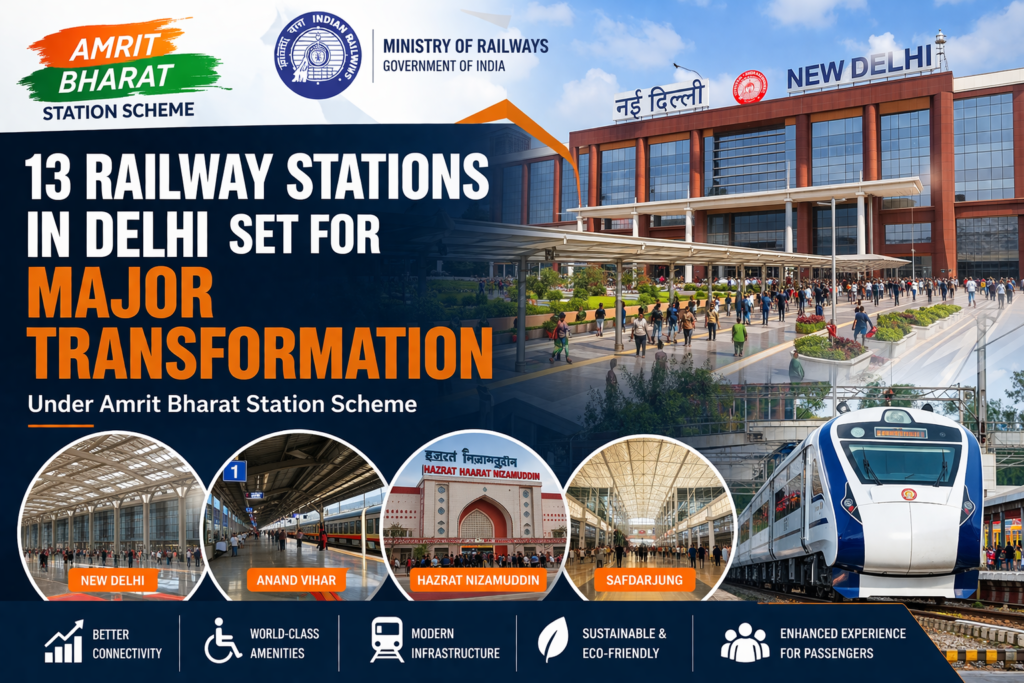
According to information presented in the Lok Sabha by Union Minister Ashwini Vaishnaw, the stations identified in Delhi include New Delhi, Hazrat Nizamuddin, Anand Vihar, Delhi Cantt., Safdarjung, Bijwasan, Narela, Sabzi Mandi, Tilak Bridge, Adarsh Nagar, Delhi Shahdara, Delhi Sarai Rohilla, and others.
Several stations are already witnessing substantial progress. At Safdarjung, critical infrastructure such as signal and telecom buildings has been completed, while work on air concourses and platform improvements is ongoing. Bijwasan station has seen completion of major structural components, including station buildings and sewage treatment systems, with finishing works currently underway. Delhi Cantt. is undergoing phased redevelopment, including elevated roads, concourses, and residential quarters.
Meanwhile, stations like Narela, Sabzi Mandi, and Tilak Bridge are being upgraded with modern facilities such as improved platforms, parking areas, lifts, and enhanced accessibility features for Divyangjan passengers. At New Delhi station, work has begun on a double basement and elevated road infrastructure, alongside redevelopment activities on both Ajmeri Gate and Paharganj sides.
The scheme adopts a long-term, phased approach through comprehensive master planning. Key features include better station access, integration with surrounding city areas, wider foot overbridges, escalators, modern waiting areas, executive lounges, and dedicated spaces for local products under initiatives like “One Station One Product.” Sustainable solutions such as eco-friendly construction and improved energy systems are also being incorporated.
However, officials note that redevelopment timelines remain uncertain due to the complexity of railway operations, safety requirements, and the need for multiple statutory clearances. Challenges such as utility shifting, working within active railway zones, and coordination with local authorities continue to impact project schedules.
The Amrit Bharat Station Scheme represents a transformative step toward redefining railway stations as modern urban hubs, improving commuter experience while supporting broader city development goals.
Also Read: India’s Metro Revolution: From 4 Cities to 1,000+ km Network by 2025