

Uttar Pradesh: The rejuvenation of the Tamsa River in Uttar Pradesh’s Azamgarh district has emerged as a significant example of tributary conservation under the Namami Gange Programme. Once burdened by siltation, waste accumulation and encroachments, the river has undergone a structured transformation through coordinated administrative action and extensive community participation.
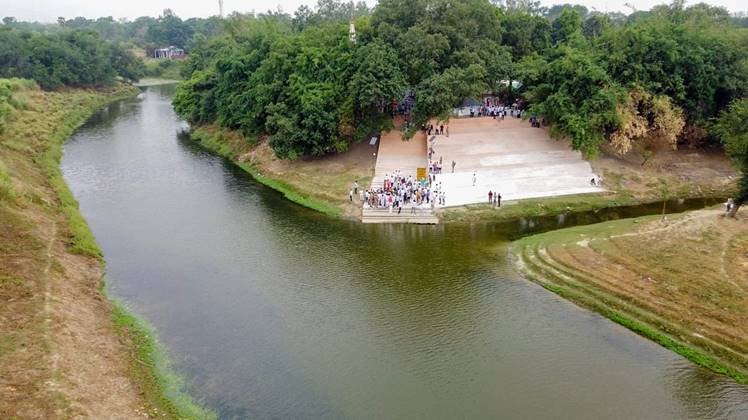
Flowing through Ambedkar Nagar, Ayodhya and Azamgarh before merging with the Ganga, the Tamsa holds both ecological and cultural importance. Recognising this, a focused conservation and cleanliness campaign was undertaken in Azamgarh with the support of the District Ganga Committee and local stakeholders.
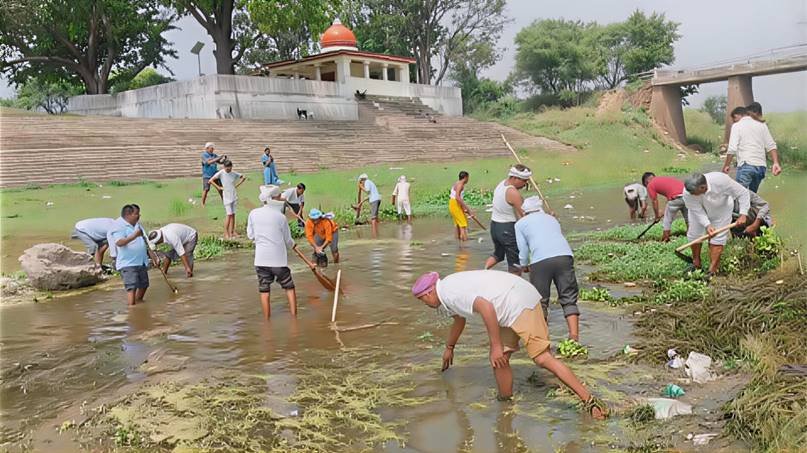
The initiative covered an 89-kilometre stretch of the river passing through 111 Gram Panchayats in Azamgarh district. District-level meetings were conducted with Gram Pradhans to sensitise them about long-term environmental and economic benefits of river conservation. A clear action plan was implemented, prioritising desilting of shallow stretches, removal of garbage and debris from riverbanks, measurement of vacant riverbank land to eliminate encroachments, and plantation of fruit-bearing trees along available land parcels.
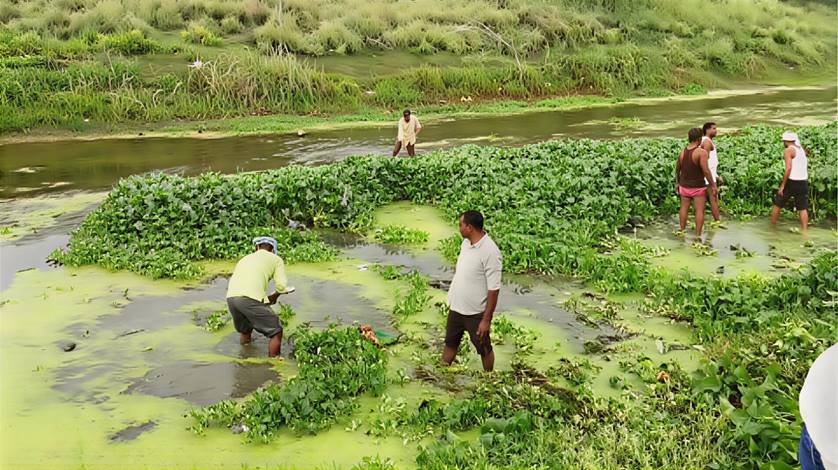
Beyond ecological restoration, the plantation drive has created local economic value, as fruit produce can be utilised by respective Gram Panchayats. The campaign was strengthened through convergence with MGNREGA, enabling elected representatives, workers and volunteers to participate in desilting, cleaning and plantation activities.
Under coordinated efforts with the State Mission for Clean Ganga and the District Ganga Committee, cleanliness drives mobilised school children, youth groups, women’s self-help groups, voluntary organisations and residents. Through Shramdaan activities, plastic, polythene and other solid waste were removed from riverbanks and ghats. Sanitation workers were deployed, dustbins installed at key locations, and awareness campaigns conducted to promote waste segregation and prevent dumping into the river.
Officials report measurable improvements in water quality, revival of biodiversity and enhanced soil fertility and irrigation potential in surrounding agricultural areas. As a tributary of the Ganga, maintaining the health of the Tamsa is considered critical to sustaining the purity and uninterrupted flow of the larger river system.
The Tamsa River rejuvenation demonstrates that sustained administrative commitment combined with grassroots participation can restore smaller river ecosystems effectively. The model is now being viewed as a replicable framework for conservation of tributaries across the Ganga basin, reinforcing the broader vision of a clean and sustainable river network under Namami Gange.
Also Read: Wetlands Sustain Ecosystems, Communities and Livelihoods: Bhupender Yadav on World Wetlands Day 2026