

A new climate vulnerability assessment has revealed that 25 out of 39 Community & Rural Development (C&RD) Blocks in Meghalaya fall under high or very high vulnerability categories, signalling the urgent need for targeted adaptation measures in the state’s Himalayan region.
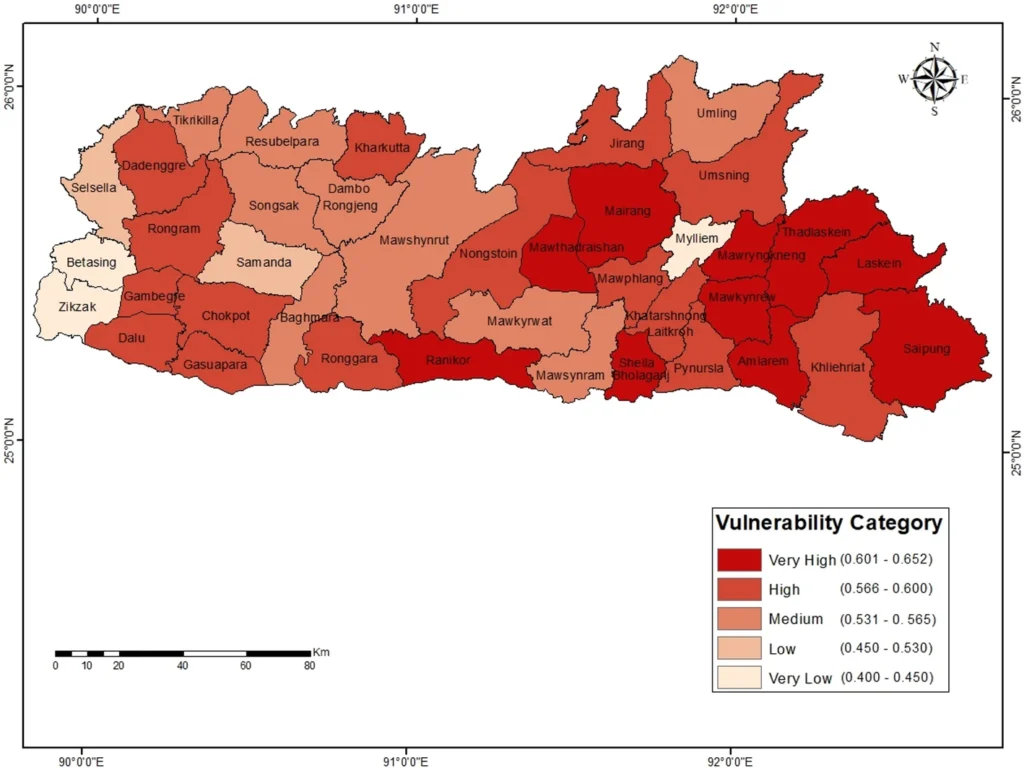
The study was conducted by the Meghalaya Climate Change Centre (MCCC) under the National Mission for Sustaining the Himalayan Ecosystem (NMSHE)—part of India’s National Action Plan on Climate Change. It forms the first comprehensive block-level climate vulnerability analysis for the state, offering a more granular understanding than earlier district-level assessments.
Why Meghalaya Is Highly Vulnerable
According to the findings, several socio-economic and environmental factors are pushing many blocks into the high-risk category. These include:
- Low household incomes
- Limited access to institutional credit
- Inadequate health and nutrition infrastructure, including gaps in Anganwadi services
- Scarcity of forest resources
- Low irrigation coverage, affecting climate-resilient livelihoods
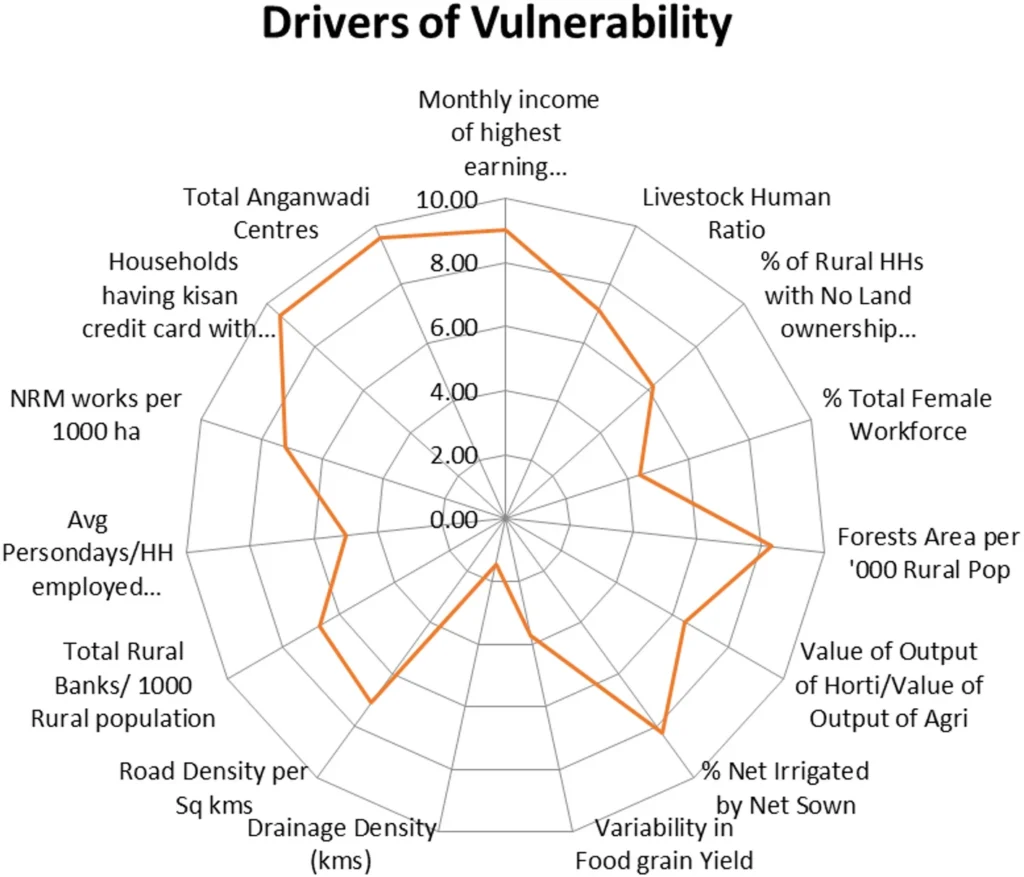
The study adopts a nationally standardised framework integrating biophysical and socio-economic indicators through a tiered, top-down methodology to identify vulnerabilities specific to Meghalaya’s diverse terrain.
Significance for Policy and Planning
The assessment highlights the need for block-specific climate adaptation strategies, especially in rural and mountainous areas where climate impacts can vary drastically. These insights will support policymakers working in areas such as climate resilience, socio-economic development, public health, and environmental management.
By pinpointing local-level climate risks, the study strengthens India’s broader effort to build a climate-resilient Himalayan ecosystem through evidence-based planning.
Published in Discover Sustainability
The research, titled “Integrated Climate Vulnerability Assessment of Meghalaya at Block Level,” has been published in the journal Discover Sustainability, affirming its scientific and policy relevance.
Also Read: Chandigarh Architect Shivdatt Sharma Honoured with Prestigious French Title