

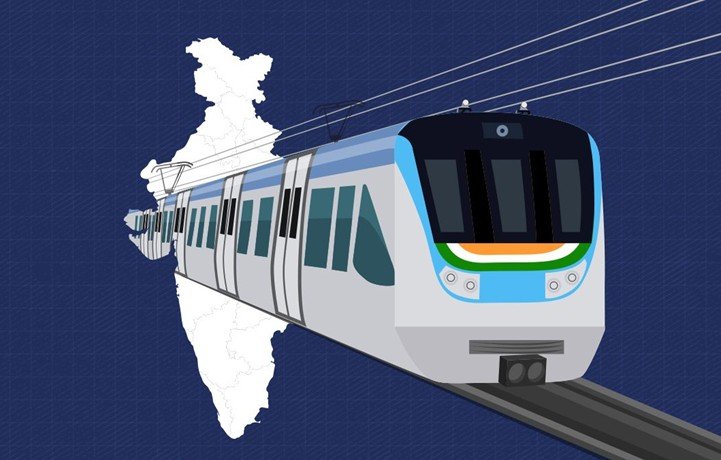
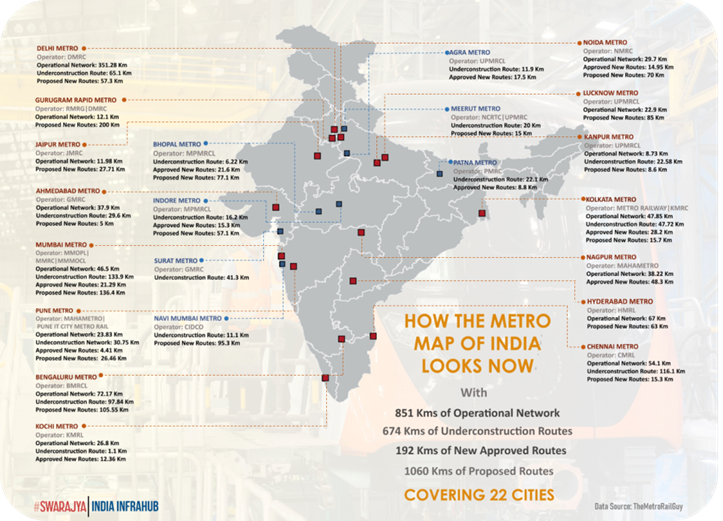
Urban India’s transport landscape has transformed in historic proportions over the past decade. What began as a modest experiment in a few metropolitan areas has matured into a sprawling network of high-capacity urban and regional rail systems that carry millions of commuters daily, reduce congestion, and shape how cities of all sizes grow. In 2014, metro rail systems connected only a handful of Indian cities. Today, the nation boasts over 1,000 km of operational metro lines serving over 23 cities, making it the third-largest urban rail network in the world.
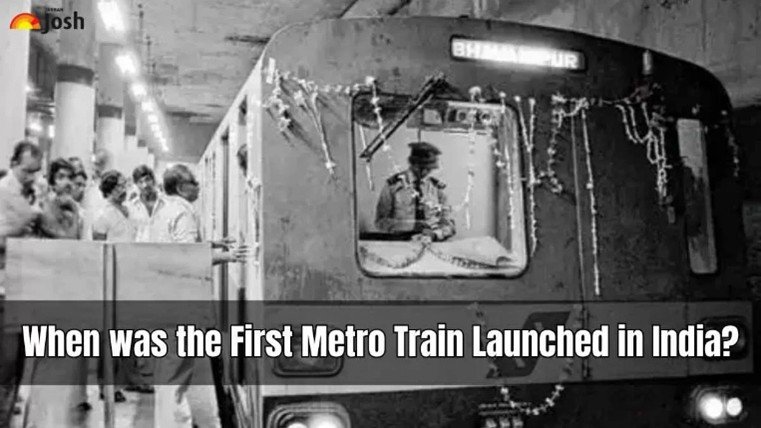
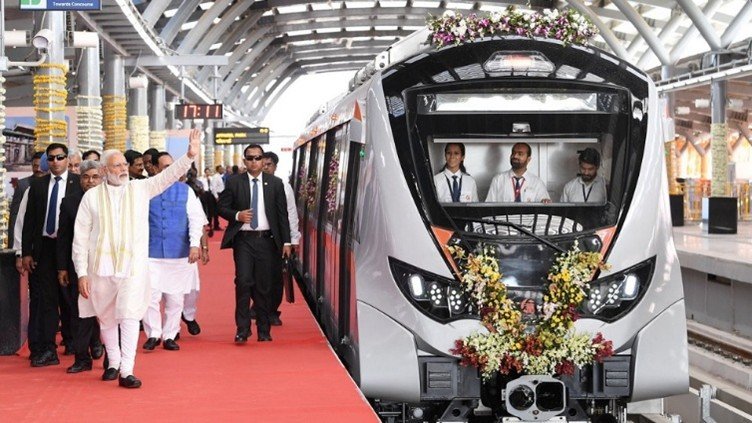
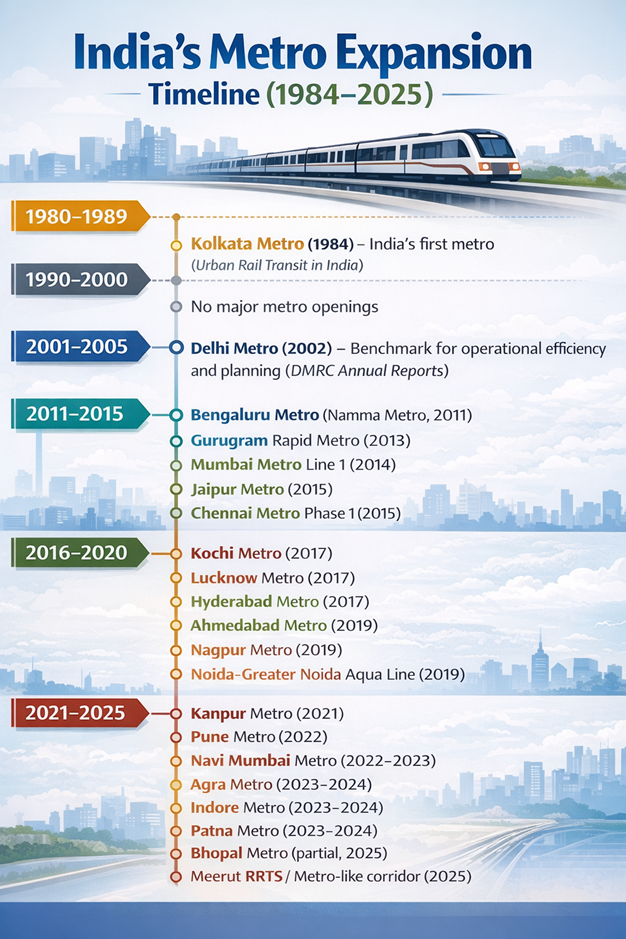
Inauguration of First Metro (Kolkata) to the latest metro project (Meerut RRTS)
Origins: The First Metro Lines and Slow Expansion (1984–2013)
India’s urban rail journey started with the Kolkata Metro, inaugurated in 1984, the first in the country and among the earliest in Asia. For nearly two decades after this historic launch, expansion was incremental, constrained by technical expertise, funding challenges, and limited institutional frameworks.
The real inflection point came in 2002, when the Delhi Metro commenced operations. Rather than merely alleviating city traffic, it established a new benchmark for project execution, cost management, and operational efficiency in Indian infrastructure. It did so through robust institutions, international technical collaboration, and strong governance structures.
Despite this success, by 2014, only four cities had metro rail systems – Kolkata, Delhi, Bengaluru, and Gurugram. At that time, India’s total metro network spanned approximately 248 km, and daily ridership hovered around 2.8 million passengers.
Metros Go National: Expansion Boom (2014–2025)
Starting in 2014, metro development accelerated dramatically. With changes in national urban transport policy and increased financial support, city after city added metro systems that would redefine mobility.
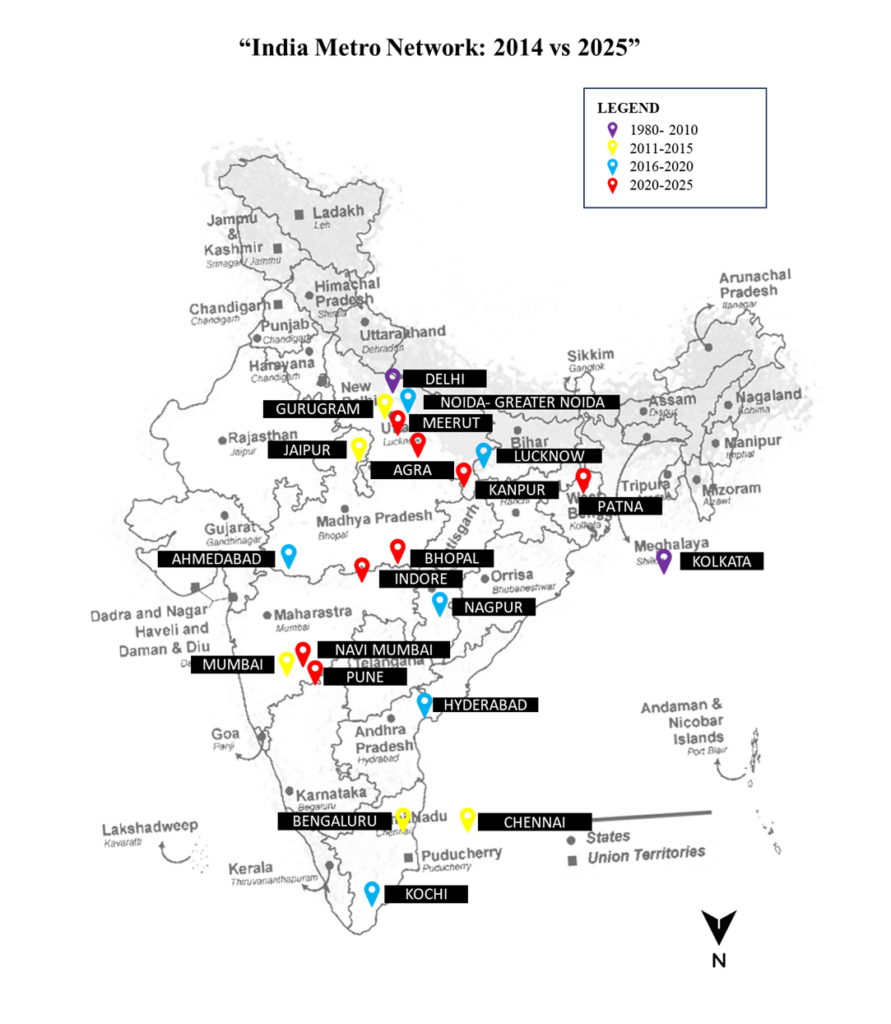
Urban transport reforms, including the Metro Rail Policy (2017) and focused funding mechanisms under national urban missions, enabled systematic metro planning and execution across states. Cities such as Mumbai, Jaipur, Chennai, Kochi, Lucknow, Hyderabad, and Nagpur transitioned from planning to operation, while tier-2 cities like Kanpur, Pune, Agra, Indore, Patna, and Navi Mumbai joined the metro network in the early 2020s.
The sequence of urban metro launches from 2014 to 2025 reads like a chronicle of India’s urban rise:
- Mumbai Metro began passenger operations in 2014, opening a new corridor in one of India’s most congested urban regions.
- 2015 saw both Jaipur and Chennai launch urban rail services, further diversifying metro footprints from north to south.
- 2017 was a watershed year with Kochi, Lucknow, and Hyderabad inaugurating lines that combined technical innovation with local planning needs.
- 2019 brought major wins for urban connectivity with Ahmedabad, Nagpur, and Noida–Greater Noida’s Aqua Line opening to commuters.
- From 2021 onward, cities like Kanpur, Pune, Navi Mumbai, Agra, Indore, and Patna continued the metro trend, highlighting that even mid-sized cities increasingly prioritized high-capacity rail.
Collectively, this expansion added more than 750 km of metro lines in just over a decade, allowing residents across different regions to access fast, safe, and reliable urban transit.
Measuring Success: Ridership, Accessibility, and Daily Impact
The success of India’s metro systems is most visible in the daily rhythms of urban life. As metro lines multiplied, so did ridership. From approximately 2.8 million riders per day in 2014, daily metro usage has climbed to over 11 million by 2025.
This growth isn’t just in raw numbers; it reflects how metro rail has integrated into everyday routine:
- Delhi Metro remains the largest in terms of network length and usage, serving millions of passengers daily and acting as a backbone for the city’s broader public transport matrix.
- Mumbai Metro’s Lines 2A and 7 have recorded ridership figures exceeding 200 million rides within the first three years of service, a testament to strong adoption in high-density corridors.
- Nagpur Metro, despite being one of the smaller networks, reported over 10 crore cumulative riders since launch, indicating strong local use.
Research over recent years has also shown that metro rail positively affects land values, commuter satisfaction, and even labour market participation by making distant job centres more accessible.
Cities Transformed: Beyond Transit to Urban Impact
Metro systems are not transportation projects alone; they are urban development engines. In cities like Bengaluru, Hyderabad, and Chennai, commercial centres and residential growth patterns have increasingly clustered around metro corridors, a phenomenon documented in studies on Transit-Oriented Development (TOD).
These developments align with India’s urban sustainability goals by reducing dependence on private vehicles, shortening average commute times, and lowering carbon emissions per commuter. Metros also act as anchors for multimodal integration — connecting with buses, shared mobility services, and pedestrian networks — underscoring their role as the backbone of future-ready cities.
Looking Ahead: Integrated Mobility and Airport Connectivity
The most exciting phase in India’s metro evolution is unfolding at the intersection of urban and regional transport. Beyond connecting neighbourhoods within cities, planners are now designing integrated corridors that connect cities to airports and economic zones.
A flagship example is the proposed Namo Bharat Rapid Rail Transit System (RRTS), which aims to link Delhi with Noida, Greater Noida, and the upcoming Jewar International Airport via a high-speed regional corridor. This system is envisioned to provide significantly faster, seamless connectivity across the National Capital Region, blending metro-like frequency with regional mobility speed.
Additionally, plans by the Delhi Metro Rail Corporation (DMRC) include extensions that could link Noida and Jewar Airport with Delhi’s Indira Gandhi International (IGI) Airport, potentially reducing travel times between the two major air travel hubs to around one hour. These corridor plans reflect an expanding role for rail infrastructure — not just solving city centre mobility challenges but enabling intercity, interairport connectivity that supports economic activity, tourism, and regional integration.
Also Read: Letter to 2026: If Cities Could Speak
Challenges and Opportunities on the Horizon
Despite strong expansion and robust ridership, metros are not without challenges. Implementation delays due to land acquisition, funding constraints, and complex urban environments continue to affect timelines in some cities. Moreover, achieving seamless last-mile connectivity remains a persistent need for ensuring equitable access, especially in cities where feeder networks are nascent.
Nonetheless, the overarching trend is clear: metros are no longer a luxury infrastructure reserved for megacities; they are a fundamental building block of 21st-century Indian urbanism — a platform for moving people efficiently, supporting sustainable growth, and knitting together the fabric of dynamic metropolitan regions.
Looking Ahead: The Next Phase of India’s Metro Story
As India stands in 2025 with over 1,000 km of operational metro rail and more than 11 million daily riders, the momentum shows no signs of slowing.
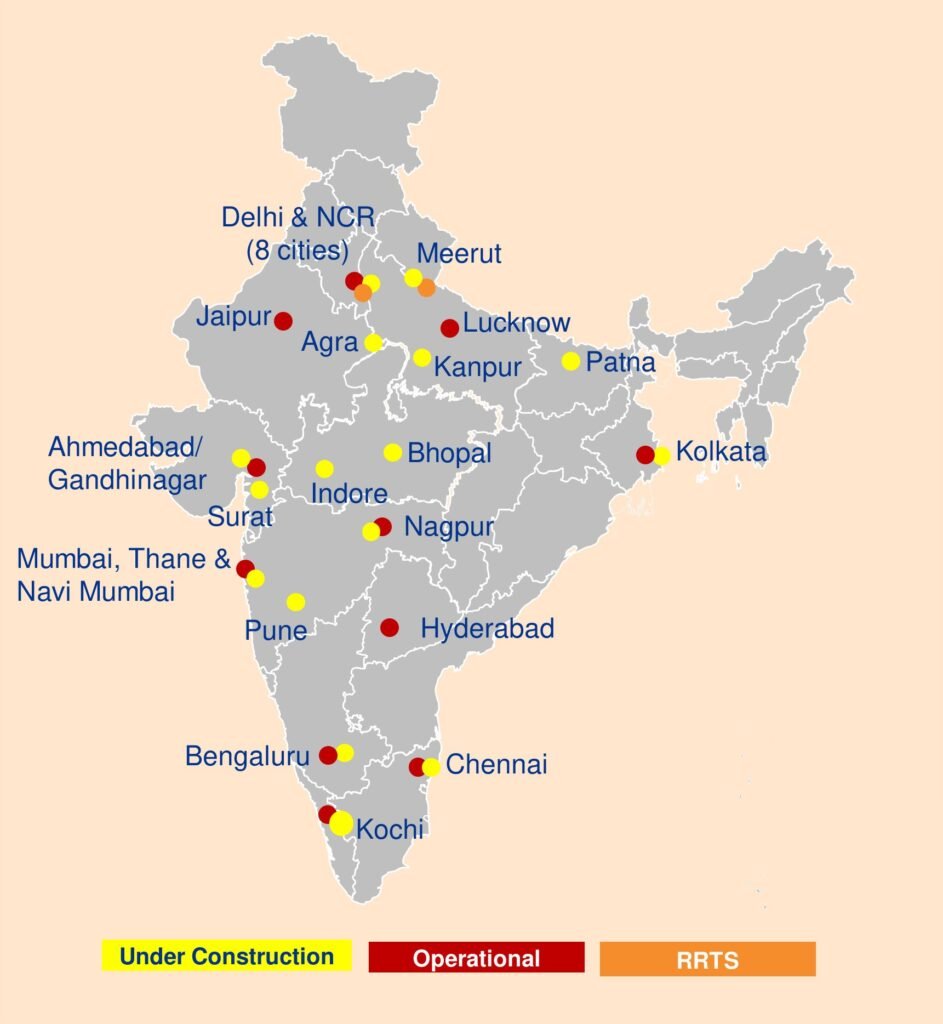
Metro corridors exceeding 1,300 km are currently under construction, while another 1,000 km are in planning and approval stages, including projects in cities such as Meerut, Varanasi, Surat, Coimbatore, Thiruvananthapuram, and Guwahati.
The future of India’s metro infrastructure is increasingly aligned with regional rapid transit systems (RRTS), airport-linked corridors, and transit-oriented development models, as seen in proposals like the Namo Bharat corridor connecting Delhi, Noida, and Jewar International Airport.
With an emphasis on sustainability, energy-efficient rolling stock, multimodal integration, and inclusive urban accessibility, India’s metro networks are evolving from transport solutions into city-shaping instruments. The coming decade is likely to witness metros not only expanding in length, but also deepening their role in shaping compact, resilient, and people-centric Indian cities—cementing metro rail as the backbone of the nation’s urban future.
References
- Press Information Bureau (PIB), Government of India — Metro network expansion and ridership data (2025)
- Ministry of Housing & Urban Affairs (MoHUA), Government of India — Urban transport policy frameworks
- Delhi Metro Rail Corporation (DMRC) — Annual Reports
- National Institute of Urban Affairs (NIUA) — Transit-Oriented Development research
- World Bank Urban Transport Review — Sustainable mobility insights
- Republic World — Reporting on Namo Bharat Metro/airport connectivity (2024)
- Times of India — Metro ridership and expansion stories (2025)
- Urban Rail Transit in India — Publicly curated reference (Wikipedia)