

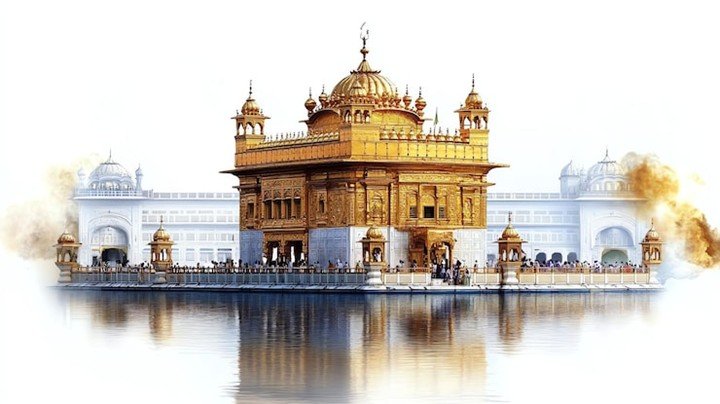
In the spiritual heart of Amritsar stands a radiant embodiment of faith, humility, and universal brotherhood—the revered Sri Harmandir Sahib. More than a sacred shrine, it is a timeless architectural masterpiece where design is not merely physical construction, but a manifestation of spiritual philosophy. Every surface, every pathway, and every reflection within its परिसर speaks a language of equality, devotion, and harmony.
Encircled by the tranquil waters of the Amrit Sarovar, the temple appears almost weightless—its golden form shimmering in the changing light of dawn, day, and dusk. Yet beneath this visual serenity lies an extraordinary depth of planning, craftsmanship, and symbolic meaning that continues to inspire architects and scholars across the world.
And even today, one question quietly lingers—how did such a spiritually profound and architecturally refined marvel come into existence in an era without modern tools or technology?

Sacred Origins: Vision that Shaped Space and Society
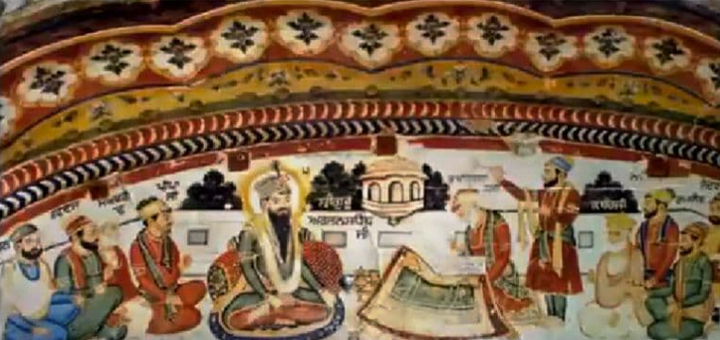
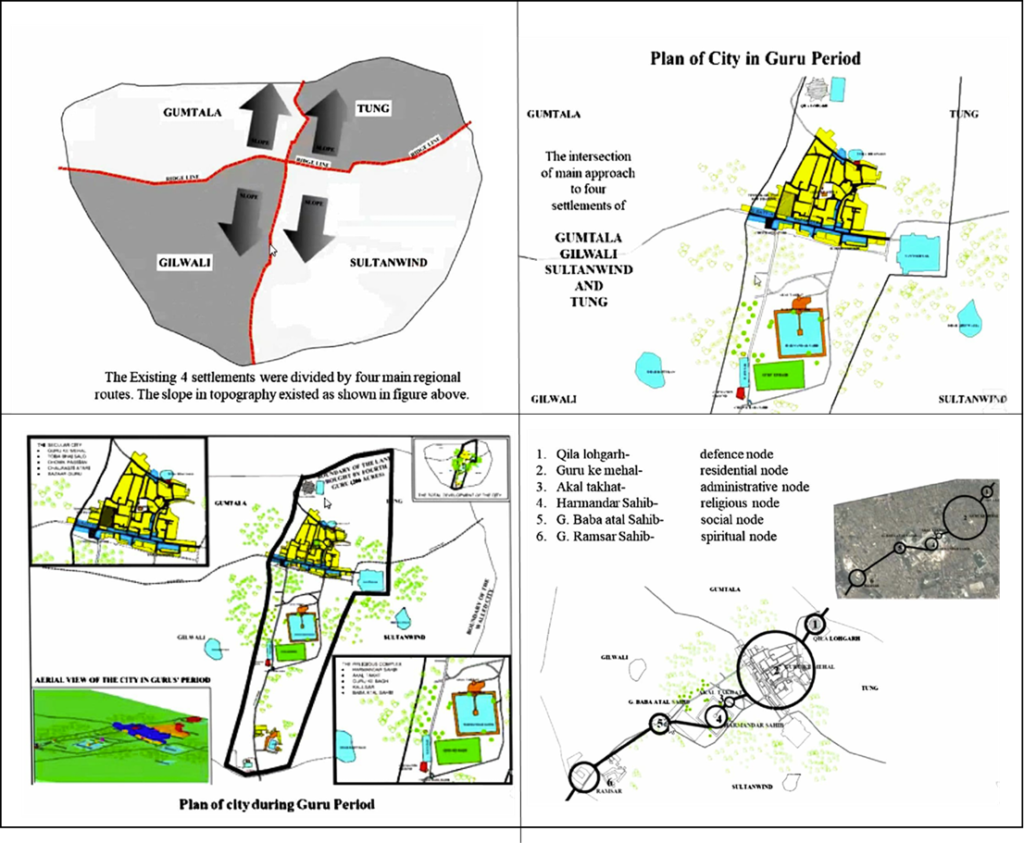
The story of Shri Harmandir Sahib begins with the enlightened vision of Guru Ram Das, who founded Amritsar not just as a settlement, but as a spiritual nucleus centered around a sacred water body. The excavation of the Sarovar itself reflects a deep understanding of both ecological balance and spiritual symbolism—placing water at the core of life and devotion.
This vision reached its architectural realization under Guru Arjan Dev, who designed and constructed the temple in the late 16th century and ceremoniously स्थापित the Guru Granth Sahib within it in 1604.
The architectural decisions taken during this period were deeply thoughtful and spiritually meaningful. Unlike many sacred structures of the time, the temple was built at a lower plinth level. This intentional design gently guides every visitor to step down as they enter, symbolizing humility and surrender before the divine.
Equally powerful is the presence of four entrances opening in all directions. This openness is a direct expression of Sikh teachings—welcoming people of all backgrounds, beliefs, and walks of life. It transforms the temple into a universal space, where no one is excluded, and everyone is equal.
Historical Evolution: A Testament of Faith and Continuity
Over centuries, Shri Harmandir Sahib has gracefully evolved while preserving its sanctity. It has witnessed changing times, yet its spiritual essence has remained untouched.
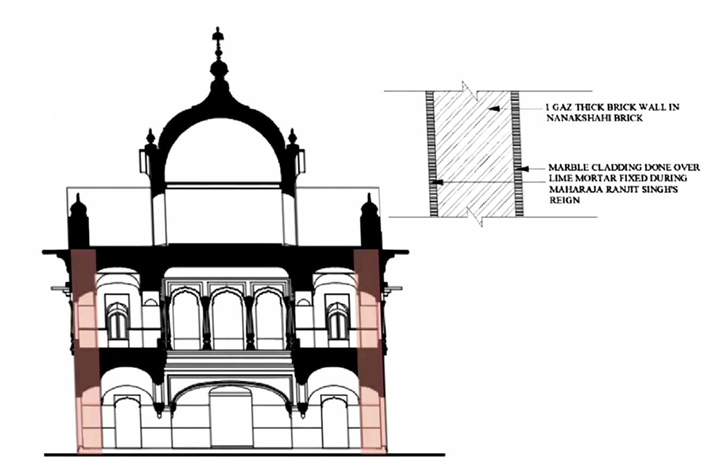
During the early 19th century, the temple underwent significant artistic enhancement under the patronage of Maharaja Ranjit Singh. The addition of marble cladding and intricate gold plating elevated its visual presence while maintaining its original form and philosophy. The gold-covered sanctum that we admire today is thus a result of devotion expressed through artistic excellence.
What is remarkable is that every phase of its transformation has been guided by श्रद्धा (faith) and सेवा (selfless service), ensuring that the architecture continues to reflect the collective spirit of the community.

Architectural Composition: A Harmony of Form, Light, and Meaning
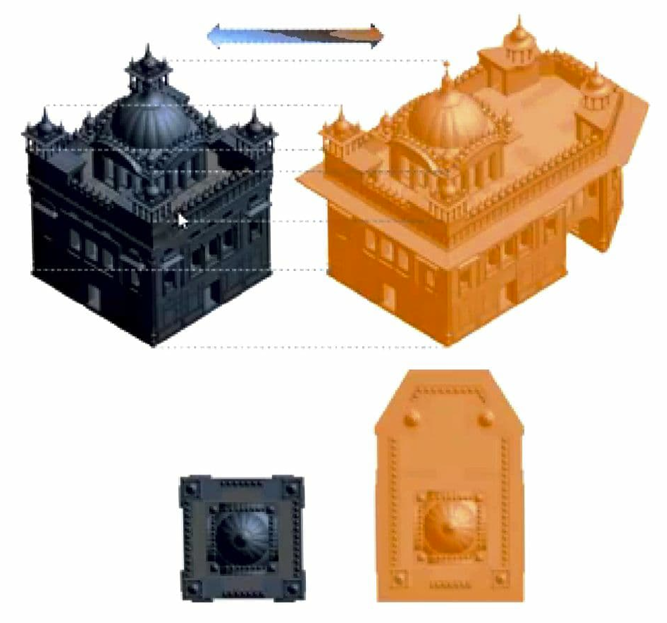
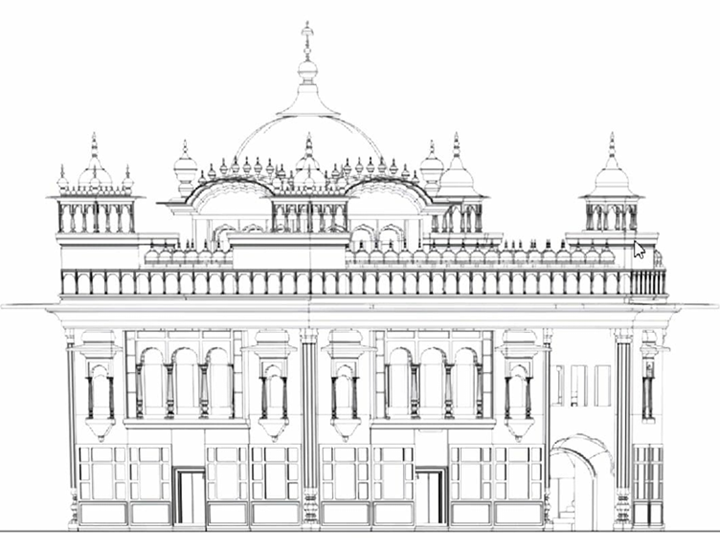
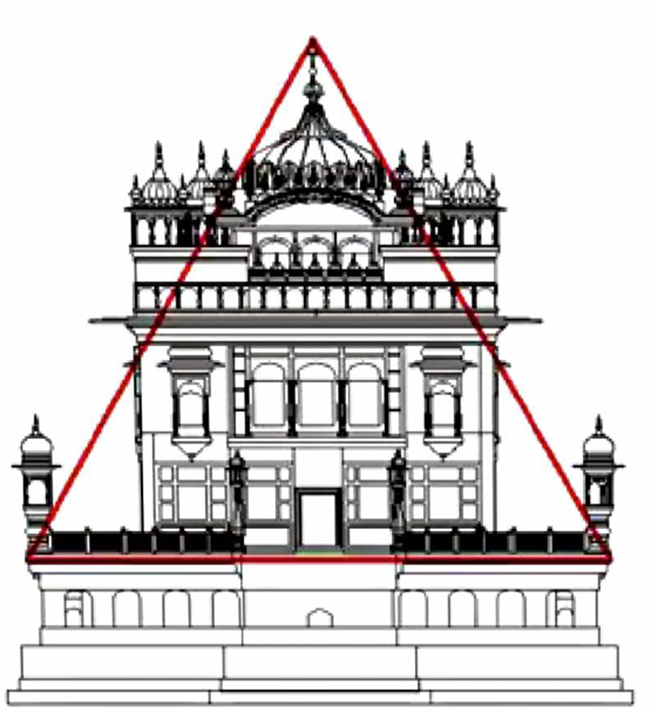
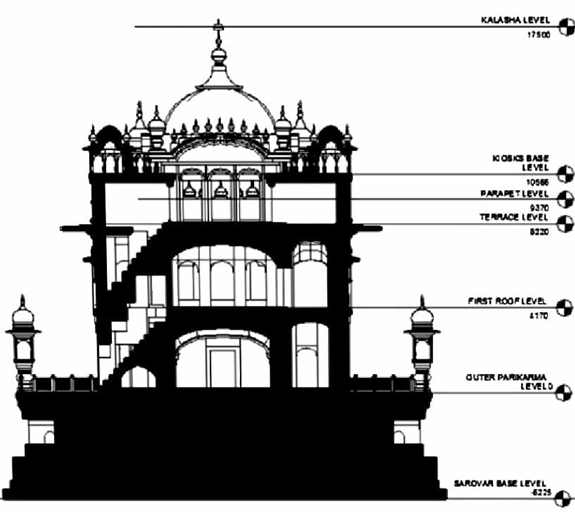
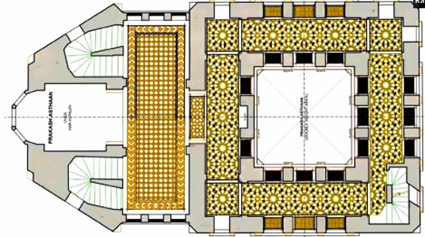
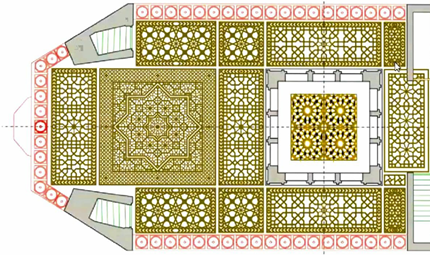
The architecture of Shri Harmandir Sahib is a refined synthesis of beauty and symbolism. The sanctum is composed of two principal levels, each expressing a distinct material and visual character.
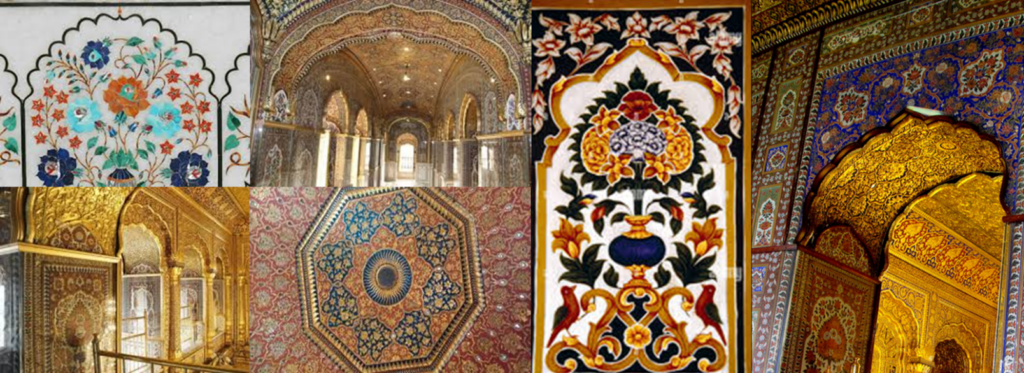
The lower level, crafted in pristine white marble, is adorned with intricate floral carvings, pietra dura inlay work, and delicate patterns inspired by nature. These elements reflect a high level of craftsmanship and attention to detail, achieved through skilled artisanship.
Above this rises the golden structure, its surfaces clad in gold-plated copper sheets that shimmer with changing light. The central dome, shaped like an inverted lotus, symbolizes spiritual awakening—rising above the material world toward higher consciousness.
The use of light within the temple is equally significant. As sunlight interacts with the gold surfaces and reflective water, it creates a constantly shifting play of brightness and shadow, enhancing the divine ambiance.
Also Read: Meenakshi Amman Temple: Sacred Geometry and Ancient Engineering Mastery
Spatial Planning: Geometry and Experience in Perfect Balance
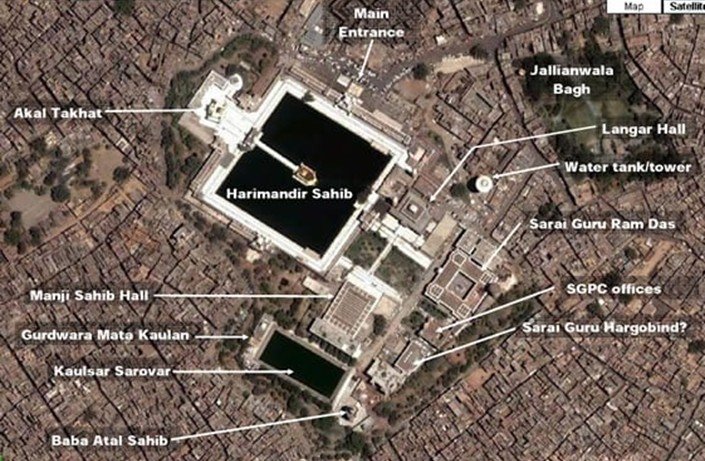
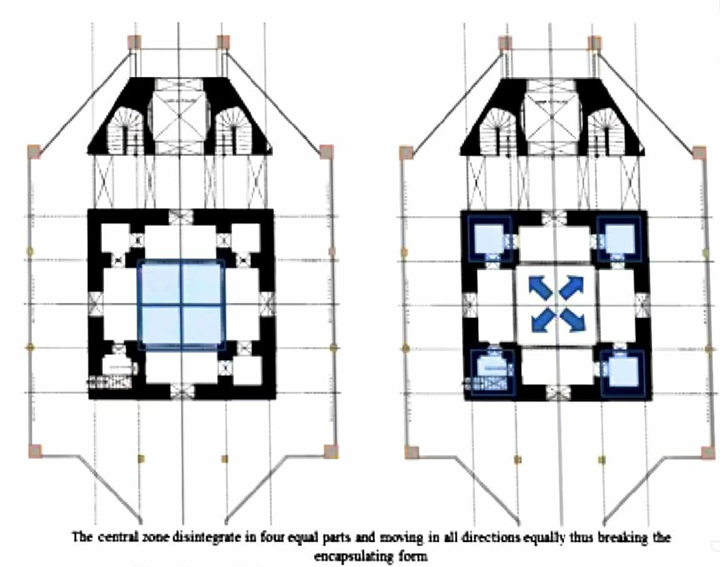
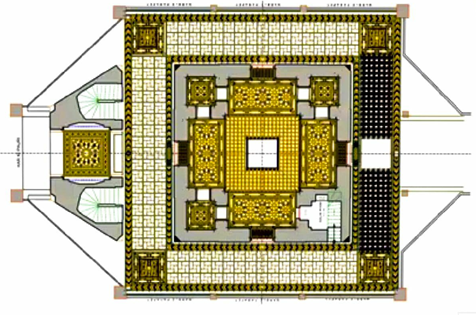
The planning of the Golden Temple complex reveals a profound understanding of spatial harmony and human experience. At its core lies the Amrit Sarovar, a vast and serene water body that anchors the entire composition.
The sanctum, positioned at the center of this Sarovar, becomes both the visual and spiritual focal point. This central placement creates a sense of balance and unity, drawing every visitor’s attention inward.
The narrow causeway leading to the sanctum acts as a transitional journey. As devotees walk along this path, the surrounding world gradually fades, replaced by a sense of शांता (peace) and focus. This carefully designed movement transforms the act of walking into a spiritual experience.
Encircling the Sarovar is the parikrama, a pathway that allows continuous movement and reflection. As one walks along this path, the temple reveals itself from multiple perspectives—its reflection in water, its changing light, and its intricate details. This dynamic interaction with space demonstrates an advanced understanding of experiential architecture. Facing the sanctum is the Akal Takht, representing the balance between spiritual wisdom and worldly responsibility. This spatial relationship reflects the Sikh principle of harmony between faith and action.
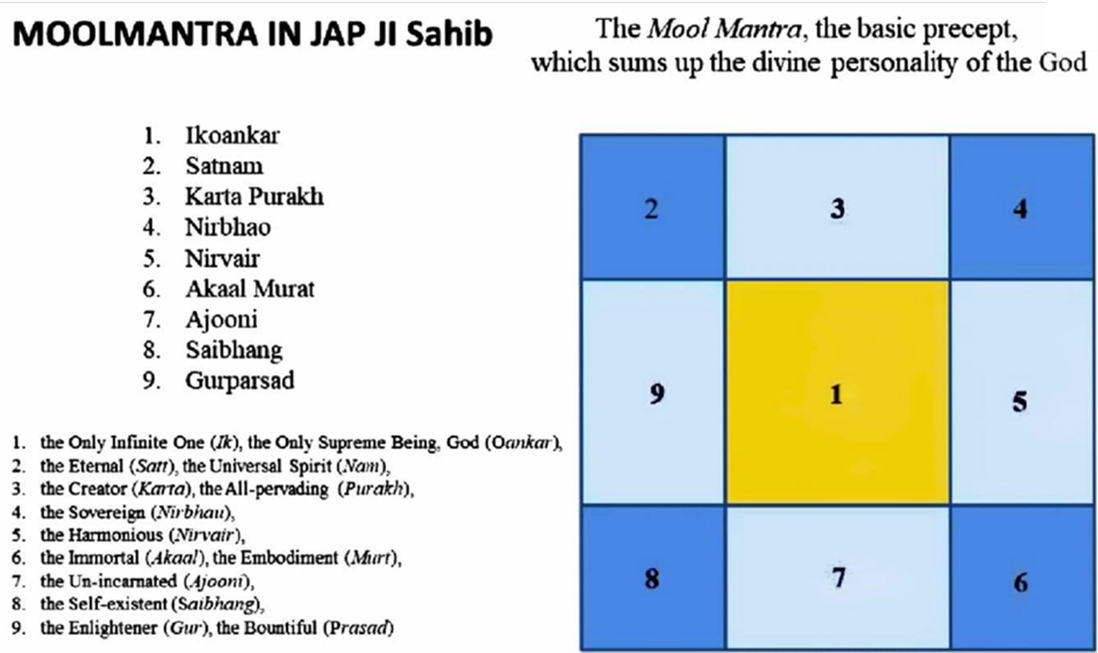
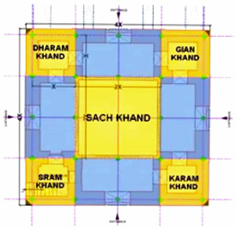
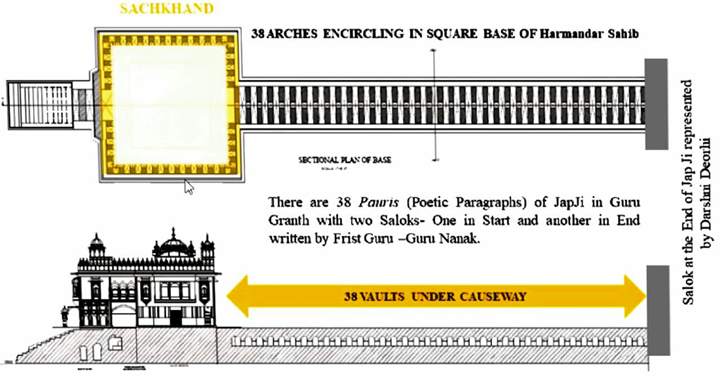

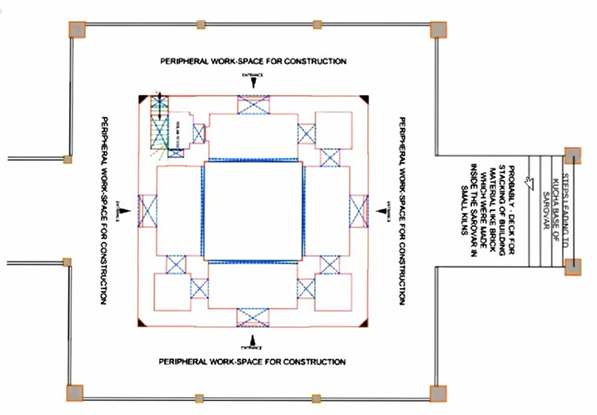
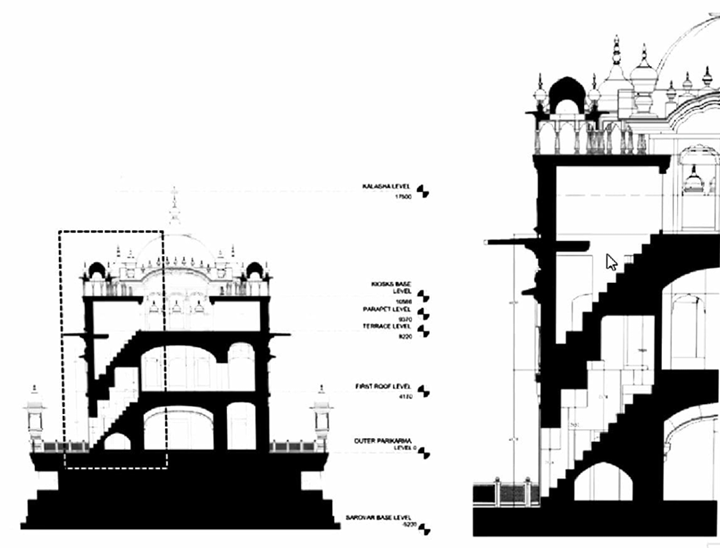
The Structure With Respect To The Geometry Of Sarovar
Materiality and Environmental Sensitivity
The materials used in Shri Harmandir Sahib are not only aesthetically pleasing but also environmentally responsive. The extensive use of marble helps regulate temperature, keeping the structure cool even during warm seasons.
The Amrit Sarovar plays a crucial climactic role, acting as a natural cooling element while also enhancing the spiritual experience. The reflective quality of water amplifies the visual impact of the temple, creating a sense of infinite continuity.
The craftsmanship seen in marble carving, gold plating, and interior ornamentation reflects a deep understanding of materials and techniques. Each detail is carefully executed, contributing to the overall harmony of the structure.
A Living Institution: Architecture in Continuous Use
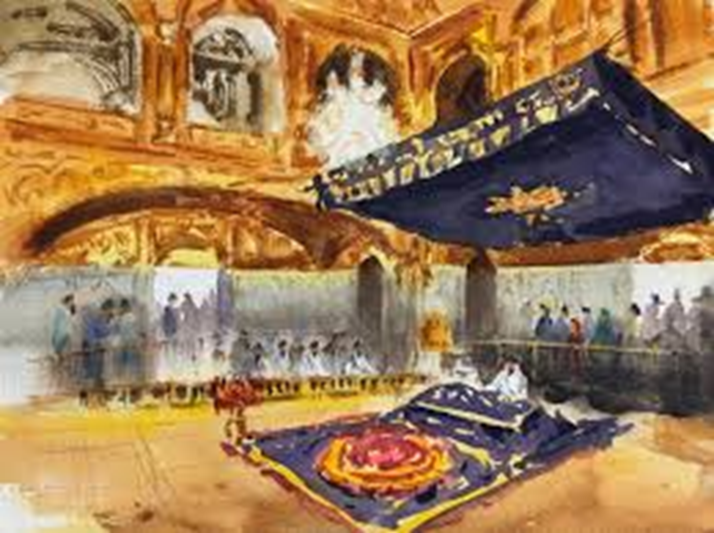
Shri Harmandir Sahib is not a static monument—it is a living, breathing space of devotion. At its heart resides the Guru Granth Sahib, and the daily rhythms of prayer, kirtan, and rituals bring the architecture to life.
One of the most inspiring aspects of the complex is the Langar, the community kitchen that serves meals to thousands of people every day. This practice reflects the Sikh values of equality, sharing, and सेवा, and its seamless integration into the complex highlights the thoughtful planning of functional spaces.
The participation of volunteers in maintaining and operating the temple further strengthens the connection between people and place. Here, architecture is not just experienced—it is lived and sustained collectively.
Urban Significance: The Heart of a Living City
The Golden Temple forms the nucleus of Amritsar’s urban fabric. The surrounding streets, markets, and neighborhoods organically radiate from this sacred center, creating a city structure deeply rooted in spirituality.
This integration of religious, social, and economic life makes Shri Harmandir Sahib not only an architectural marvel but also an example of how sacred spaces can shape entire cities.
A Timeless Inspiration
Shri Harmandir Sahib continues to inspire not only devotees but also architects, planners, and thinkers across the world. Its design demonstrates that true architecture goes beyond form—it creates experiences, fosters community, and reflects deeper human values.
Even after centuries, it quietly invites reflection. How was such a balanced, meaningful, and enduring structure conceived in that era? What knowledge and devotion guided its creation?
Perhaps the answer lies in the spirit behind it—a spirit of humility, equality, and unity.
And it is this spirit that continues to shine, making the Golden Temple not just a marvel of architecture, but a timeless expression of divine harmony.
References
- Kapur, P. (1983). The Sikh Shrines in India. New Delhi: National Book Trust.
- Singh, K. (2004). A History of the Sikhs (Vol. 1 & 2). New Delhi: Oxford University Press.
- Arshi, P. S. (1989). The Golden Temple: Its Theology and Structure. Chandigarh: Publication Bureau.
- Michell, G. (1988). The Penguin Guide to the Monuments of India. London: Penguin Books.
- Singh, H. (2010). The Heritage of Sikh Architecture. Amritsar: Sikh University Press.
- Official publications of the Shiromani Gurdwara Parbandhak Committee (SGPC).
- Rawal Singh Aulakh, Divine dimensions of the formless: An architectural evolution of Sri Harmandir Sahib Amritsar (The Golden Temple). (SPECIAL MENTIONS)
Also Read: Matrimandir, Auroville — Architecture, Features and Importance