

Noida | The upcoming Jewar Airport, scheduled for inauguration on March 28, is poised to significantly reshape the real estate dynamics of the National Capital Region (NCR). Industry experts and developers are already calling the project a “game-changer,” citing its potential to unlock new growth corridors, particularly across eastern NCR.
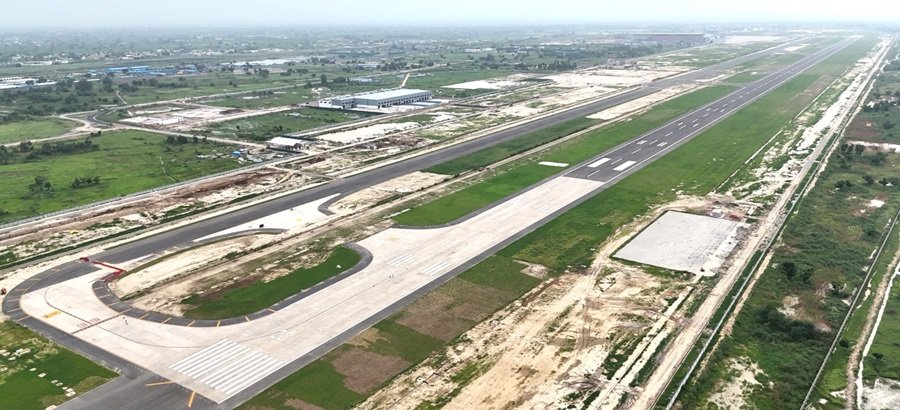
The airport, strategically located in Uttar Pradesh’s Jewar region near Noida, is being developed to ease congestion at Delhi’s existing aviation hub while catalyzing large-scale urban and economic expansion. The state government has reportedly invited Prime Minister Narendra Modi to inaugurate the project, marking a major milestone in regional infrastructure development.
Connectivity to Drive Growth
The Jewar Airport project is expected to dramatically enhance connectivity across NCR, especially along the Yamuna Expressway and Noida–Greater Noida Expressway corridors. Improved accessibility is anticipated to accelerate both residential and commercial development in surrounding regions, transforming previously underutilized land into high-demand urban clusters.
For years, NCR’s real estate growth remained concentrated around Gurugram, known for its corporate ecosystem and premium developments. However, Noida—once seen as a more affordable alternative—has rapidly evolved into a competitive real estate destination due to planned infrastructure, wider roads, and integrated urban layouts.
Rising Property Values and Market Shift
Data from industry reports indicates a sharp appreciation in property prices in Noida. Average residential prices have nearly doubled from around ₹4,795 per sq. ft. in early 2020 to approximately ₹9,200 per sq. ft. in early 2025, reflecting a growth of over 90%. Greater Noida has witnessed similar momentum, while the broader NCR market has grown at a comparatively moderate pace.
Experts suggest that the airport could further accelerate this upward trajectory. Market projections indicate a potential 20–30% rise in property values along the Yamuna Expressway corridor as airport-driven economic activity gains momentum.
Emergence of New Micro-Markets
The Noida–Greater Noida Expressway belt has already emerged as a key residential and commercial hub, accounting for a significant share of Grade-A office leasing in recent years. The influx of professionals and businesses has led to the rapid development of nearby residential micro-markets.
Areas such as Sector 150 (Noida) and Greater Noida West are witnessing increased demand, particularly from homebuyers seeking larger living spaces, green environments, and modern lifestyle amenities. Developers are expanding premium housing projects in these locations, aligning with evolving buyer preferences.
Shift Towards End-User Driven Demand
The buyer profile in Noida has undergone a notable transformation. While earlier demand was largely investor-driven, current trends indicate a shift toward end-users. Professionals working in nearby IT and corporate hubs are increasingly opting for homes closer to workplaces, while families are prioritizing better infrastructure and quality of life.
This transition reflects a maturing real estate market supported by robust planning, metro connectivity, and improved road networks.
Industry Outlook
Real estate stakeholders believe the airport will act as a long-term catalyst for sustained growth. According to developers, the project will enhance regional connectivity, attract investments, generate employment opportunities, and boost both residential and commercial demand.
Industry leaders also highlight that the Yamuna Expressway corridor—once considered speculative—is now evolving into a structured and investment-ready real estate zone, backed by institutional interest and infrastructure-led growth.
With the inauguration approaching, Noida appears to be entering a decisive phase in its urban evolution—positioning itself as one of NCR’s most dynamic and future-ready real estate markets.
Also Read: Jewar International Airport: First successful validation flight landing