

India’s rural development journey is undergoing a significant transformation, driven by decentralised governance, livelihood diversification, and digital integration. A recent feature released by the Press Information Bureau (PIB) highlights how coordinated policy frameworks and grassroots institutions are enabling rural communities to transition from subsistence-based livelihoods to sustainable economic models.
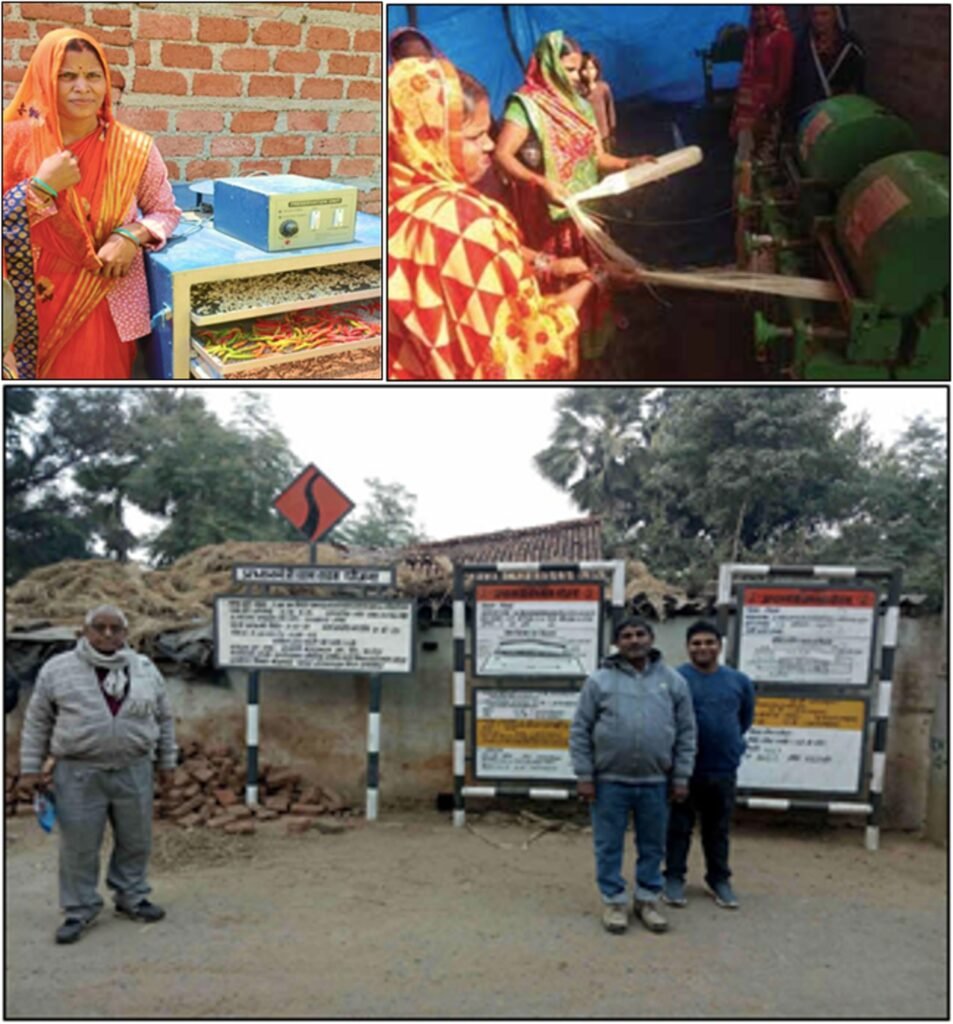
The story begins in Shripura village of Guna district, Madhya Pradesh, where Sarita Saini, a member of the Ekta Self-Help Group, has successfully combined commercial vegetable farming with solar drying technology. Supported under the Madhya Pradesh State Rural Livelihoods Mission, she received a solar dryer worth ₹1 lakh, allowing her to store and sell produce year-round. This intervention has helped her generate a stable monthly income of nearly ₹20,000, demonstrating how targeted infrastructure and capacity-building can catalyse rural entrepreneurship.
Such individual success stories are embedded within a broader governance framework that places communities at the centre of development planning. Strengthening institutions such as Gram Panchayats, Self-Help Groups, and village organisations has shifted rural development away from top-down scheme delivery toward participatory and locally responsive models. This decentralised approach enables communities to identify priorities, monitor outcomes, and co-own development processes.
At the policy level, flagship programmes of the Ministry of Rural Development form the backbone of this transformation. The Deendayal Antyodaya Yojana–National Rural Livelihoods Mission (DAY-NRLM) has mobilised over 10.29 crore rural households into Self-Help Groups as of December 24, 2025, making it one of the largest livelihood missions globally. The Lakhpati Didi initiative under DAY-NRLM recognises women-led households achieving annual incomes of ₹1 lakh or more, signalling a shift toward diversified and resilient rural economies.
Employment security remains a critical pillar of rural resilience. Since its inception, the Mahatma Gandhi National Rural Employment Guarantee Act (MGNREGA) has provided statutory wage employment while creating durable community assets. The programme has seen notable improvements over the past decade, including increased women’s participation (from 48% to 56.74%) and near-universal electronic wage payments, enhancing transparency and financial inclusion. Building on this, the proposed Viksit Bharat–Guarantee for Rozgar and Ajeevika Mission (Gramin) Act, 2025, aims to increase guaranteed employment to 125 days per household, aligning rural works with the long-term vision of Viksit Bharat @2047.
Infrastructure development has further strengthened rural quality of life. Under the Pradhan Mantri Awas Yojana–Gramin, 2.92 crore pucca houses have been completed, while the Pradhan Mantri Gram Sadak Yojana has delivered nearly 7.87 lakh kilometres of rural roads. These investments reduce physical isolation, improve access to markets and services, and support local economic growth. A notable example is a 5.68-km all-weather road in Jharkhand’s Godda district, which has improved connectivity for over 10,000 residents.
Digitalisation is emerging as a powerful enabler of rural transformation. Village organisations are leveraging online marketplaces such as IndiaMART to access wider markets, while Gram Panchayats are adopting digital platforms like eGramSwaraj to improve transparency and governance efficiency. As of December 2025, more than 2.14 lakh Gram Panchayats have been connected under the BharatNet programme, strengthening digital public infrastructure across rural India.
The unifying principle across these initiatives is convergence—aligning planning, resources, and implementation across sectors. Programmes like Mission Antyodaya and participatory tools such as Viksit Panchayat Development Plans institutionalise data-driven, community-led decision-making. Together, they reflect a shift toward rural development as an integrated mission rather than a collection of isolated schemes.
As India observes Good Governance Day, the evolving rural development framework underscores a key lesson: governance delivers lasting impact when it is inclusive, decentralised, and future-oriented. From solar dryers in small villages to digital planning platforms at the Panchayat level, these initiatives illustrate how thoughtful policy design can translate into tangible improvements in everyday rural life.