

In a decisive move to safeguard one of India’s oldest and most ecologically significant mountain systems, the Union Government has announced a blanket ban on the grant of any new mining leases across the entire Aravalli Range, stretching from Gujarat to the National Capital Region. The directive has been issued by the Ministry of Environment, Forest and Climate Change (MoEF&CC) to all concerned States, reinforcing the Centre’s commitment to long-term environmental conservation.
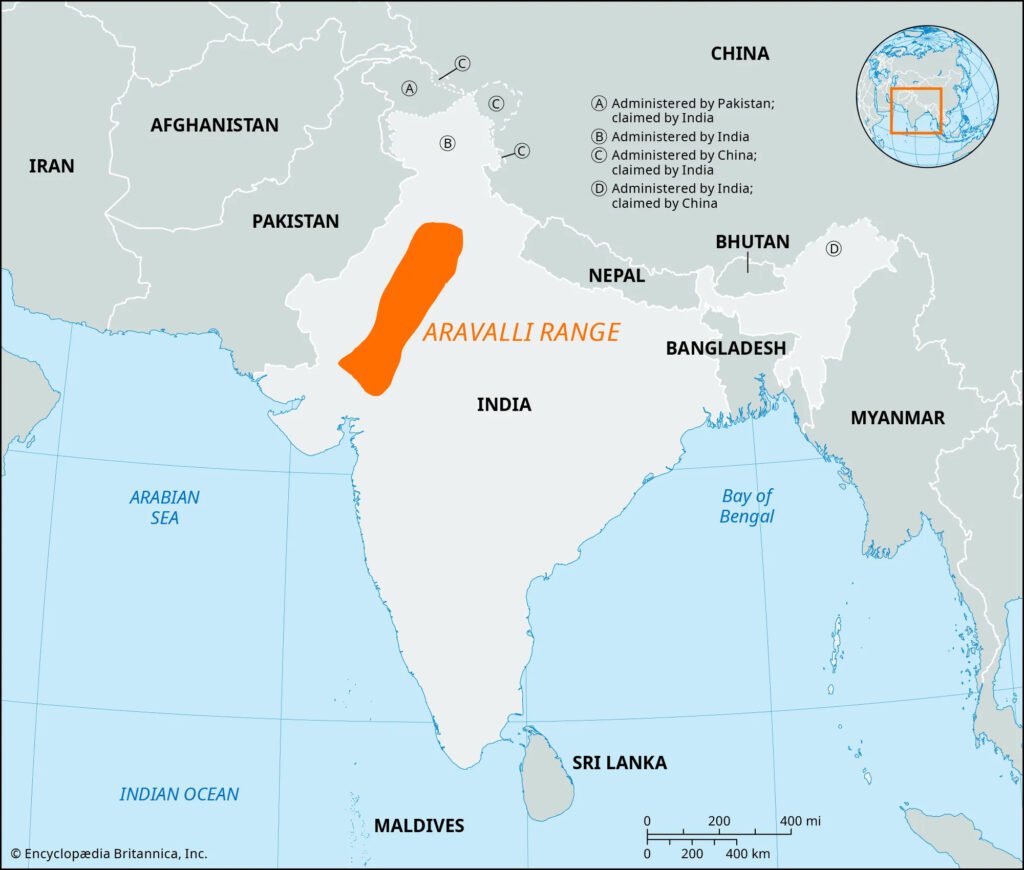
The prohibition applies uniformly across the full Aravalli landscape and is aimed at preventing illegal and unregulated mining that has posed a serious threat to the continuity and ecological integrity of the range. The Aravallis function as a continuous geological ridge, playing a critical role in regulating regional climate, preventing desertification, conserving biodiversity, and recharging groundwater aquifers that support large urban and rural populations.
Beyond the immediate ban on new leases, the Centre has also initiated steps to expand the protected and no-mining zones within the Aravallis. The MoEF&CC has directed the Indian Council of Forestry Research and Education (ICFRE) to identify additional areas where mining should be completely prohibited, over and above zones already restricted by the Centre. This identification will be based on ecological sensitivity, geological significance, and landscape-level considerations.
As part of this exercise, ICFRE has been tasked with preparing a comprehensive, science-based Management Plan for Sustainable Mining (MPSM) for the entire Aravalli region. The plan will assess cumulative environmental impacts, evaluate ecological carrying capacity, and delineate conservation-critical zones. Importantly, the MPSM will be placed in the public domain to enable wide stakeholder consultation, ensuring transparency and informed decision-making.
For mining operations that are already underway, the Centre has instructed State Governments to enforce strict compliance with environmental safeguards and ensure adherence to existing Supreme Court orders. Ongoing mining activities will be subjected to tighter regulation and additional restrictions to align them with sustainable mining practices and environmental protection norms.
The government reiterated that protecting the Aravalli ecosystem is vital not only for environmental stability but also for the long-term resilience of urban regions, agricultural landscapes, and biodiversity corridors across north-western India. The latest measures signal a shift towards landscape-scale conservation and stricter governance of natural resources in ecologically fragile regions.
Also Read: Patna Set to Launch Bihar’s First Water Metro by January 2026