
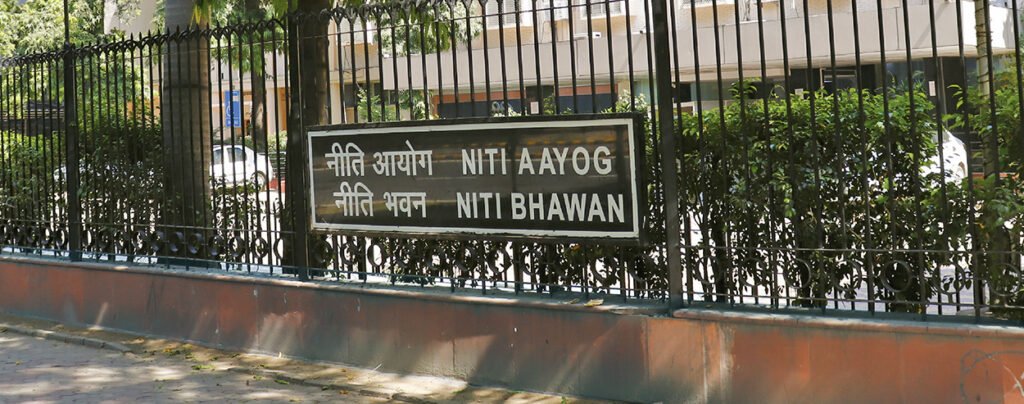
NITI Aayog has released a landmark policy report titled “Internationalisation of Higher Education in India: Prospects, Potential, and Policy Recommendations”, outlining a strategic roadmap to position India as a global hub for higher education and research by 2047. The report was officially launched in New Delhi by senior leadership of NITI Aayog, including Vice Chairman Suman Bery, along with key policymakers and education leaders.
Developed in collaboration with an Indian Institute of Technology Madras–led consortium of knowledge partners, the report is among the most comprehensive studies on higher education internationalisation emerging from the Global South. It strongly aligns with the vision of the National Education Policy (NEP) 2020, particularly the concept of “internationalisation at home”, which aims to embed global academic practices within Indian institutions.
Evidence-Based Insights and Global Perspectives
The report is backed by extensive qualitative and quantitative research, including survey responses from 160 higher education institutions across 24 Indian states, covering more than 100 indicators. In addition, inputs were gathered from 140 national and international experts during a National Workshop held at IIT Madras, along with in-depth interviews involving academics from 30 international institutions across 16 countries.
The study examines global trends in student and faculty mobility over the last two decades and identifies opportunities for expanding international academic collaborations, joint research programmes, and cross-border campuses. It also evaluates the potential for foreign universities establishing branch campuses in India, as well as Indian universities expanding overseas.
Policy Vision and Strategic Targets
Speaking at the launch, Vice Chairman Suman Bery highlighted that internationalising higher education is not only an academic imperative but also a strategic instrument of diplomacy and soft power. Member (Education) Dr. V.K. Paul contextualised the report within India’s long-term development agenda, noting that the country should aim to host one lakh international students in central and state universities by 2030, contributing to the broader vision of Viksit Bharat 2047.
NITI Aayog Member Dr. Arvind Virmani emphasised the role of international students as long-term ambassadors of India, while underscoring the need to strengthen doctoral education through global research collaborations. CEO B.V.R. Subrahmanyam pointed to multiple benefits of internationalisation, including improved curriculum quality, reduced foreign exchange outflow, and expanded research partnerships. He also stressed the importance of regulatory ease, private university participation, and leveraging India’s 3.5 crore-strong diaspora.
A Structured Roadmap for 2047
The report presents 22 policy recommendations, 76 action pathways, and 125 performance success indicators, supported by nearly 30 Indian and global best practices. These recommendations are structured around five thematic pillars—Strategy, Regulation, Finance, Branding, Communication & Outreach, and Curriculum & Culture—aimed at transforming India into a globally competitive education destination.
Senior officials from the Department of Higher Education and the All India Council for Technical Education (AICTE) noted that recent regulatory reforms have already facilitated the entry of nearly 13 international universities into India, marking an early success of NEP-driven initiatives.
With its data-driven approach and clearly defined implementation framework, the report is expected to serve as a key reference document for policymakers, academic institutions, planners, and education administrators shaping the future of India’s higher education ecosystem.
Also Read: Bridges of India: Engineering Landmarks That Redefine Connectivity and Resilience