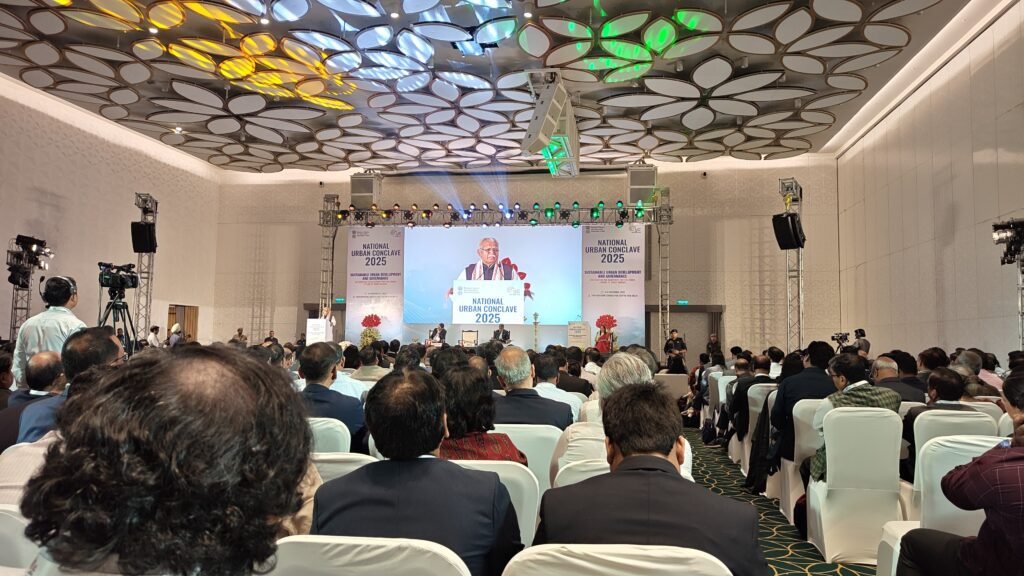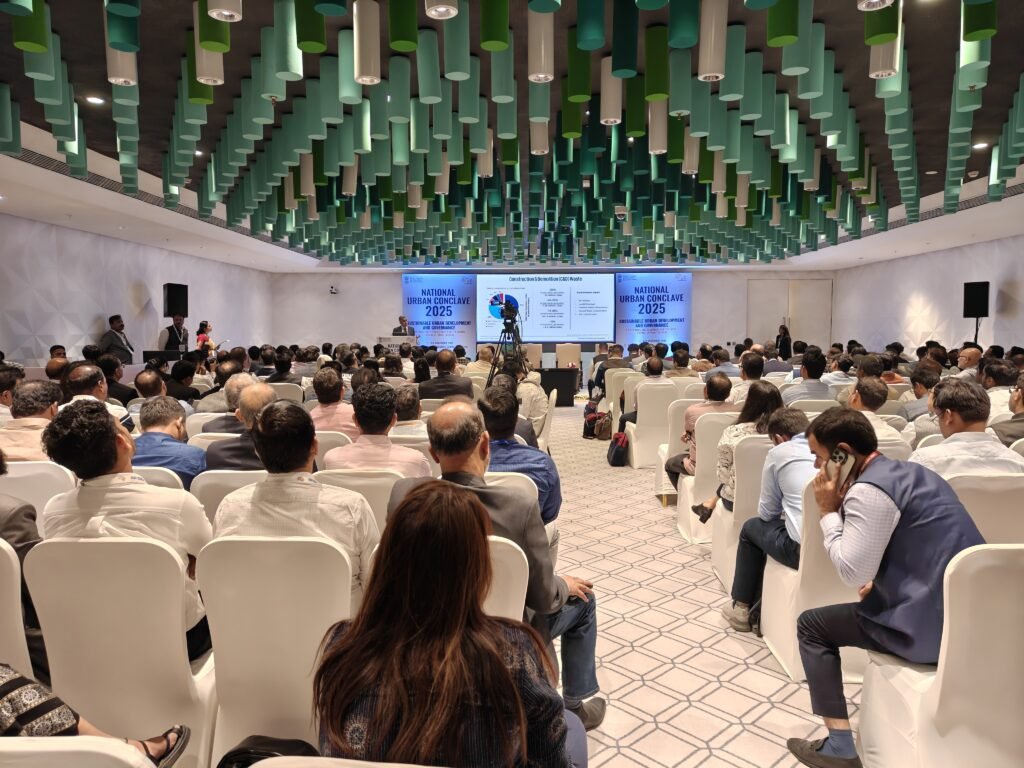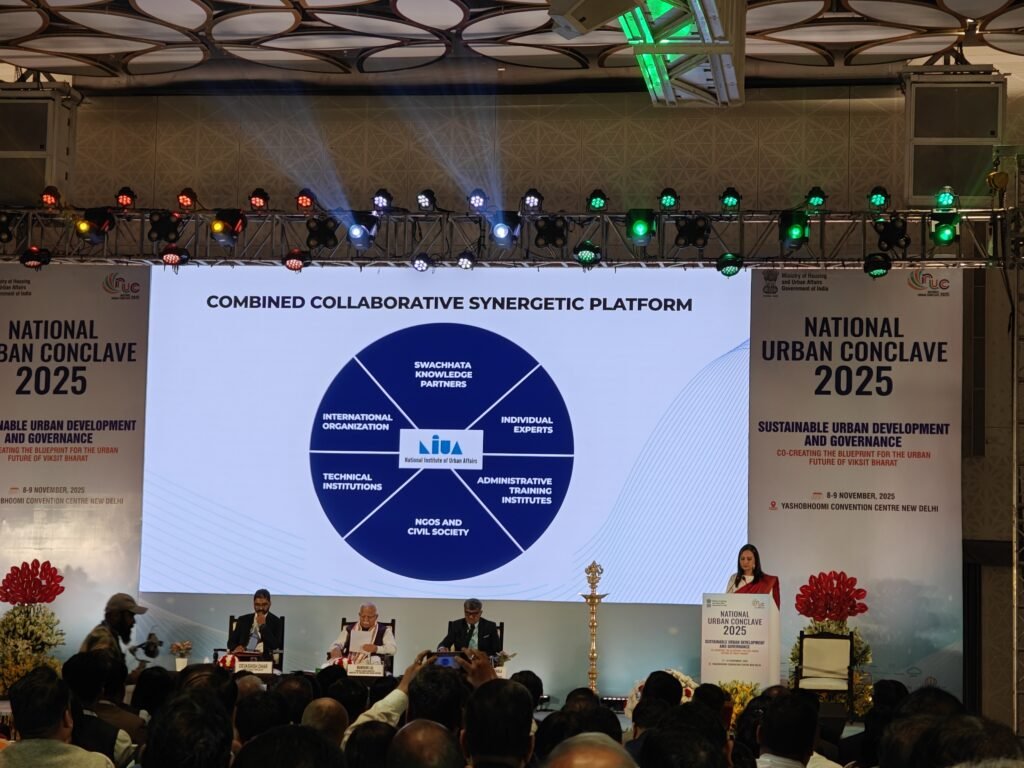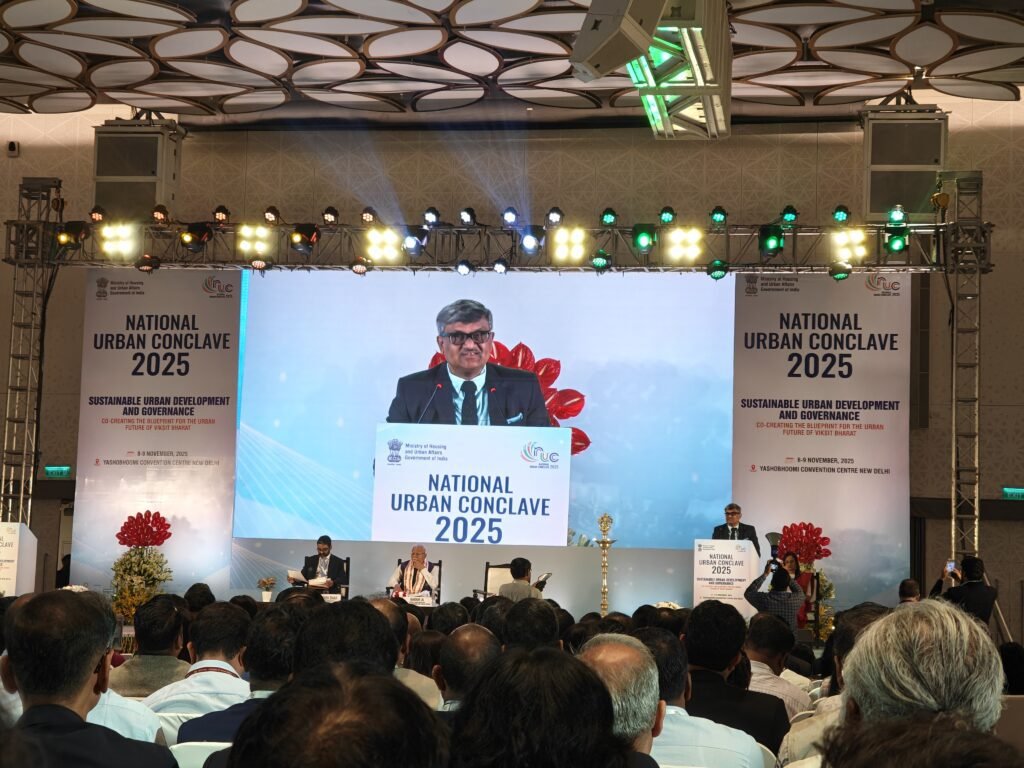

New Delhi: The National Urban Conclave 2025, convened by the Ministry of Housing and Urban Affairs (MoHUA) and the National Institute of Urban Affairs (NIUA), concluded at Yashobhoomi, Dwarka, marking one of the most comprehensive policy dialogues in recent years on India’s urban future. With over 2,500 delegates, seven parallel thematic sessions, and participation from states, global partners, and industry leaders, the Conclave articulated a clear shift in India’s urban strategy — from managing cities to building them as engines of economic value, environmental resilience, and social inclusion.
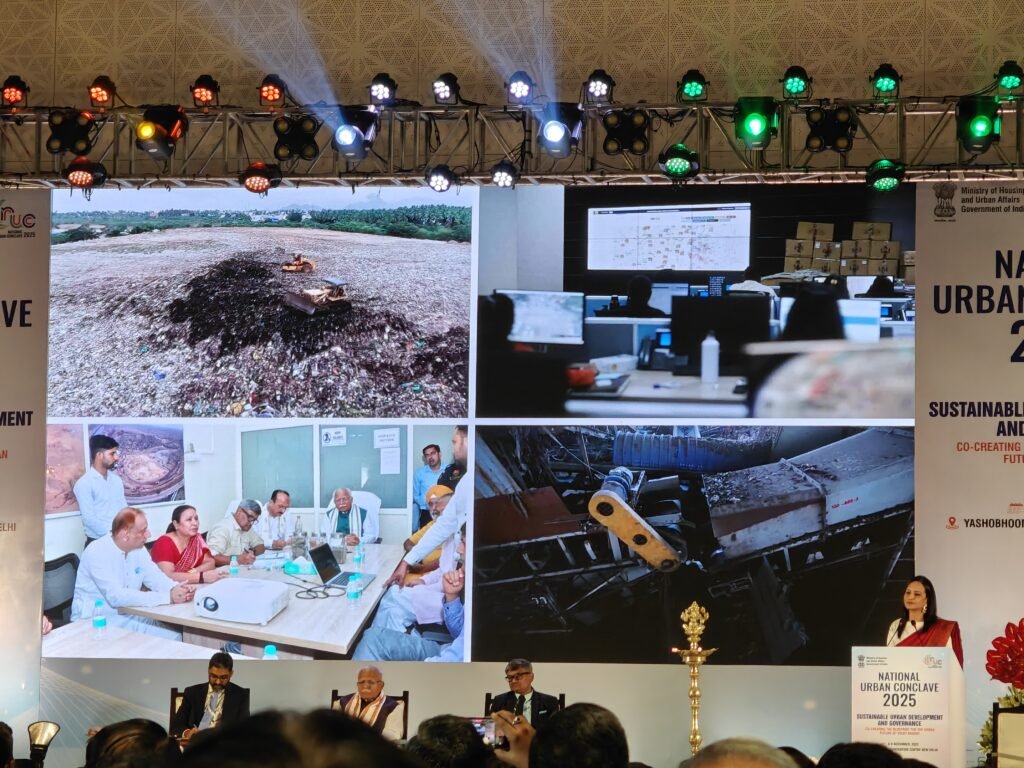
At the heart of the inaugural day were four major national rollouts: Dumpsite Remediation Accelerator Programme (DRAP) targeting complete clearance of legacy waste by September 2026; the NIUA-anchored Knowledge Management Unit to consolidate national learning under Swachh Bharat Mission–Urban; Urban Invest Window (UiWIN) enabling private and multilateral capital to enter urban infrastructure; and the ‘Jal Hi Janani’ anthem under AMRUT, reaffirming civic responsibility for water stewardship. These launches set the tone for a future where urban planning, governance, and sustainability converge.
A powerful narrative emerged from keynote speakers. Public policy expert Devashish Dhar reiterated that Indian cities must be viewed as “spatial engines of prosperity”, not administrative burdens. Secretary Srinivas Katikithala distilled the government’s stance sharply: “Every urban policy must increase the income and well-being of citizens — or it must be redesigned.” This clarity underscored a larger theme — India is now aligning its urban missions with measurable economic impact and institutional accountability.
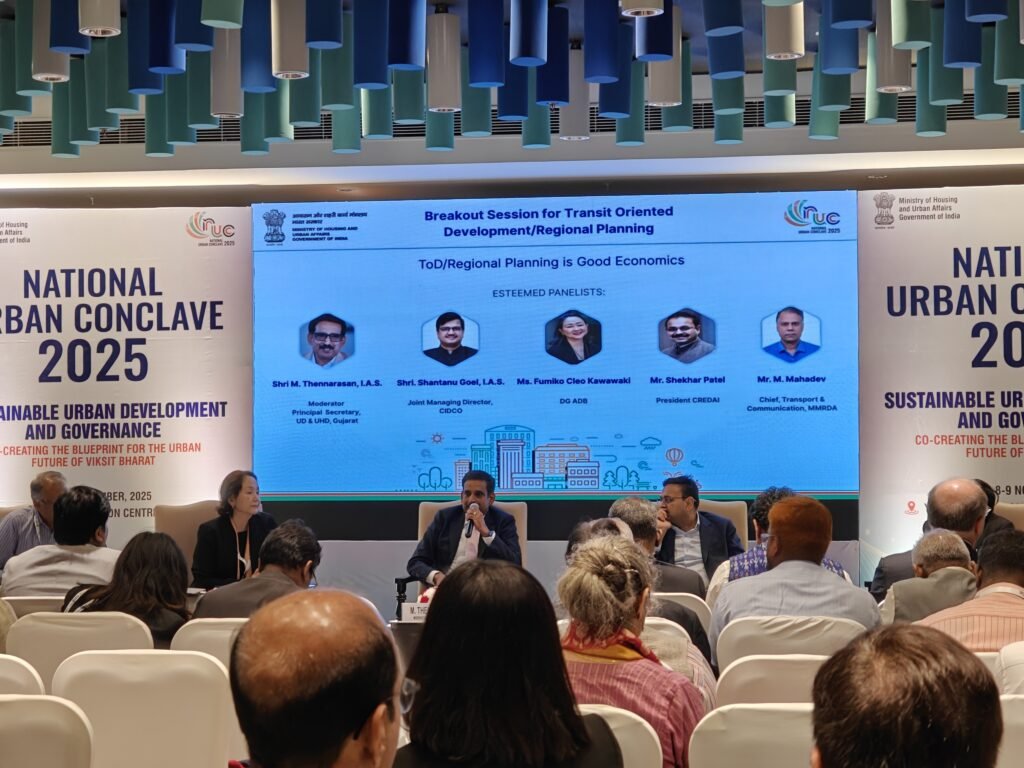
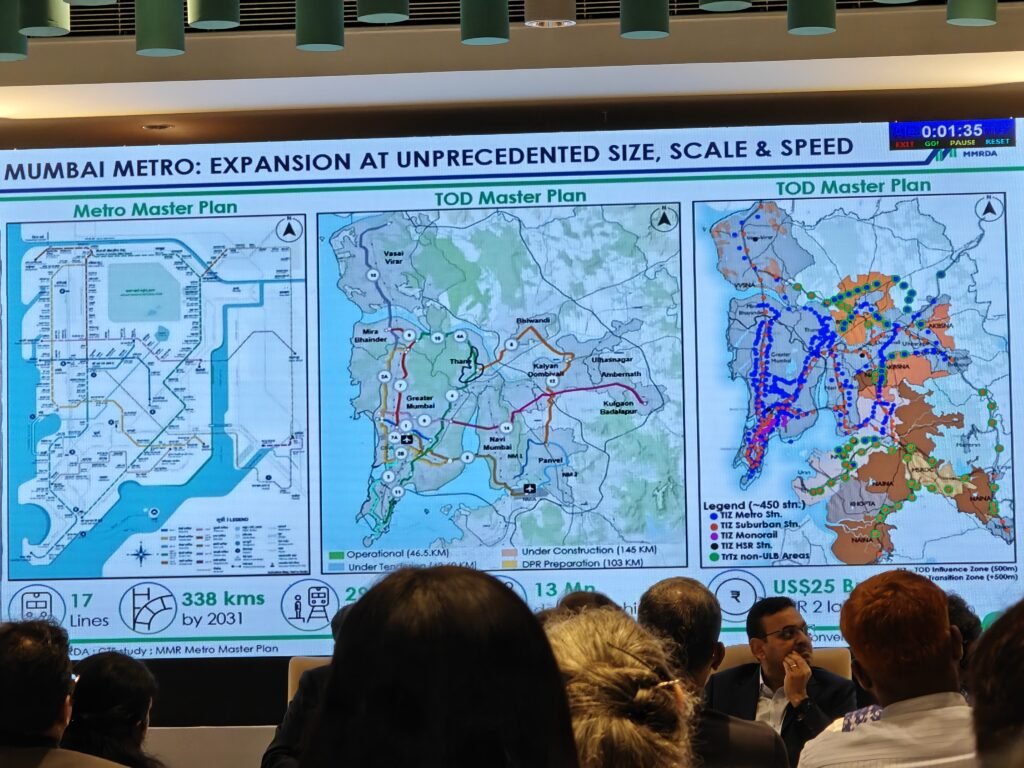
The breakout sessions reflected this orientation. The Transit-Oriented Development (TOD) and Regional Planning panel demonstrated how cities like Navi Mumbai and metros like Chennai and Mumbai are integrating land use, density, and mobility through digital tools, AI-driven analytics, and multimodal planning. International partners, particularly ADB, highlighted global evidence that compact, connected cities generate higher economic productivity with lower carbon footprints.
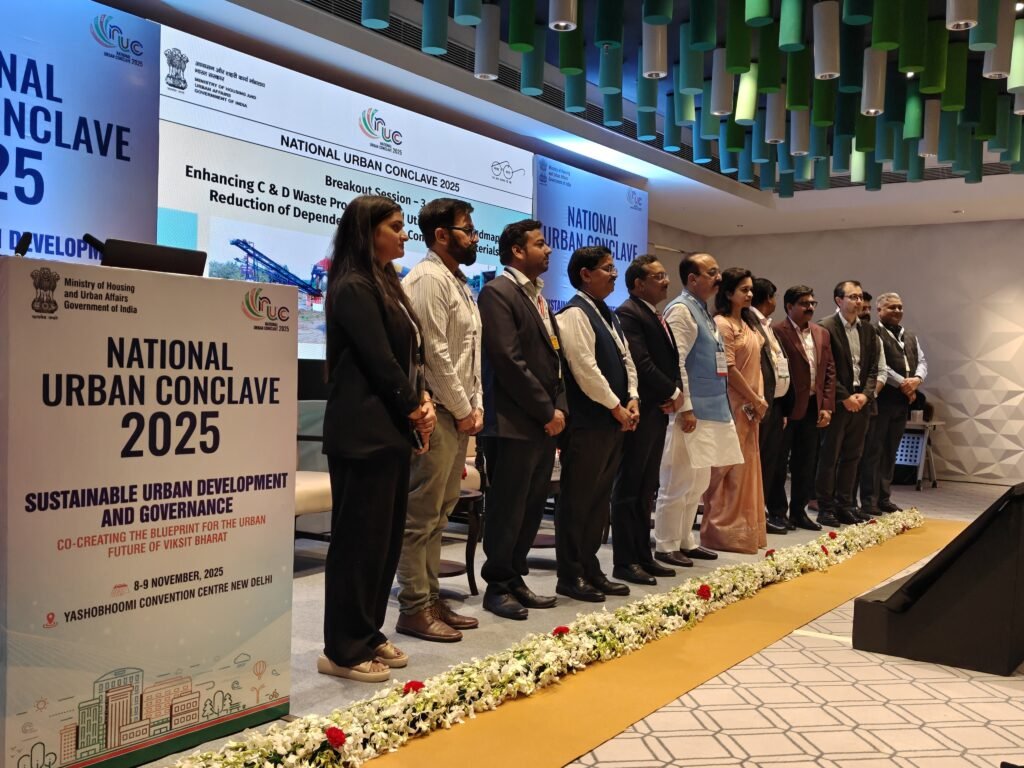
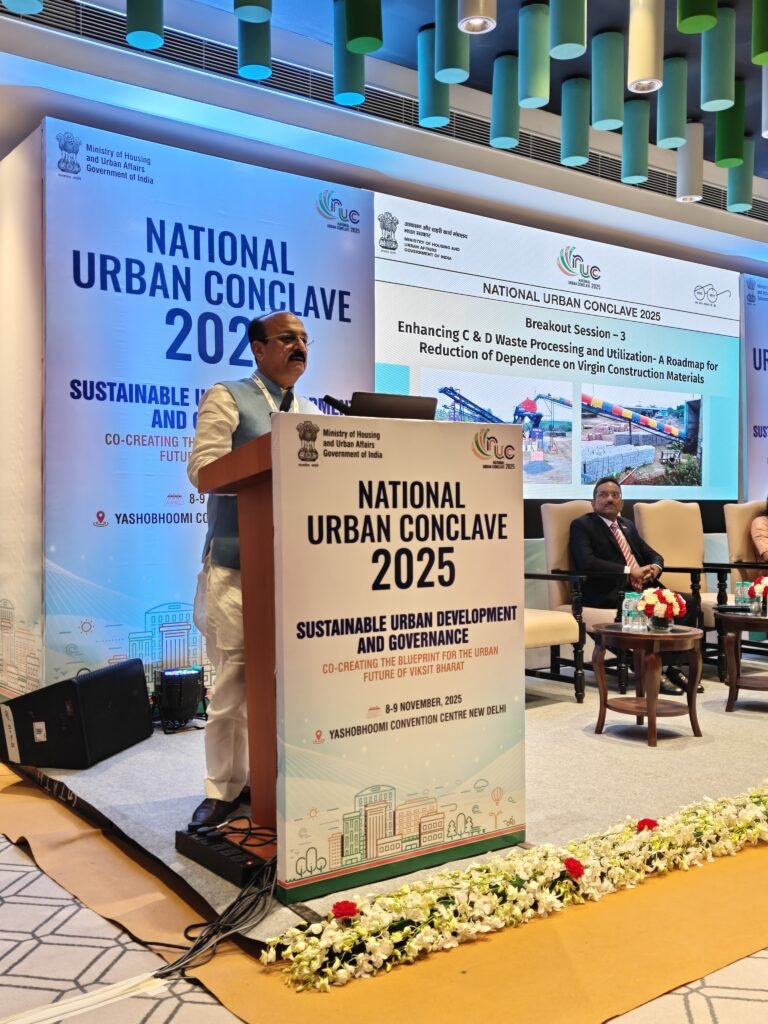
The Construction and Demolition (C&D) Waste session confronted India’s 150 million-tonne annual waste challenge head-on. Experts stressed mandatory recycled material use, incentives for industries near RDF plants, and integrating private construction agencies — not only municipal bodies — into the waste responsibility framework. The message was clear: circular economy is no longer an environmental choice but an economic necessity.
Discussions on urban livelihoods, governance, capacity building, and housing ecosystems reinforced the need for cities to be simultaneously job creators, service providers, and inclusive habitats. The Conclave recognised that India must add millions of affordable homes each year without compromising climate goals, mobility, or access to employment.
The valedictory session, led by Minister of State Tokhan Sahu, announced further institutional strengthening — MoUs with academic and training institutions, the launch of the IIRS Sankalan GIS App, and the establishment of the Centre for Public Policy on Housing and Habitat. These underline the transition from policy discussion to policy deployment.
In essence, the National Urban Conclave 2025 symbolised a decisive pivot in India’s urban journey. It offered more than ideas — it delivered a framework where technology, investment, governance reform, and citizen-centric planning work in synergy. As India prepares for BRICS Urban Forum 2026 and the Urban Tech Expo, the Conclave has positioned the country not only to manage its rapid urbanisation but to leverage it as a driver of national prosperity.