

Indian Railways’ recent reforms aimed at promoting rail-based transportation of bulk cement have received an encouraging response from the cement industry, with several manufacturers approaching the Container Corporation of India (CONCOR) to shift their logistics to rail.
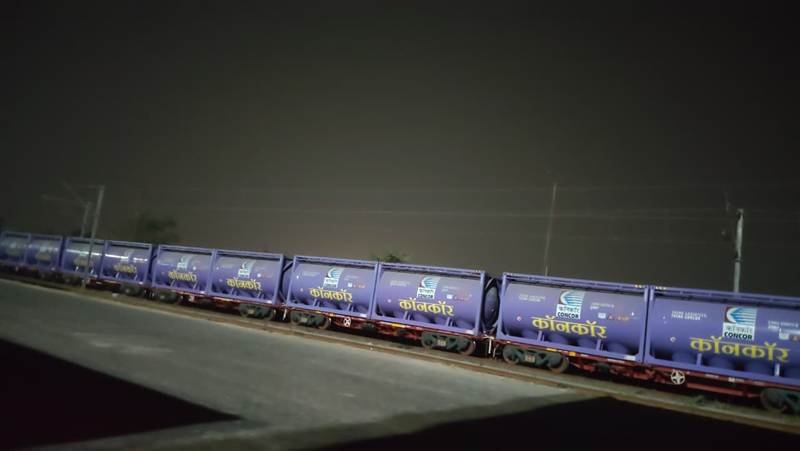
According to the Ministry of Railways, the initiative focuses on increasing bulk cement movement through tank containers, a shift that is expected to reduce logistics costs, fuel consumption, and carbon emissions while improving operational efficiency.
A key driver behind this positive response is the revision of freight charges. Indian Railways has reduced the Gross Tonne Kilometre (GTKM)–based charge from 90 paise to 85 paise per tonne per kilometre, along with additional discounts for empty return movement to the originating terminal. This pricing reform has made rail transportation of bulk cement significantly more competitive compared to road transport.
To support the growing demand, CONCOR is also facilitating the development of bulk cement silos at its terminals, enabling efficient handling and storage of cement in tank containers. The ministry noted that these measures are helping deepen logistics reforms and encouraging a modal shift from road to rail.
Officials highlighted that the new charging structure offers multiple advantages, including lower overall freight costs, faster turnaround times, and reduced handling losses when compared to traditional bagged cement transportation. The adoption of tank containers also improves plant-to-market efficiency and supports more sustainable freight movement. Indian Railways’ Reforms in Bul…
Earlier, bulk cement movement by rail was charged on a per-TEU basis with distance-based slabs and a gradually declining discount for empty return movement over five years. However, this system was found to be unattractive for cement producers and acted as a deterrent to shifting freight from road to rail. The revised GTKM-based pricing has been designed as a win-win solution for both Indian Railways and industry stakeholders.
The Ministry of Railways stated that the strong industry response indicates growing confidence in rail-based bulk logistics and aligns with broader goals of cost efficiency, infrastructure optimisation, and reduced environmental impact.
Also Read: Indian Railways Introduces Trucks-on-Trains Service to Cut Logistics Costs and Emissions