

India continues to strengthen its position as a global leader in sanitation, with remarkable progress under the Swachh Bharat Mission 2025 and complementary national programs. Marking World Toilet Day 2025, the country highlights a decade of transformation—from eliminating open defecation to building sustainable, community-driven waste and sanitation systems.
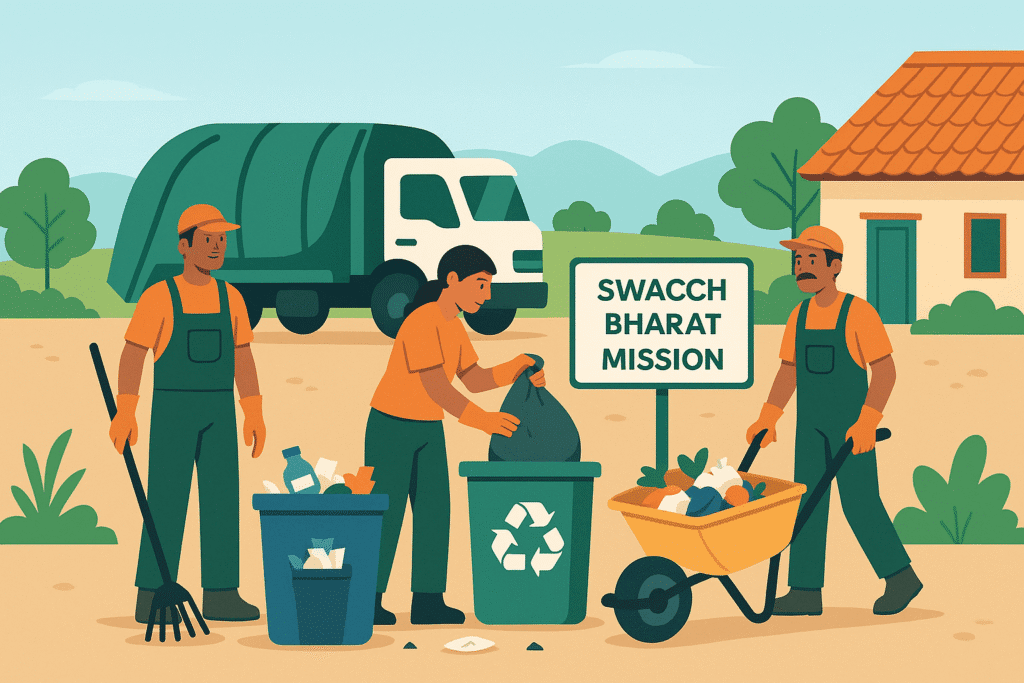
Massive Rise in ODF Plus Villages
India’s rural sanitation landscape has undergone a dramatic shift:
- 5.67 lakh ODF Plus villages — a 467% increase since 2022
- 4.85 lakh villages have achieved ODF Plus Model status
- Rural India was first declared Open Defecation Free in 2019
An ODF Plus village maintains its ODF status while ensuring effective solid and liquid waste management along with visual cleanliness. This includes three progressive levels: Aspiring, Rising, and Model villages.
Urban India Moves Ahead With ODF++, Massive Toilet Coverage
Urban centres continue to upgrade sanitation infrastructure:
- 4,692 cities are ODF
- 4,314 cities have achieved ODF+
- 1,973 cities have advanced to ODF++, where safe faecal sludge and sewage management is ensured
Toilet construction targets have surpassed mission goals:
- 108% achievement for Individual Household Latrines
- 125% achievement for Community & Public Toilets
The Backbone: Swachh Bharat Mission (2014–2025)
Launched in 2014, SBM has driven India’s sanitation shift with strong behavioural change, infrastructure creation, and community ownership.
Key outcomes:
- 300,000 fewer diarrhoeal deaths (WHO estimate)
- Household health expenses in ODF villages reduced by ₹50,000 annually
- Significant reduction in groundwater contamination
- 93% of women reported improved safety and dignity due to toilet access
SBM Phase II (2020 onwards) now focuses on sustaining ODF gains through solid & liquid waste management, aiming for ‘Sampoorn Swachhata’.
Supporting Missions: AMRUT & Jal Jeevan Mission
India’s sanitation success is strengthened by integrated water and sewage initiatives:
- AMRUT 2.0 (urban infrastructure):
- 890 sewerage/septage projects worth ₹34,447 crore
- 4,622 MLD new sewage treatment capacity created
- 6,964 MLD STP capacity approved for upcoming projects
- Jal Jeevan Mission ensures piped drinking water and supports sustained ODF outcomes in rural India.
Conclusion
India’s sanitation journey has evolved from building toilets to creating resilient, sustainable sanitation ecosystems. Through SBM, AMRUT and Jal Jeevan Mission, the country is advancing health, dignity, women’s safety, and environmental protection—aligning strongly with UN Sustainable Development Goal 6 (Clean Water & Sanitation).
As the nation celebrates World Toilet Day, India stands out as a global model of how political resolve and community participation can transform public health.
Source: PIB
Also Read: 17th GRIHA Summit 2025: Innovation, Climate Action & Excellence in Green Building