

For decades, the Sydney Fish Market has been a place of controlled chaos—early morning auctions, the clang of crates, the smell of salt and ice, and curious visitors weaving through working docks. Housed in a patchwork of aging warehouses at Pyrmont, it grew into one of Sydney’s most loved community and tourist destinations, despite its spatial limitations. Today, that chapter is coming to a close.
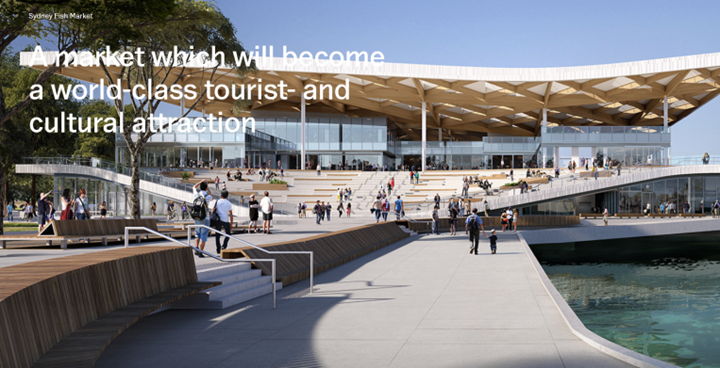
With the new Sydney Fish Market at Blackwattle Bay completed, Sydney stands on the brink of a transformation that is architectural, cultural, and deeply urban. When the market opens to the public on 19th January 2026, it will not simply reopen in a new building—it will redefine what a market can be in the 21st-century city.
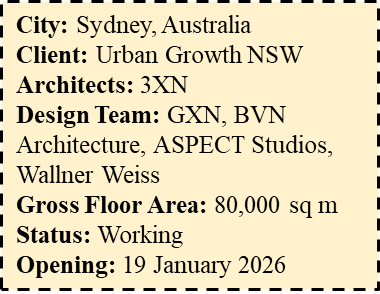
Designed by 3XN, alongside GXN, BVN Architecture, ASPECT Studios, and Wallner Weiss, the project is a bold attempt to turn essential infrastructure into a civic experience—one that balances the realities of a working fish market with the openness of a public waterfront destination.
A Market That Belongs to the City
Markets are among humanity’s oldest building types. Across cultures and centuries, they have served as places of trade, social exchange, and everyday spectacle. Drawing from this universal archetype, the new Sydney Fish Market reimagines the market not as an enclosed retail hall, but as a porous, open, and layered urban space.
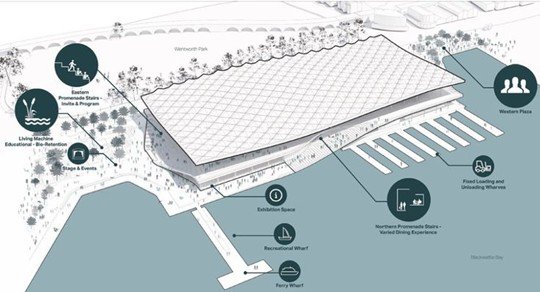
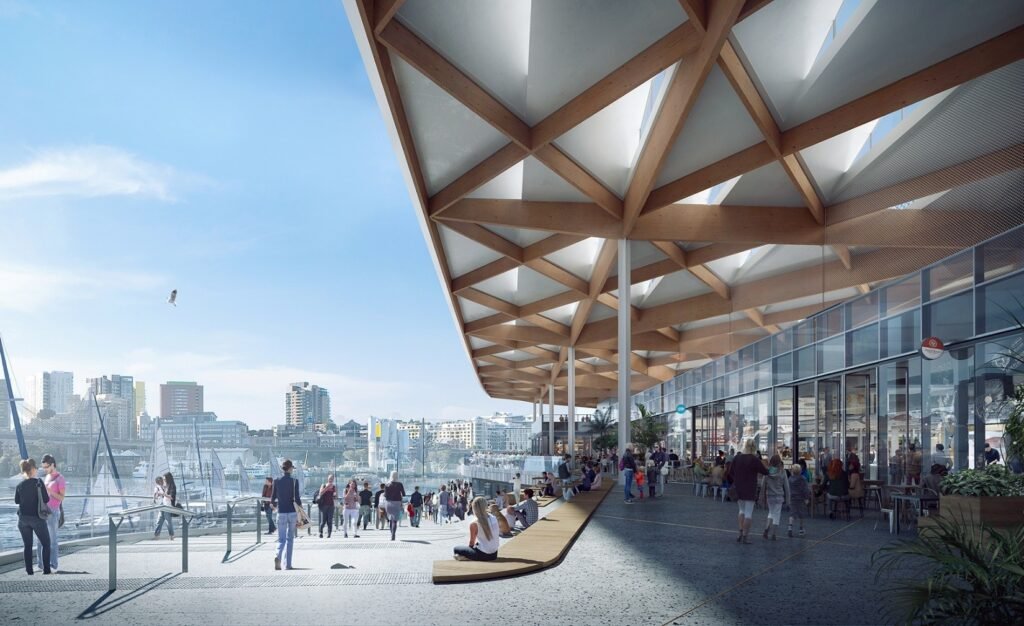
Set on a 3.6-hectare site at the head of Blackwattle Bay, the building acts as a hinge—linking the harbour edge with Wentworth Park and surrounding neighborhoods. What was once an industrial edge is now a place of movement, pause, and encounter, stitched into the city through plazas, promenades, and public terraces.
The Roof That Changes Everything
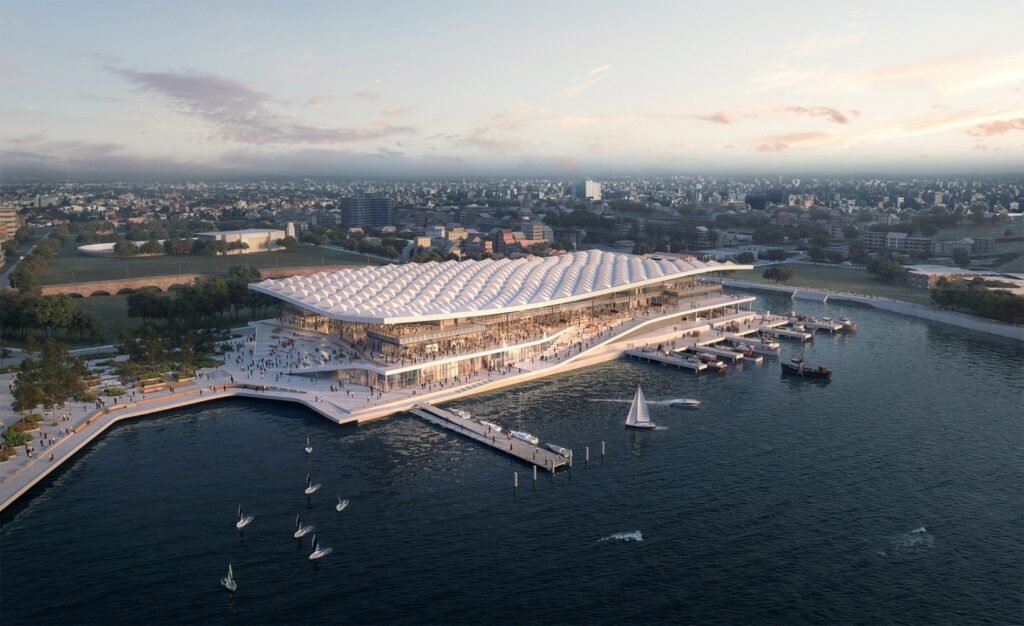
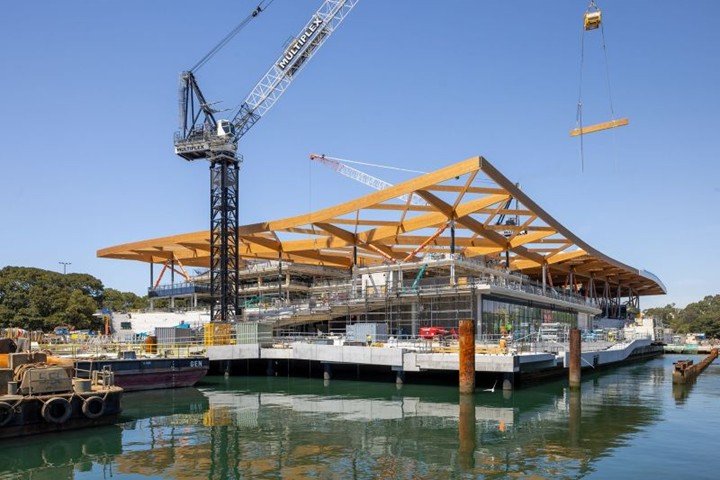
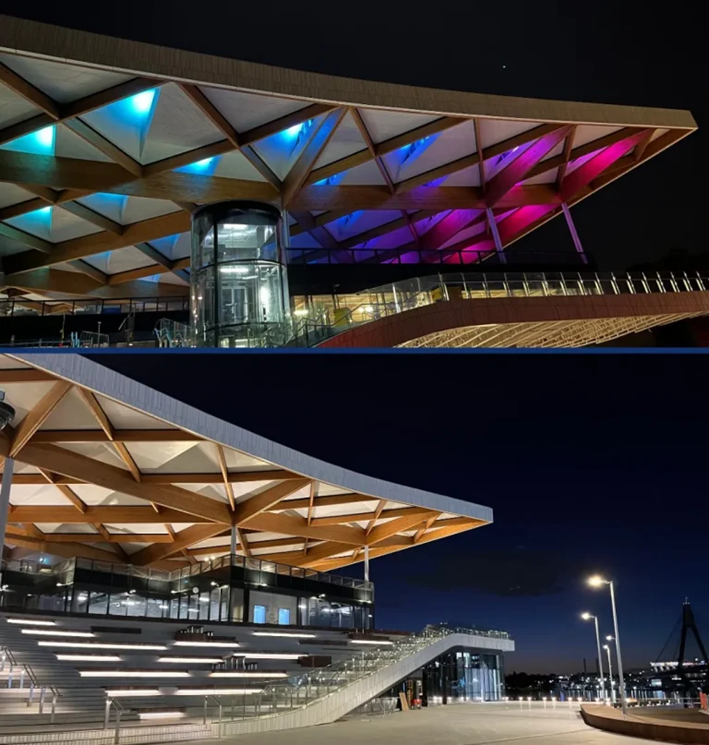
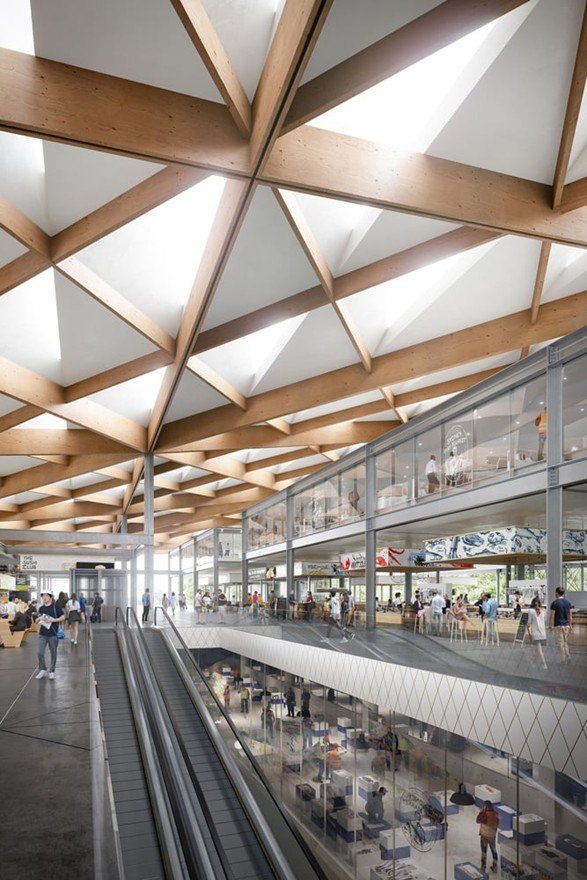
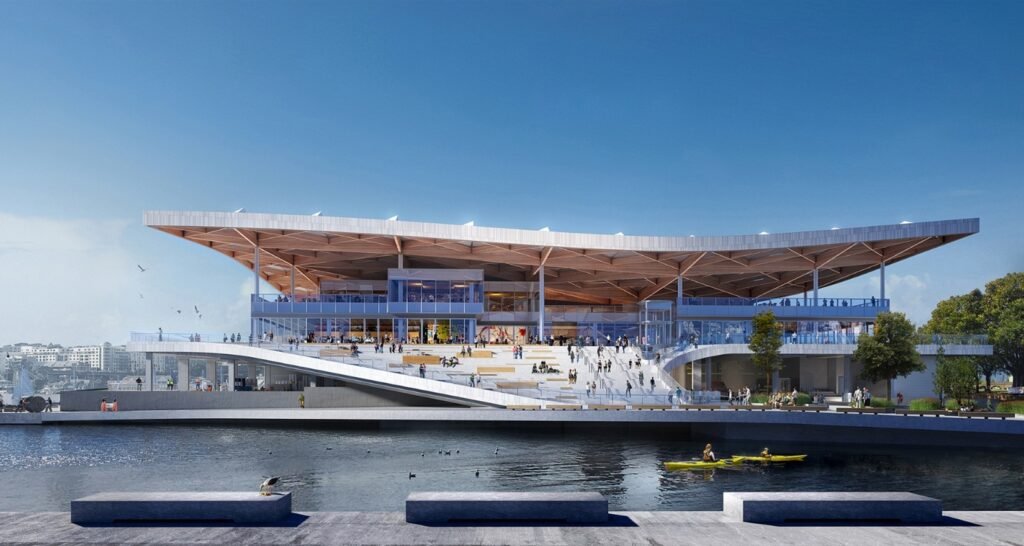
Long before visitors taste the seafood or explore the promenade, they encounter the building’s most defining feature: a vast, wave-like roof stretching nearly 200 m across the waterfront. Floating above the market halls, the roof instantly marks the building as a new Sydney icon.
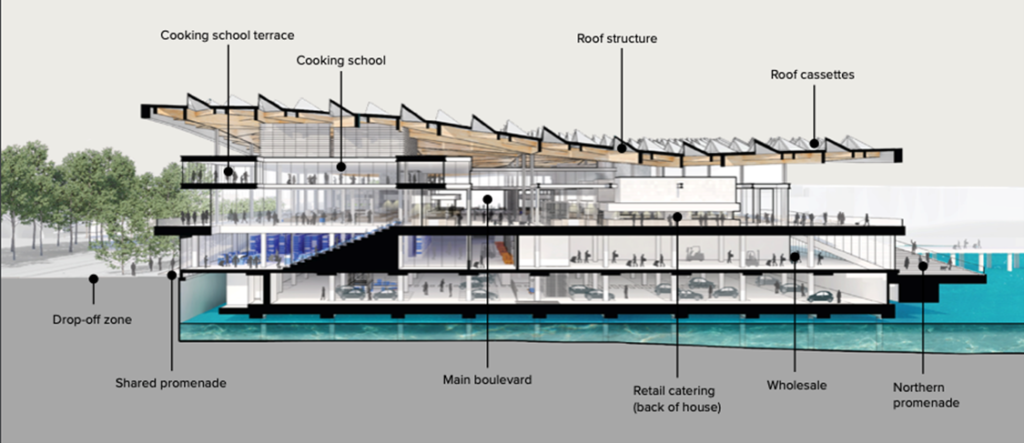
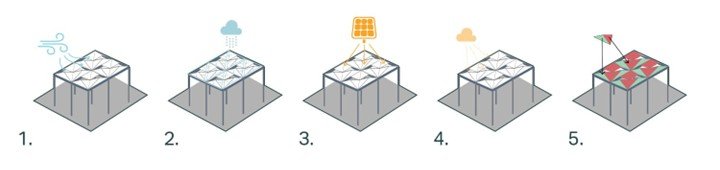
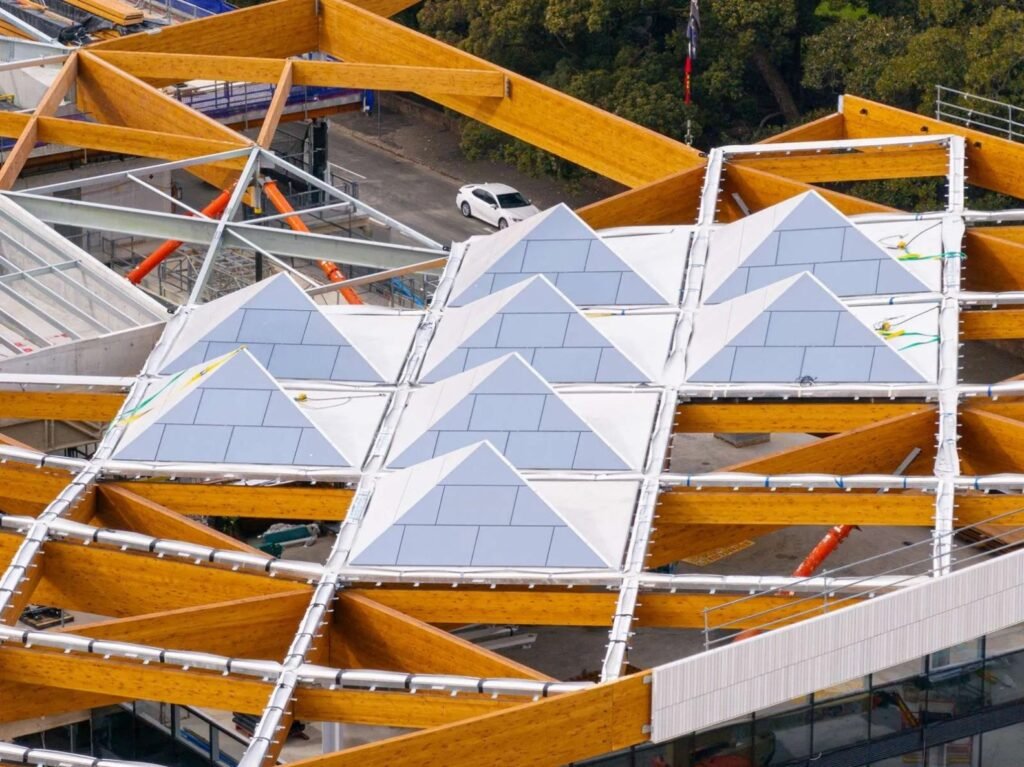
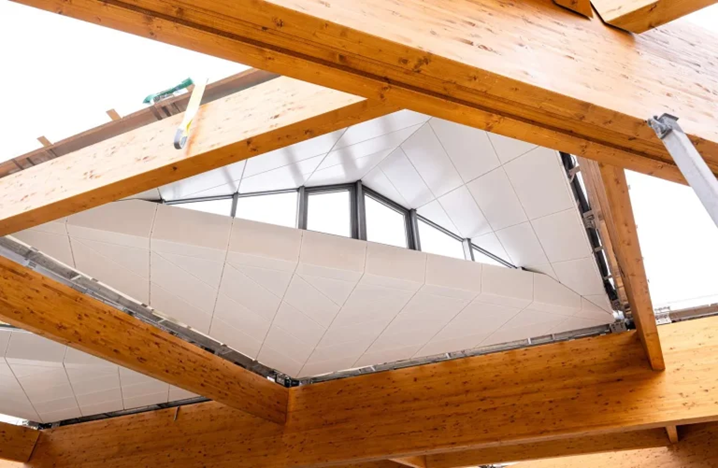
But this roof is not just a visual theatre. Constructed from timber beams and aluminium cassettes, it performs as an environmental system. More than 400 solar-panel-lined cassettes generate on-site energy, contributing to daily operational needs. Its reflective surfaces bounce daylight deep into the building, while its geometry shades interiors from the harsh Sydney sun. Rainwater is captured and reused for irrigation and amenities, making the roof an active participant in sustainability rather than a passive shell.
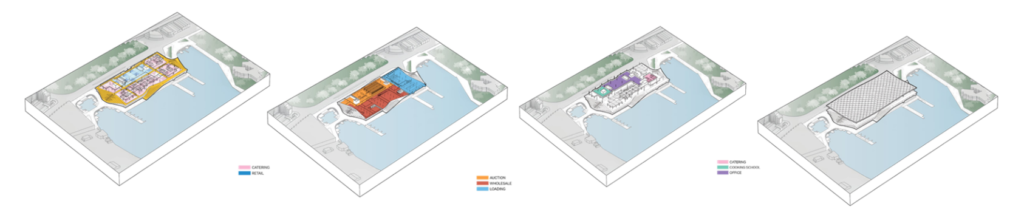
Rising and dipping in response to the functions below—higher over auction halls, lower over retail and dining—the roof becomes a direct architectural expression of how the market works.
Where Industry and the Public Finally Coexist
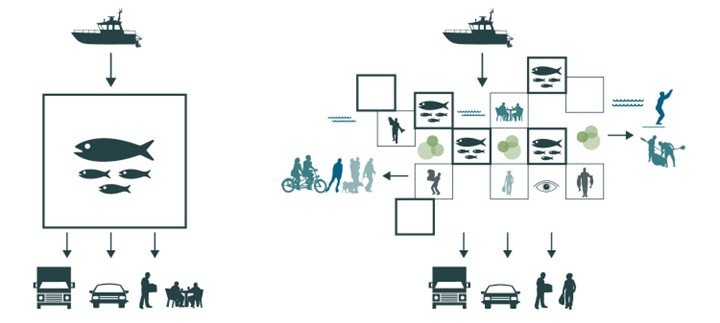
One of the greatest challenges of fish markets worldwide is the conflict between public curiosity and industrial efficiency. Visitors want to see the action; operators need uninterrupted workflows. Traditionally, one has come at the expense of the other.
Here, architecture resolves that conflict.
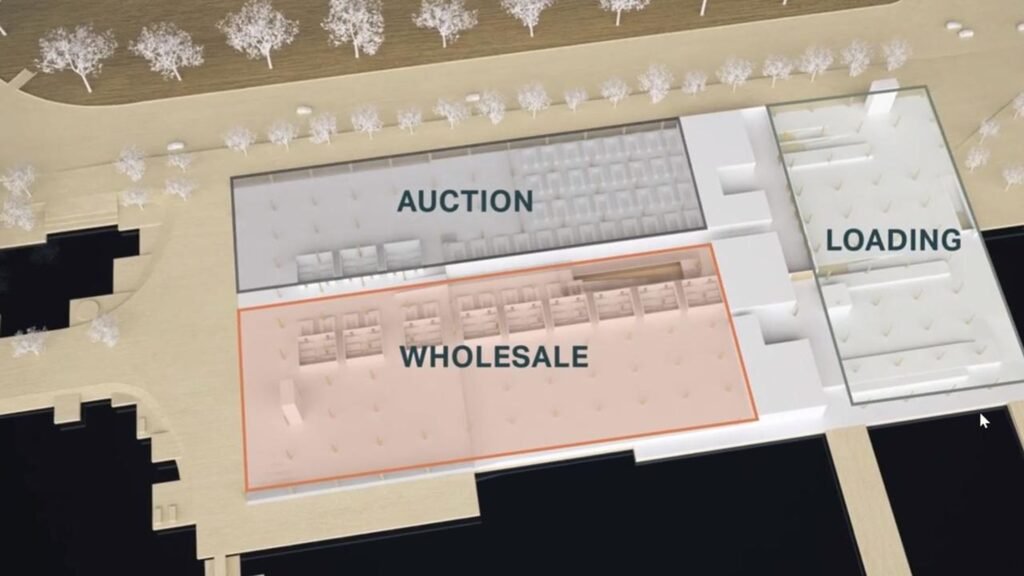
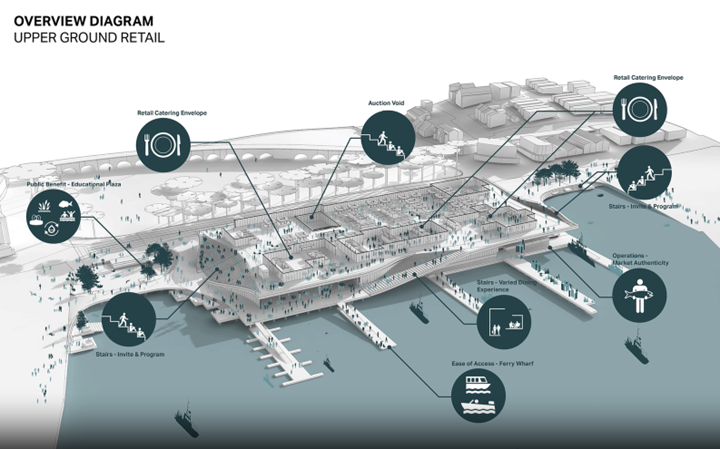
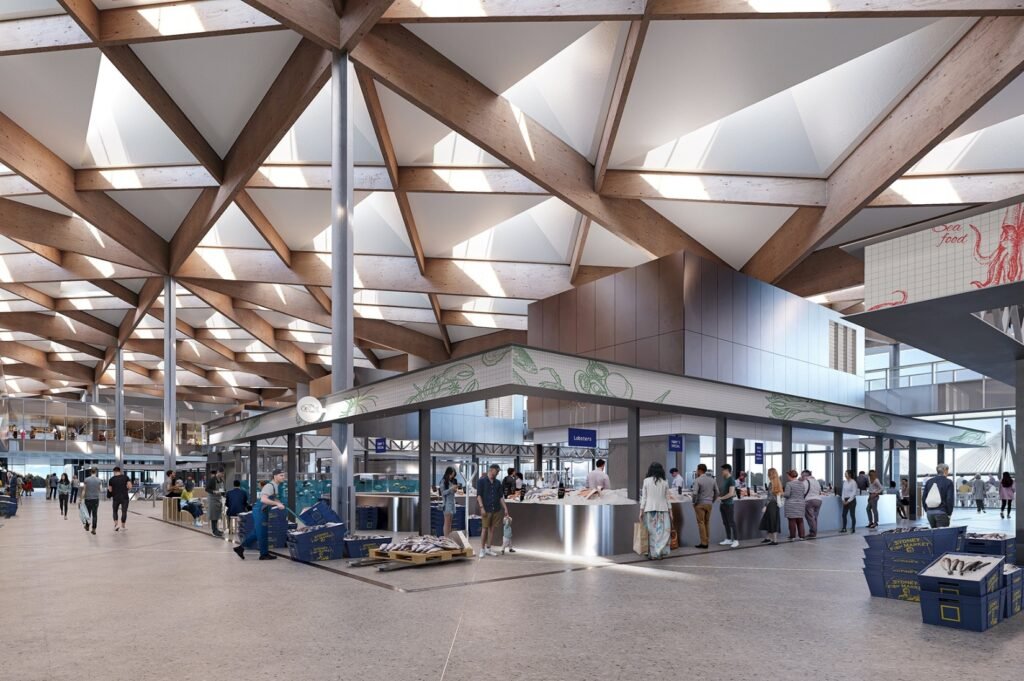
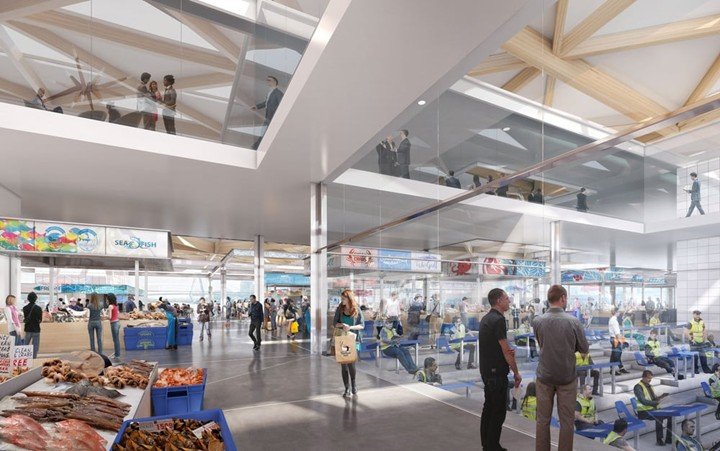
The ground level is dedicated entirely to operations—commercial wharves, fish landing, wholesale trading, and auctions—ensuring the seafood industry continues to function at full capacity. Above and around it, the public moves freely, observing the market in action through glazed façades, elevated walkways, and viewing platforms.
For the first time, Sydney’s seafood economy is made visible but protected, turning logistics into urban theatre without compromising efficiency.
A Bigger Market, Designed for People
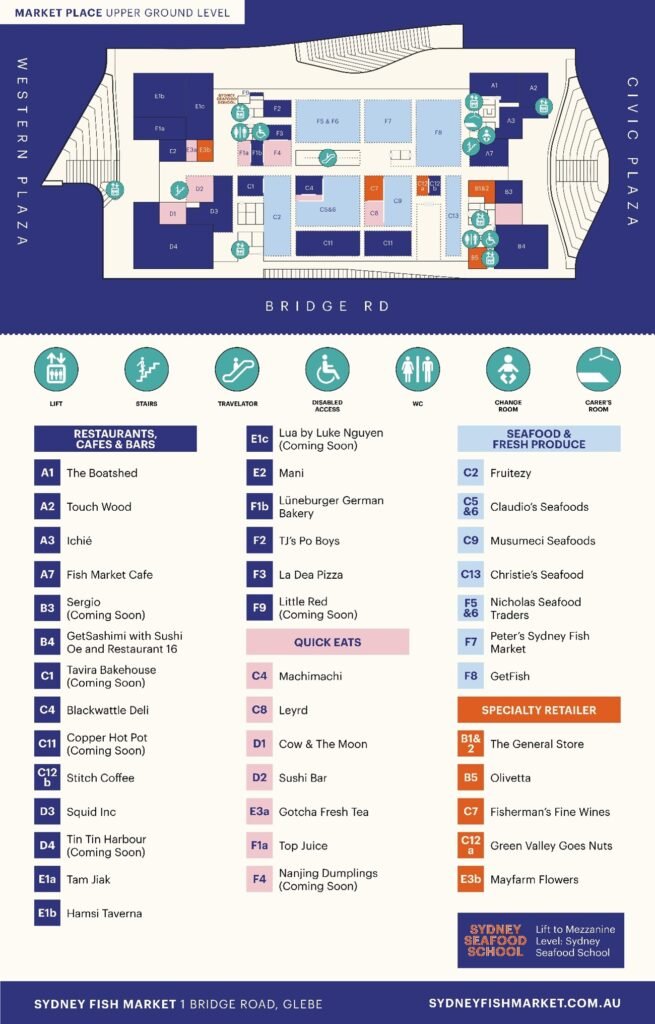
At 80,000 square m, the new market is approximately 20 percent larger than the existing facility, yet feels more human in scale. Designed to welcome over six million visitors annually, it will host more than 40 retailers, ranging from fresh seafood stalls to specialty food shops, cafés, and fine-dining restaurants.
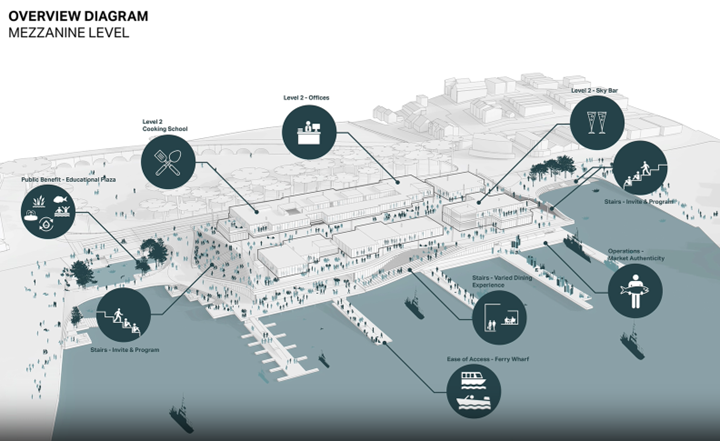
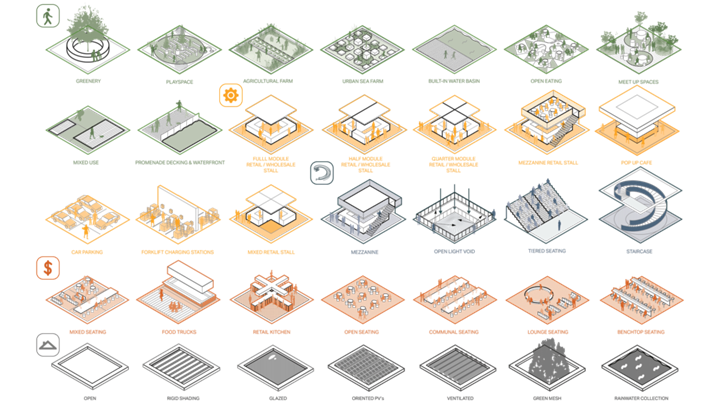
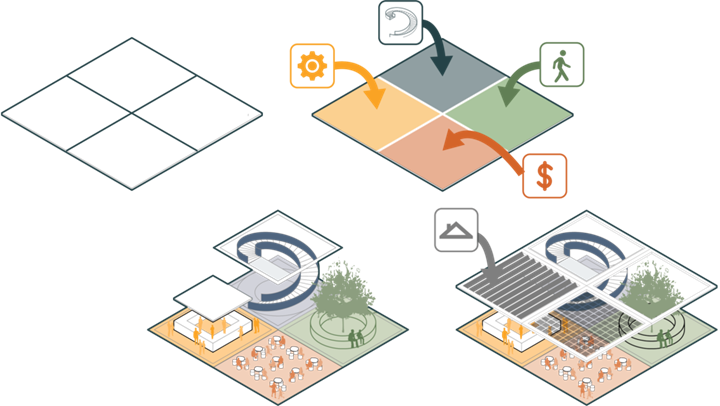
Almost all existing tenants are making the move, joined by over 20 new operators—ensuring continuity of character while expanding choice. The layout, circulation, and zoning of these spaces are carefully organised to maintain an intimate market atmosphere, as detailed in the official market map.
Wide staircases double as public seating, encouraging people to pause, eat, and look out over Blackwattle Bay. These steps blur the line between circulation and social space, reinforcing the idea that the market is as much about gathering as it is about buying.
Opening the Harbour to Everyone
Perhaps the project’s most lasting impact lies beyond the building itself. The redevelopment opens up previously inaccessible stretches of the harbour foreshore, delivering 6,000 square metres of new public open space and completing a 15-km continuous waterfront walk from Woolloomooloo to Rozelle Bay.
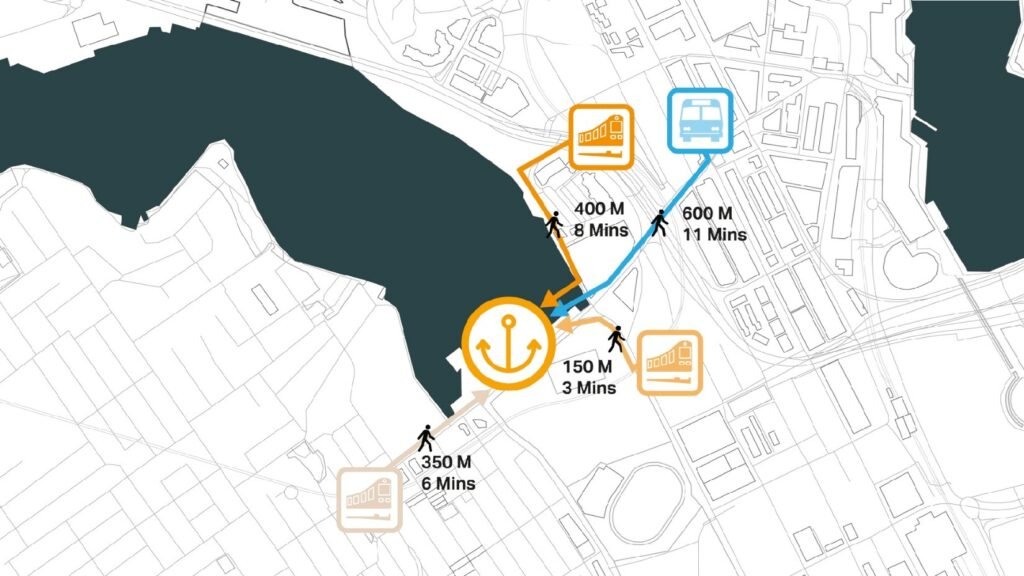
Pedestrians and cyclists move seamlessly through the site, supported by nearby light rail stops and a future ferry wharf. The market is no longer a destination you drive to—it is part of the city’s everyday movement system.
Landscape design introduces native planting and bio-filtration zones, forming a ‘green bridge’ that supports biodiversity while naturally filtering stormwater before it reaches the bay.
Sustainability That Works Behind the Scenes
Sustainability targets are ambitious: 50 percent reductions in energy use, water consumption, and waste compared to the old market. These goals are met through integrated systems—rainwater harvesting, greywater recycling, heat recovery from refrigeration, and passive cooling strategies that minimize reliance on mechanical air-conditioning.
Even waste is rethought. Industrial food waste is designed to be fully recycled, and packaging materials are reprocessed as part of a circular operational model.
An Ending, and a Beginning
As the new market prepares to open, Sydneysiders will gather one last time at the existing Pyrmont site for the iconic 36-hour Seafood Marathon, a fitting farewell to a place rich with memory.
Sydney Fish Market CEO Daniel Jarosch captures the moment simply:
“It’s the end of an era and the beginning of something extraordinary.”
When the doors open in January 2026, the new Sydney Fish Market will stand as more than a building. It will be a living system—where architecture, industry, sustainability, and public life meet beneath a floating roof on the edge of the harbour.
References
- 3XN Architects. (2024). Sydney Fish Market project description.
- BVN Architecture. (2024). Sydney Fish Market redevelopment.
- ASPECT Studios. (2024). Landscape and public realm strategy.
- Parametric Architecture. (2024). New Sydney Fish Market by 3XN.
- Gehl, J. (2010). Cities for people. Island Press.
- GXN Innovation. (2024). Sustainability strategies for Sydney Fish Market.
- UN-Habitat. (2020). Integrated infrastructure and public space.
- World Green Building Council. (2022). Mass timber and circular construction.
- Sydney Fish Market Pty Ltd. (n.d.).
Also Read: Heritage Streets of Amritsar: History, Urban Planning, and the Living Fabric of the Walled City