

Nehru Place is not merely a commercial district; it is one of Delhi’s most revealing urban experiments—where modernist planning ideals, informal economies, and everyday public life intersect in complex ways. Conceived in the late 1960s and developed largely through the 1970s and 1980s, Nehru Place was planned as Asia’s largest wholesale and retail centre for computers and electronics. Over time, it has grown into something far more layered: a dense, lived-in urban space that reflects the contradictions and resilience of Indian cities.
The Planned Vision: Modernism in Concrete
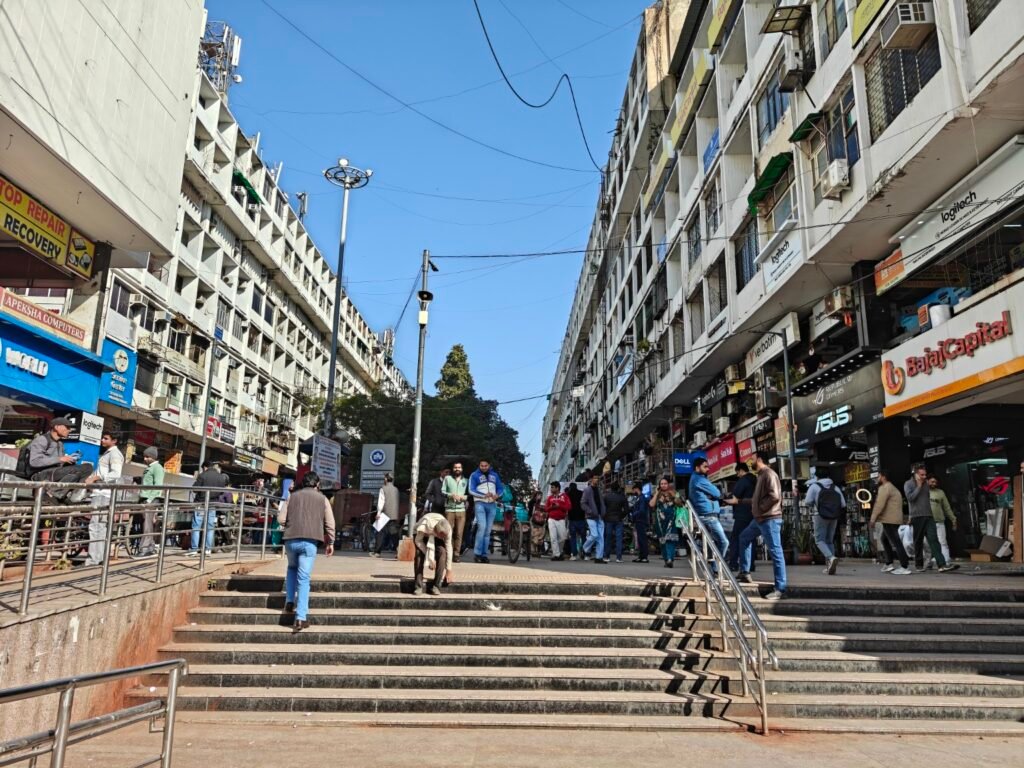
The planning of Nehru Place followed a distinctly modernist approach. Large slab blocks, repetitive façades, internal courtyards, and a strong separation between pedestrian and vehicular movement defined its original structure. Inspired by post-independence planning ideals, the complex was envisioned as a self-contained commercial district—efficient, rational, and ordered.
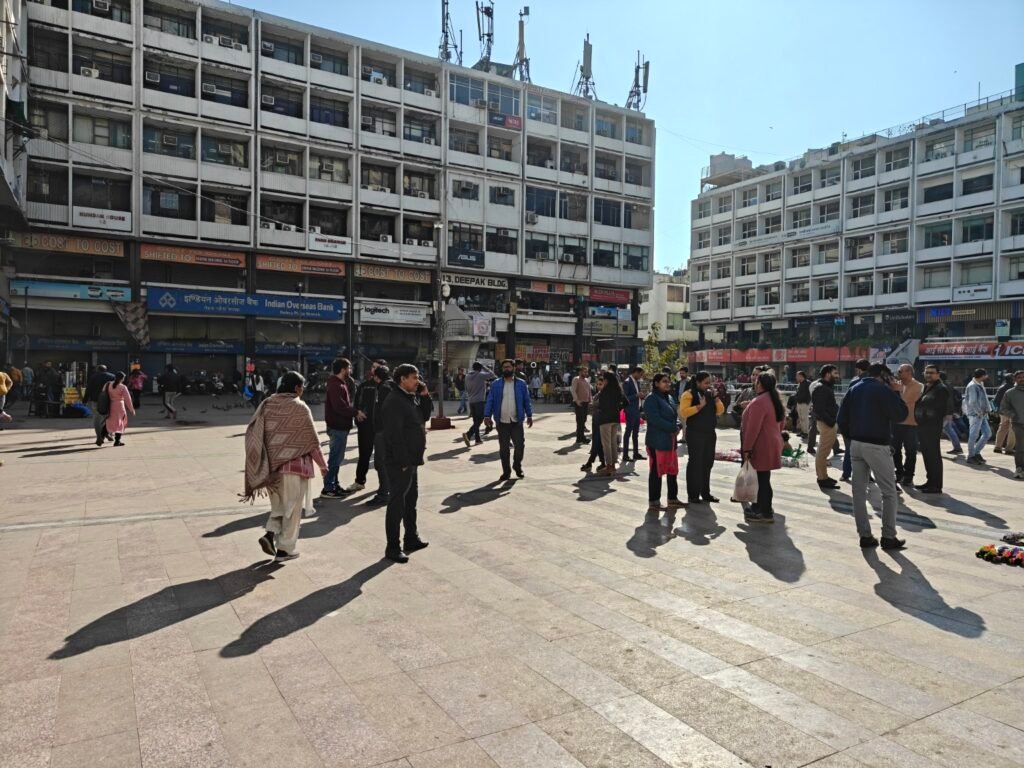
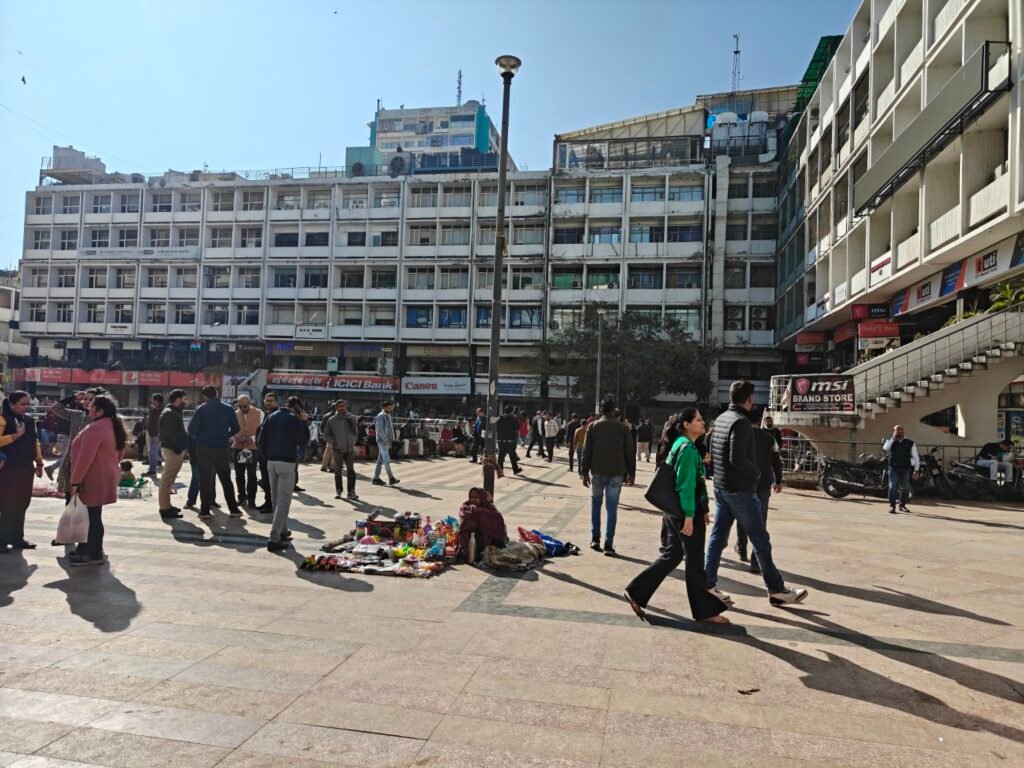
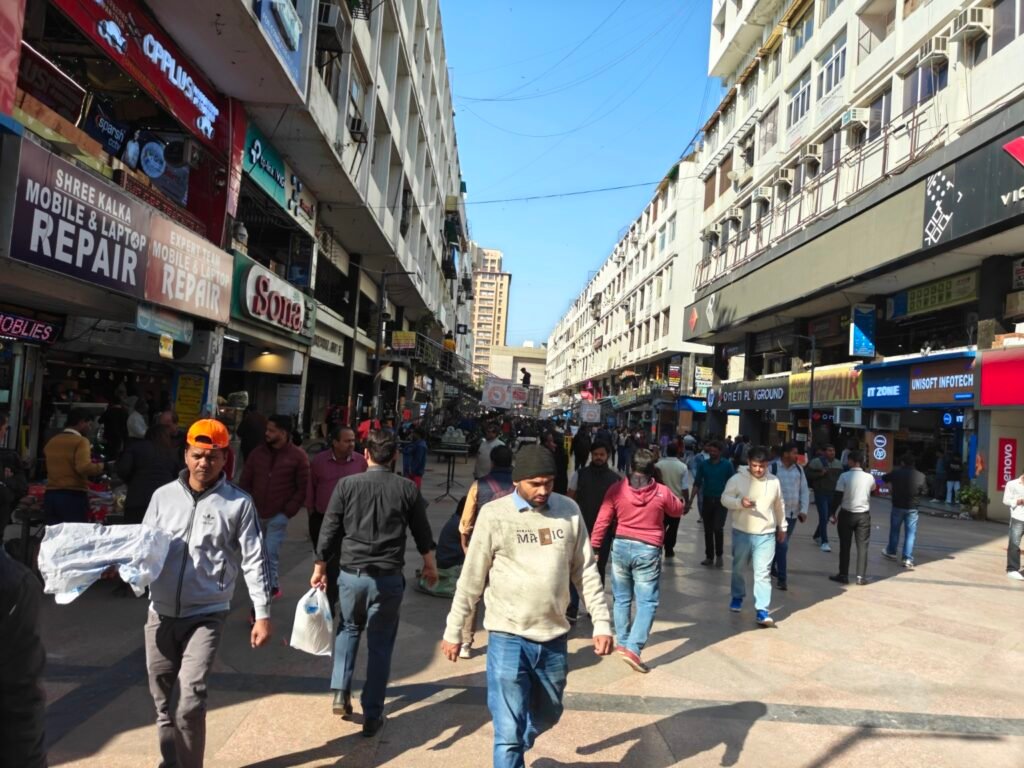
Wide pedestrian plazas, sunken courts, and elevated walkways were designed to manage crowds while offering shaded, climate-responsive movement in Delhi’s harsh summers. Buildings were inward-looking, prioritising function over architectural expression. In theory, Nehru Place was meant to be legible, systematic, and disciplined—an embodiment of planned urban commerce.
The Rise of the Informal City
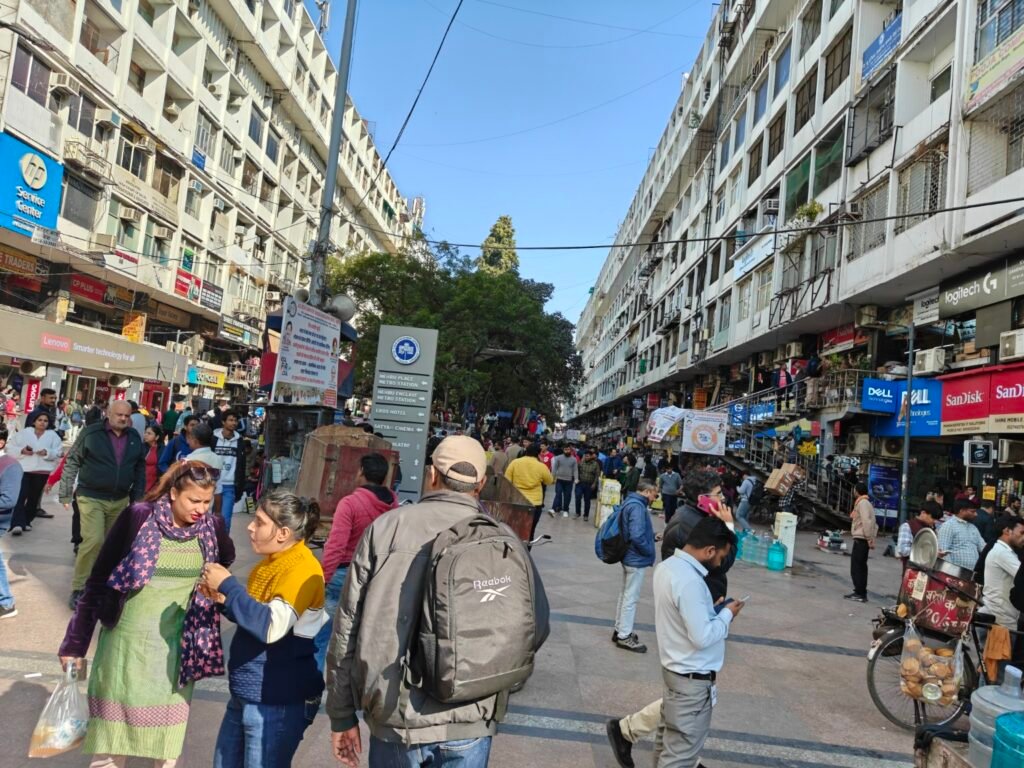
What truly shaped Nehru Place, however, was not just its architecture, but the informal layer that gradually colonised it. As the IT and electronics market boomed in the 1990s and early 2000s, the rigid modernist grid proved insufficient for the volume and diversity of users. Street vendors, repair technicians, hawkers, food sellers, and small traders appropriated every available edge—plazas, staircases, railings, and shaded corners.
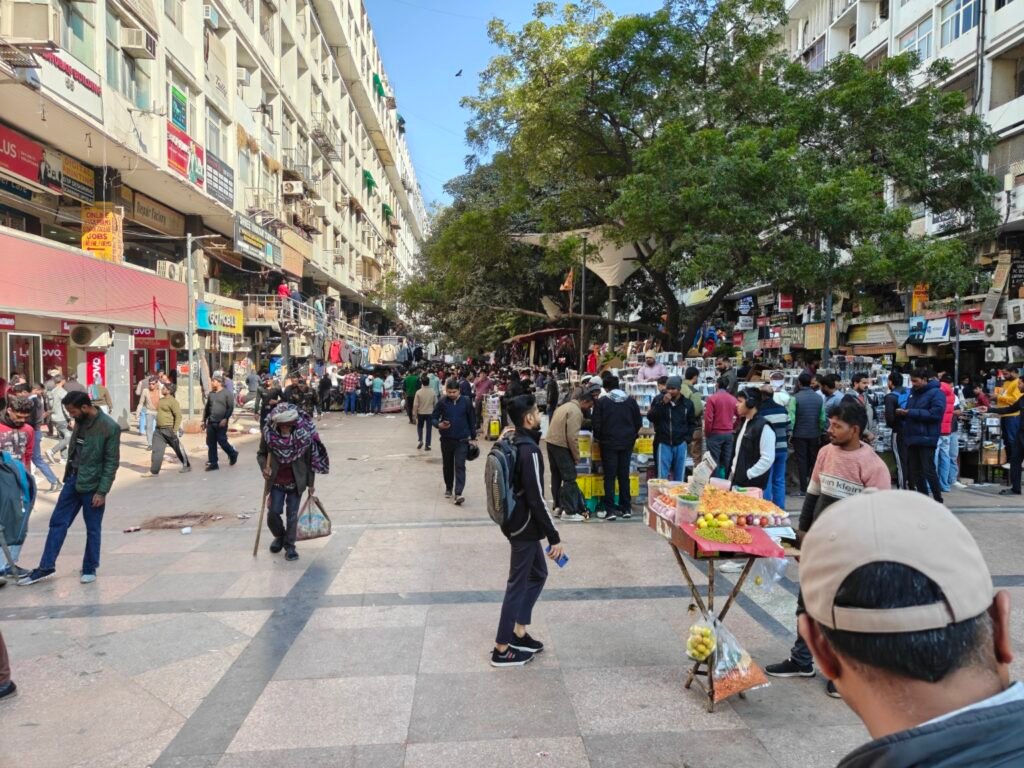
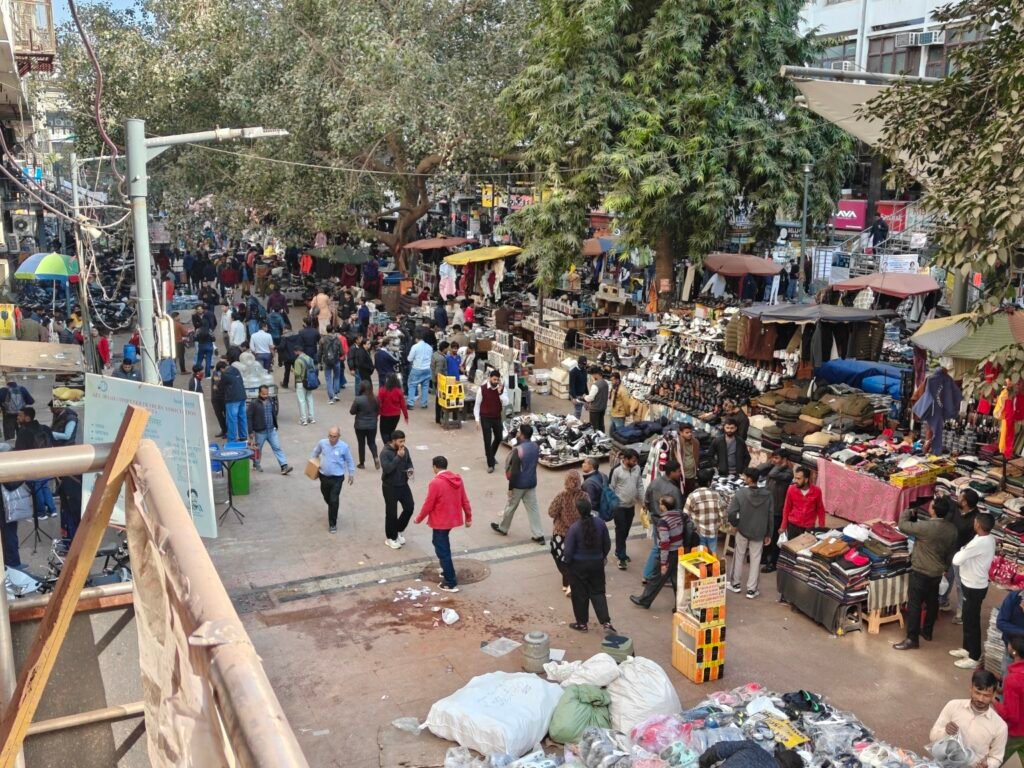
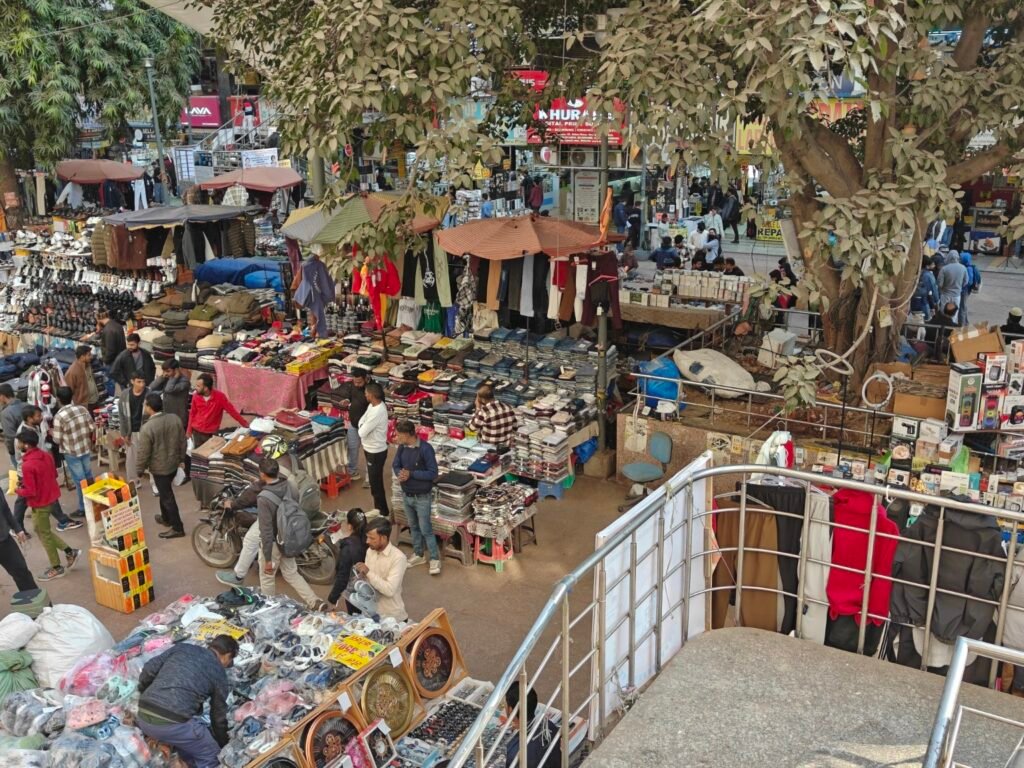
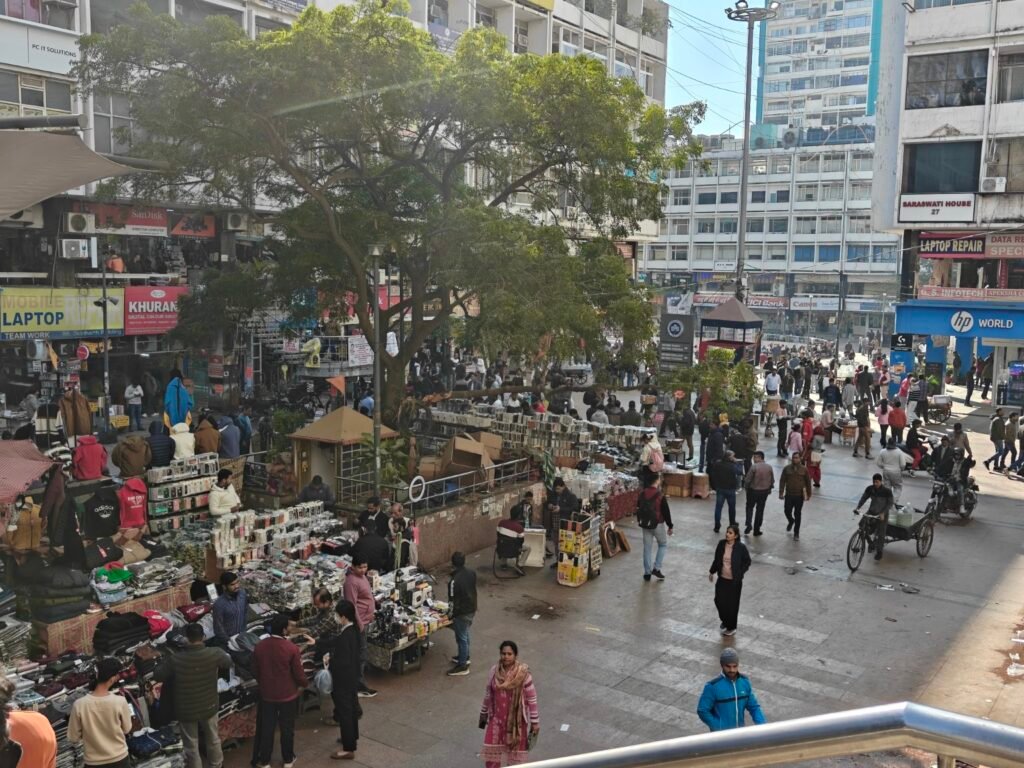
This informal economy did not weaken Nehru Place; it made it functional. Affordable services, quick repairs, and competitive pricing transformed it into a destination for students, professionals, small businesses, and institutions from across North India. The formal buildings became containers, while life spilled into the open spaces between them.
Public Space as Marketplace
Today, the photographs of Nehru Place tell a powerful story of urban intensity. The central plaza functions less as a civic square and more as a constantly shifting marketplace. Trees provide shade not just for pedestrians but for entire rows of temporary stalls. Steps double as seating, display areas, and informal meeting points. Movement is organic rather than linear—people stop, negotiate, browse, repair, wait, and observe.
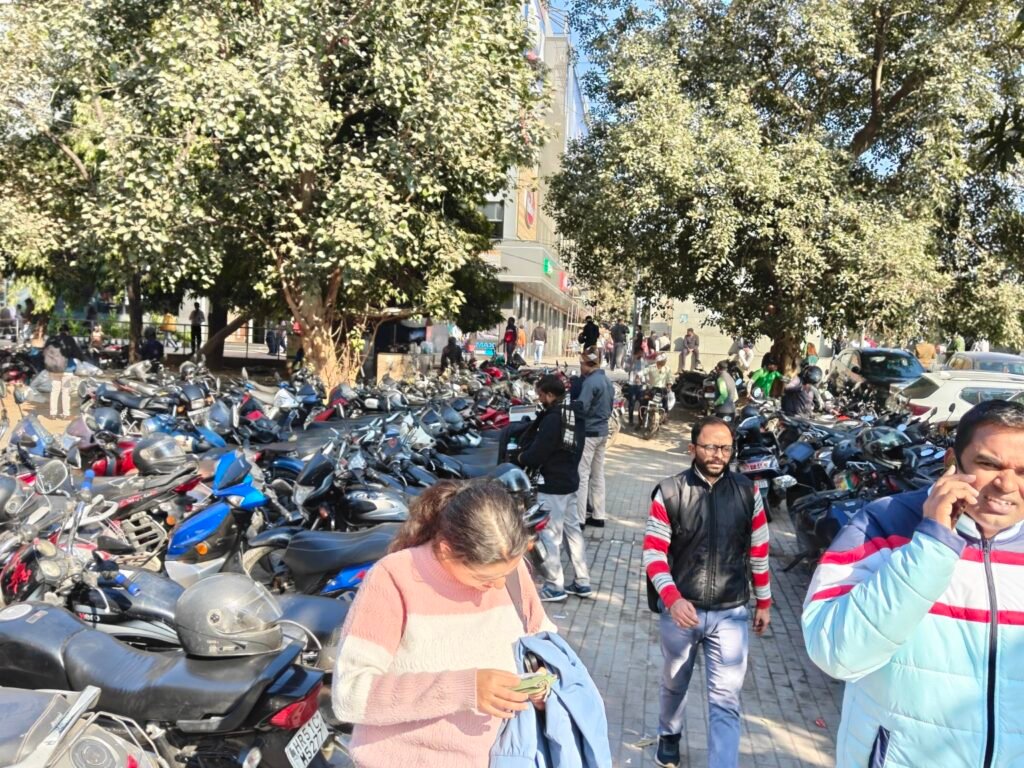
From an urban design perspective, Nehru Place demonstrates how public space in Indian cities is rarely “empty” or singular in use. It is layered, negotiated, and adaptive. The same space supports commerce, circulation, social interaction, and survival economies simultaneously.
Architecture Under Pressure
The original buildings of Nehru Place—once symbols of modern commerce—now show visible signs of strain. Aging infrastructure, ad-hoc signage, external air-conditioning units, exposed wiring, and uneven maintenance reflect decades of intense use. Yet, this apparent disorder also signals relevance. These buildings are not obsolete; they are overworked.

There is a clear tension between regulation and reality. Periodic redevelopment proposals aim to “clean up” Nehru Place, often focusing on aesthetics and order. The risk lies in erasing the very informality that sustains its economic and social vibrancy. Urban renewal here cannot be cosmetic; it must be inclusive and incremental.
Nehru Place Today: A Living Urban Laboratory
In its present form, Nehru Place operates as a living laboratory for urban designers and planners. It raises critical questions:
- Can modernist commercial districts adapt to informal urbanism without losing character?
- How do we upgrade infrastructure without displacing livelihoods?
- What does inclusive public space look like in a high-density commercial zone?
Nehru Place’s success lies not in perfection, but in accommodation. It accommodates people, economies, and behaviours that were never part of the original drawings. Its plazas are imperfect yet active, chaotic yet legible to those who use them daily.
Editorial Reflection
As an urban designer, one cannot look at Nehru Place only through the lens of decay or congestion. It is a reminder that cities are not static objects—they are processes. As an editor, Nehru Place deserves to be documented not as a problem to be solved, but as a condition to be understood.
Its future should not aim to replace the informal with the formal, but to design frameworks where both can coexist safely and with dignity. Nehru Place, in many ways, mirrors Delhi itself—planned, improvised, overcrowded, resilient, and deeply human. In acknowledging its layered reality, we acknowledge the true nature of Indian urbanism.
Also Read: One Space, Every Issue: What a Small Urban Space Teaches Us in 2026