

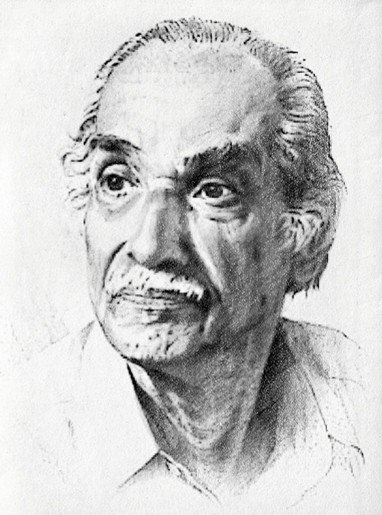
The period immediately following Indian Independence in 1947 demanded an architecture capable of symbolizing national confidence while pragmatically supporting rapid socio-economic development. In this formative era, architecture was no longer confined to aesthetic expression; it became an instrument of governance, scientific progress, education, and industrial growth. Achyut Purushottam Kanvinde (1916–2002) emerged as one of the most significant architects responding to this demand. His work exemplifies a disciplined modernism that sought to reconcile international architectural ideals with the realities of the Indian climate, economy, and society. Rather than monumental symbolism, Kanvinde’s buildings express quiet authority through rational planning, material honesty, and functional efficiency, establishing a lasting architectural language for India’s public institutions.
Early Life, Artistic Background, and Educational Formation
Achyut Kanvinde was born on 9 February 1916 in Achra, Maharashtra, into a family with artistic inclinations; his father was a painter, which instilled in him an early sensitivity toward form, composition, and observation. He received his formal architectural training at Sir J.J. College of Architecture, Bombay, graduating in 1942 at a time when architectural education in India was still largely influenced by colonial pedagogies. This early grounding provided him with technical rigor but left limited exposure to emerging global architectural movements.
Recognizing the need for modern expertise in the post-war period, the Government of India selected Kanvinde for advanced education at the Harvard Graduate School of Design, where he studied under Walter Gropius, founder of the Bauhaus School. At Harvard, Kanvinde was exposed to modernist philosophy emphasizing functional determinism, standardization, modular planning, and the ethical responsibility of architecture toward society. This experience was transformative, equipping him with a rational and systems-oriented approach that would later define his professional career
Return to India and Role within Government Institutions
Kanvinde returned to India in 1947—the same year as Independence—and joined the Council of Scientific and Industrial Research (CSIR) as Chief Architect. This position placed him at the forefront of India’s scientific infrastructure development. Unlike private practice, working within CSIR demanded architectural solutions that were economical, repeatable, efficient, and future-oriented, characteristics that deeply shaped Kanvinde’s design approach. His government role also reinforced his belief that architecture must serve collective needs rather than individual expression. Buildings designed under CSIR were conceived as tools to support scientific inquiry and national development, and this utilitarian ethos remained central to his work throughout his career.
Architectural Philosophy: Rationalism, Function, and Climate
Kanvinde’s architectural philosophy can be described as contextual rationalism. He believed that architecture should emerge logically from function, structure, climate, and material constraints. Formal expression was never pursued independently; instead, form was the outcome of rational decision-making. This philosophy aligns closely with Bauhaus principles but is distinctly Indian in its climatic adaptation.
Kanvinde rejected superficial ornamentation and symbolic excess, arguing that architectural meaning must arise from spatial clarity and use. His frequent use of exposed concrete and brick reflects a commitment to material honesty, durability, and economy. However, his buildings avoid harshness through careful modulation of light, scale, and movement, ensuring that functional rigor does not compromise human comfort.
Institutional and Educational Architecture
IIT Kanpur: A Model Academic Landscape
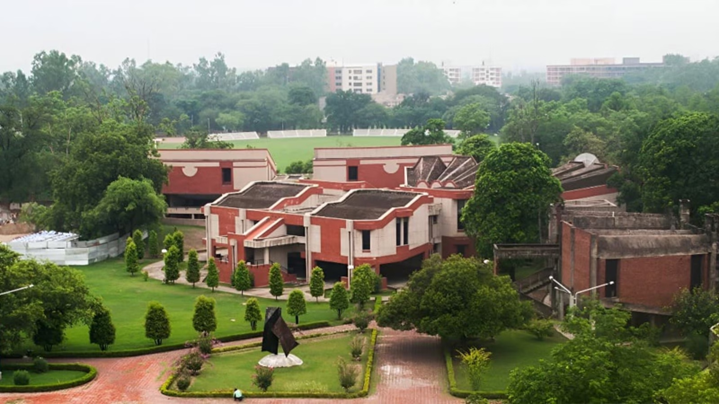
The Indian Institute of Technology, Kanpur, is widely regarded as Kanvinde’s most comprehensive architectural achievement. Designed as an integrated campus rather than a collection of buildings, IIT Kanpur demonstrates its mastery of large-scale planning. The campus layout reflects functional zoning, pedestrian prioritization, and landscape integration, creating an environment conducive to learning and research.
Buildings are low-rise, arranged around courtyards and green spaces that mitigate heat and encourage social interaction. The restrained architectural language reinforces the primacy of academic activity over architectural spectacle, embodying Kanvinde’s belief that institutional architecture must support intellectual engagement rather than dominate it.
IISc Hostels and Academic Housing
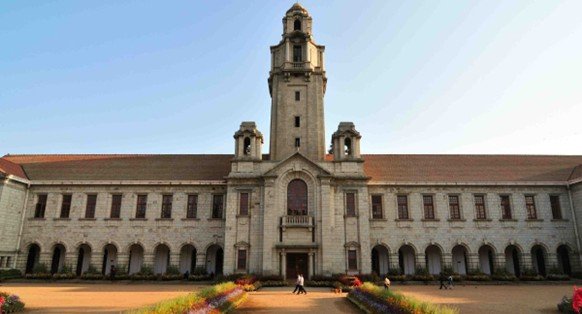
Kanvinde’s hostel designs at the Indian Institute of Science, Bengaluru, illustrate his attention to everyday life and human comfort. These buildings incorporate verandahs, shaded corridors, and landscaped courts that enhance ventilation and social interaction. The architecture responds sensitively to climate while fostering community living, reflecting Kanvinde’s belief that architecture must address psychological and social needs alongside functional requirements.
Scientific and Research Architecture
Physical Research Laboratory, Ahmedabad
The Physical Research Laboratory represents Kanvinde’s disciplined approach to scientific architecture. Designed to accommodate specialized research functions, the building emphasizes modularity, flexibility, and controlled internal environments. The external form remains understated, reinforcing the seriousness and precision associated with scientific inquiry.
Kanvinde’s foresight in allowing for expansion and adaptation reflects his understanding of research institutions as evolving entities rather than static monuments.
Also Read: Sir Patrick Geddes: The Thinker Who Reimagined How Cities Grow
Industrial Architecture and the White Revolution- Dudhsagar Dairy, Mehsana
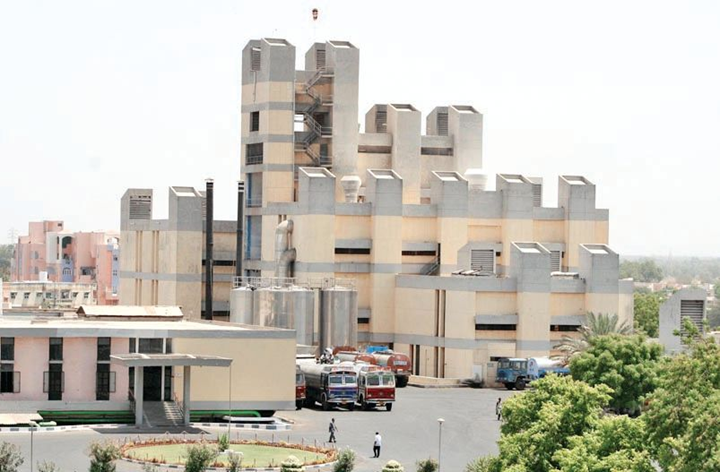
The Dudhsagar Dairy Complex stands as a landmark in Indian industrial architecture. Designed during the White Revolution, the building translates production processes directly into architectural form. Circulation paths, structural spans, and spatial sequencing are all dictated by operational requirements, resulting in a powerful expression of functional architecture.
The exposed concrete structure conveys permanence and efficiency, symbolizing India’s commitment to self-reliance and cooperative development.
Religious and Cultural Architecture- ISKCON Temple, New Delhi
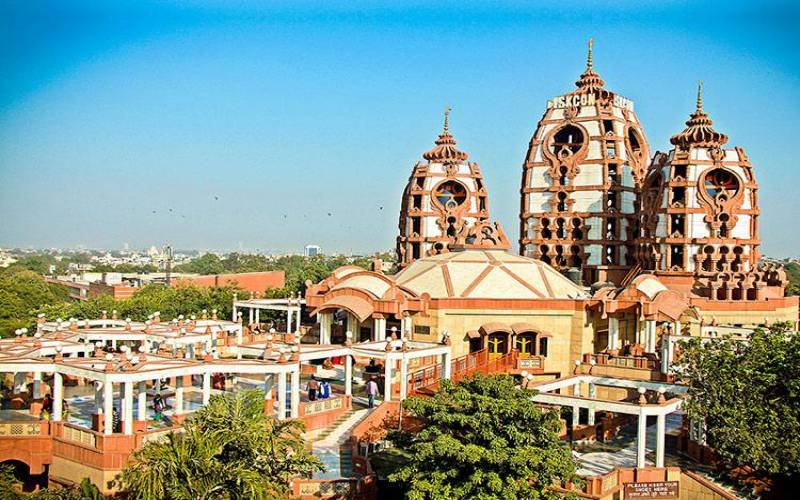
Kanvinde’s ISKCON Temple exemplifies his ability to reinterpret traditional typologies through modern architecture. While the temple retains axial planning and symbolic hierarchy, it employs modern materials and abstract forms. The resulting space is spiritual without being ornamental, demonstrating Kanvinde’s belief that tradition can be expressed through contemporary architectural language
Housing, Social Responsibility, and Ethics
Kanvinde’s housing projects reflect a deep commitment to social responsibility. Whether designing institutional housing or low-income schemes, he prioritized light, ventilation, economy, and the dignity of living. His housing designs demonstrate that architectural quality need not be compromised by budgetary constraints, reinforcing his ethical stance on architecture’s social role.
Recognition, Influence, and Architectural Legacy
Kanvinde was awarded the Padma Shri (1974) by the Government of India and served as President of the Indian Institute of Architects, among other honors. However, his true legacy lies in shaping India’s institutional architectural culture. Through his buildings and professional leadership, he established a model of architecture that was rational, ethical, and contextually grounded, influencing generations of architects and planners.
Relevance in Contemporary Discourse
Achyut P. Kanvinde’s work offers enduring lessons in an era facing a climate crisis and rapid urbanization. His emphasis on functional clarity, climatic responsiveness, adaptability, and social purpose aligns closely with contemporary sustainability discourse. His architecture demonstrates that modernism, when rooted in context and ethics, can achieve timeless relevance.
Also Read: Sir Edwin Lutyens: Architect of Imperial Grandeur and Timeless Urban Design
REFERRENCES
Architexturez South Asia Archive – Achyut P. Kanvinde Profi le
Council of Scientifi c & Industrial Research (CSIR) Institutional Records
IIT Kanpur Campus Planning Archives
Wikipedia: Achyut P. Kanvinde; Dudhsagar Dairy; Darpana Academy
Publications on Modern Architecture in India (post-Independence period)
Indian Institute of Architects historical records