
Event Details
Dates: 2–13 March 2026
Venue: Travancore Palace
Theme: Celebrating Tribal Arts, Culture and Expression
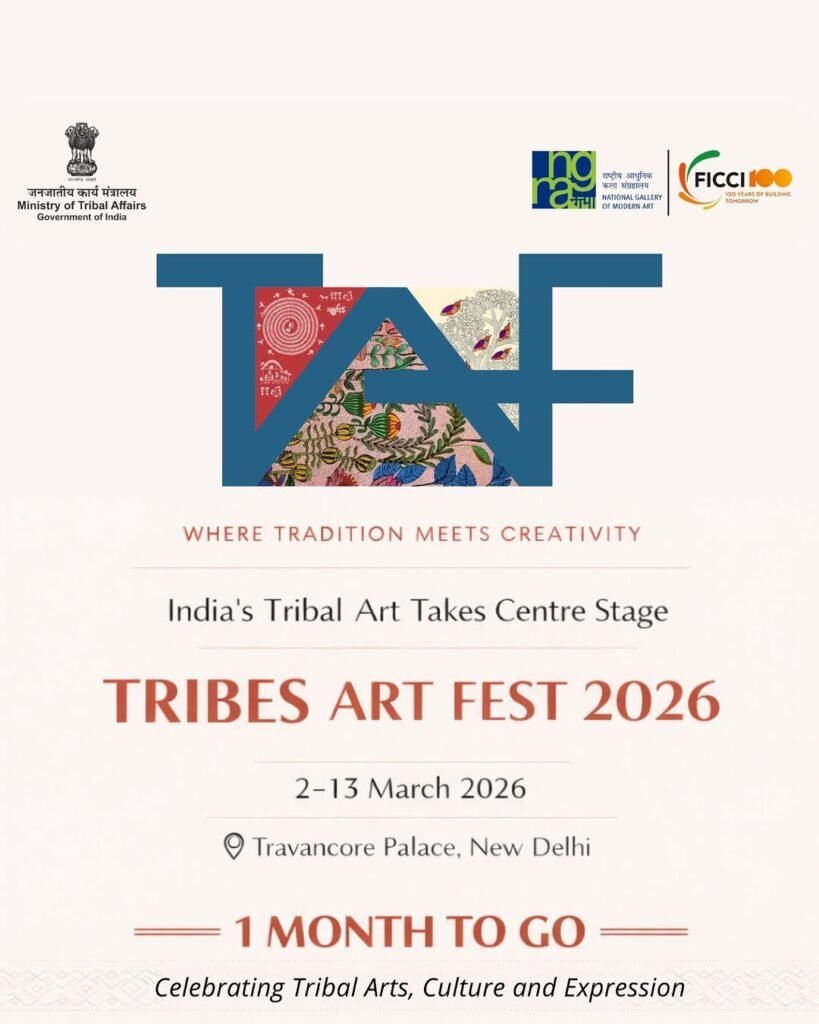
India’s indigenous artistic traditions will take centre stage at Tribes Art Fest 2026, a national celebration of tribal creativity, culture, and expression scheduled from 2–13 March 2026 at Travancore Palace. The festival is being organised by the Ministry of Tribal Affairs, in collaboration with the National Gallery of Modern Art and FICCI.
Where Tradition Meets Creativity
Positioned as a platform that bridges heritage and contemporary discourse, the festival will showcase the depth and diversity of India’s tribal art forms—from Warli and Gond to Madhubani, Pithora, and Sohrai. These art traditions, rooted in community rituals, ecological knowledge, and oral histories, are increasingly finding recognition within mainstream art institutions and global markets.
The two-week festival aims to provide visibility and economic opportunities for tribal artists while fostering dialogue between practitioners, curators, designers, collectors, and policymakers.
What to Expect
Visitors can anticipate:
- Exhibitions of traditional and contemporary tribal artworks
- Live demonstrations by master artisans
- Interactive workshops and knowledge sessions
- Panel discussions on preservation, intellectual property, and sustainable livelihoods
- Cultural performances reflecting indigenous narratives
Travancore Palace, with its historic architecture and central location in New Delhi, provides a fitting backdrop for this convergence of art, policy, and public engagement.
Cultural Significance
India’s tribal communities represent a vast repository of aesthetic traditions shaped by geography, mythology, and ecological wisdom. In recent decades, these art forms have transitioned from ritualistic and domestic contexts to galleries, museums, and international biennales. Events such as Tribes Art Fest underscore the need to move beyond token representation and towards sustained institutional support and market integration.
By situating tribal art within a national cultural framework, the festival signals a larger shift—recognising indigenous practices not as peripheral crafts but as integral to India’s contemporary art narrative.
Also Read: CEPT University to Host Planning Charrette 2026 in Bengaluru and Chennai