The long-pending expansion of the Punjab and Haryana High Court at Chandigarh has entered a crucial stage, with the revised Holistic Development Plan (HDP) formally cleared at the local heritage level and readied for submission to UNESCO for final approval.
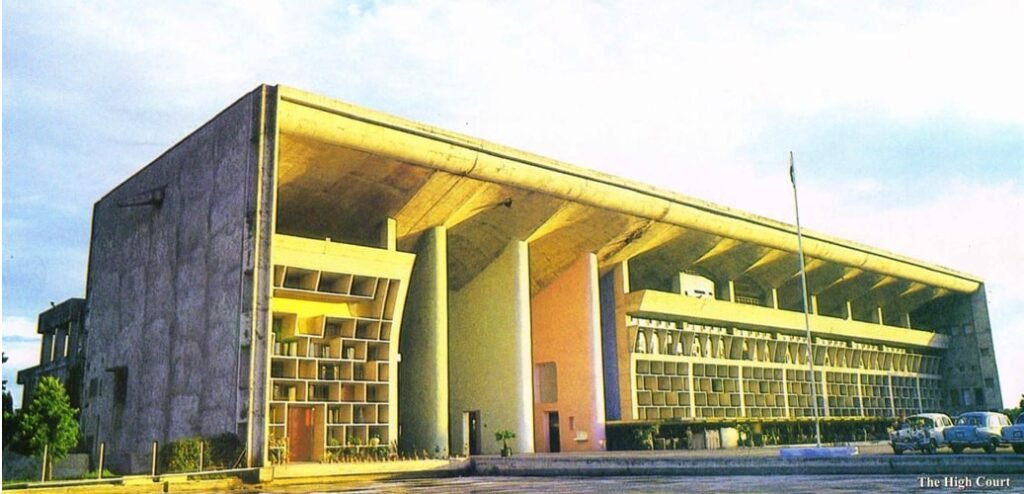
The Chandigarh Heritage Conservation Committee (CHCC) has unanimously cleared the conceptual proposal, paving the way for it to be forwarded to the Fondation Le Corbusier, Paris, and subsequently to UNESCO’s World Heritage Committee. January 21 has been identified as the deadline for consideration of the project in the 2026 UNESCO review cycle.
Addressing Space Crunch Amid Heritage Constraints
The High Court complex, inaugurated in 1955 and part of Chandigarh’s UNESCO-listed Capitol Complex, is facing an acute shortage of space due to a steady rise in judicial workload. The court currently caters to over 10,000 lawyers, more than 3,300 staff members, thousands of litigants daily, and nearly 10,000 vehicles entering the complex each day. With the sanctioned strength of judges expected to increase from the present level to 85 in the coming years, the lack of adequate courtrooms and support infrastructure has become a pressing concern.
The revised plan proposes development over approximately 20.5 lakh square feet, including the construction of four new multi-storey court blocks that would add 30–35 courtrooms. Additional parking and service facilities are also proposed, largely shifted to basement levels to avoid visual clutter and surface congestion.
Heritage Safeguards at the Core
Given the High Court’s location within a World Heritage Site designed by Le Corbusier, heritage conservation remains central to the proposal. CHCC members stressed that the Outstanding Universal Value (OUV) of the Capitol Complex must not be compromised under any circumstances.
According to officials, the new design strictly adheres to the ICOMOS-prescribed intervention limits, preserves key sightlines, and ensures that the original High Court building remains visually dominant. Several ageing and non-heritage structures are proposed to be removed to reorganise the area in a planned and coherent manner.
Mandatory Heritage Impact Assessment, environmental clearances, and compliance with the forthcoming Site and Buffer Zone Management Plan are integral to the project before any construction activity can begin.
Also Read: Heritage Streets of Amritsar: History, Urban Planning, and the Living Fabric of the Walled City
Court-Mandated Timelines
The renewed push follows directions from the High Court in a 2023 public interest litigation filed by the High Court Employees Association. The court had directed the Chandigarh Administration to fast-track the process and work on a 24×7 basis to appoint consultants and finalise the proposal. The overall project cost is estimated at around ₹1,300 crore.
Awaiting UNESCO’s Decision
Once submitted, the proposal will undergo detailed scrutiny by UNESCO and its advisory bodies. Approval from the World Heritage Committee is mandatory, as any construction within the Capitol Complex without clearance could risk Chandigarh’s heritage status. UNESCO has earlier stalled multiple projects in the complex, including proposals for underground parking and utility infrastructure.
The High Court expansion plan is now being closely watched as a critical test of whether essential institutional growth in a heritage city can be achieved without undermining architectural and cultural legacy.