

New Delhi: In a major step towards sustainable and circular infrastructure development, CSIR–Central Road Research Institute (CSIR-CRRI) has entered into a strategic partnership with JSW Steel Limited, Salem Works to construct eco-friendly roads using steel slag in Tamil Nadu. The collaboration was formalised on January 24, 2026, and aligns with the Government of India’s vision of converting industrial waste into valuable resources under the “From Waste to Wealth” framework.
Steel slag, an industrial by-product of steel manufacturing, is traditionally treated as waste. Through this partnership, it will be scientifically processed and reused as a construction material for bituminous road applications, significantly reducing dependence on natural aggregates and lowering the carbon footprint of road infrastructure projects.
The initiative is being undertaken as a sponsored research project titled “Development of Customized Steel Slag Valorisation Process for Techno-economic Conversion of EOF and LRF Steel Slag for Various Road Applications at JSW Salem Works.” The project focuses on processing Electric Optimization Furnace (EOF) and Ladle Refining Furnace (LRF) slag into aggregates suitable for durable road construction.
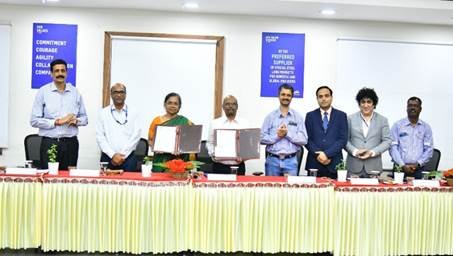
The Memorandum of Agreement was signed at JSW Steel’s Salem Works in the presence of Dr. N. Kalaiselvi, Director General of CSIR and Secretary, Department of Scientific and Industrial Research (DSIR). She highlighted that CSIR-CRRI’s Steel Slag Road® technology has already been successfully implemented in several Indian states and that this project marks its first application in Tamil Nadu.
Under the project, laboratory characterisation of steel slag will be followed by the development of customised processing protocols and construction of a demonstration road stretch near Salem. Long-term performance monitoring will also be undertaken to validate field performance and scalability of the technology.
The collaboration is expected to serve as a replicable model for other steel plants across India, supporting national priorities such as Aatmanirbhar Bharat, sustainable development, and large-scale adoption of circular economy practices in public infrastructure.
Also Read: Heritage Streets of Amritsar: History, Urban Planning, and the Living Fabric of the Walled City