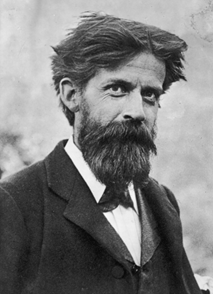
Urban planning today speaks fluently of sustainability, regional thinking, heritage conservation, and community participation. Yet many of these ideas trace their intellectual roots to Sir Patrick Geddes, a Scottish biologist-turned-urban thinker whose work transformed how cities are understood—not as machines to be expanded, but as living systems to be nurtured.
Born in 1854 in Ballater, Scotland, Geddes did not begin his career as an architect or planner. Trained in biology, and influenced by evolutionary science, he viewed cities through an ecological lens. To Geddes, human settlements were organisms shaped by environment, occupation, culture, and time. This perspective sharply contrasted with the rigid, engineering-led planning models dominant during the industrial era.
From Biology to Urban Thought
Geddes’s scientific background shaped his core belief: cities evolve, and successful planning must respect this evolution. He argued that urban form cannot be separated from geography, economy, and social life. This interdisciplinary thinking later became foundational to modern urban studies, regional planning, and sustainability discourse.
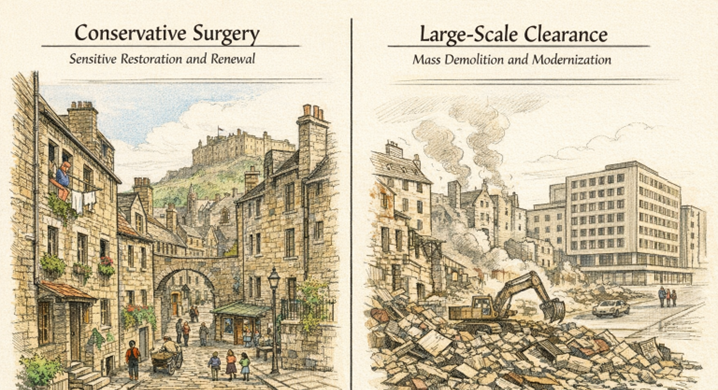
His experiments in Edinburgh’s Old Town demonstrated this philosophy in practice. Instead of wholesale demolition, Geddes introduced the idea of conservative surgery—a planning approach that prioritised minimal intervention, adaptive reuse, and social uplift. Rather than erasing historic neighbourhoods, he sought to repair them, preserving cultural memory while improving living conditions.
Also Read: Sir Edwin Lutyens: Architect of Imperial Grandeur and Timeless Urban Design
Survey Before Plan
Among Geddes’s most influential contributions is the principle of “Survey Before Plan.” At a time when master plans were imposed with little understanding of local realities, he insisted that planners must first conduct detailed surveys—social, economic, environmental, and cultural—before proposing change.
This idea transformed planning into a knowledge-driven and participatory process. Surveys, for Geddes, were not only technical tools but educational ones, enabling citizens to understand their own cities and participate in shaping their future. Today’s practices of participatory planning, community mapping, and context-sensitive design reflect this legacy.
Place–Work–Folk: A Human Framework
Geddes summarised his planning philosophy through the triad Place–Work–Folk, emphasising the inseparable relationship between environment, livelihood, and society. Settlements, he argued, emerge where these three elements interact harmoniously.
For students and professionals alike, this framework remains highly relevant—particularly in discussions on informal economies, cultural identity, and climate resilience. It reminds planners that spatial decisions directly affect livelihoods and social structures.
Also Read: Frank Lloyd Wright: The Master of Organic Architecture
The Valley Section and Regional Thinking
Another enduring contribution is the Valley Section, a diagram illustrating how human activities evolve from mountains to the sea. Through this simple representation, Geddes showed how agriculture, industry, trade, and settlements are interconnected within larger ecological systems.
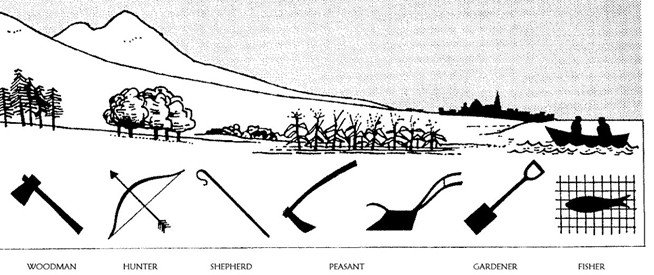
This regional perspective challenged city-centric planning and laid the groundwork for landscape urbanism, regional planning, and sustainable resource management—approaches increasingly vital in an era of environmental stress.
Geddes in India
Between 1914 and 1924, Geddes worked extensively in India, preparing planning reports for cities such as Indore, Madurai, Baroda, Lucknow, and Jaipur. Unlike many colonial planners, he respected indigenous urban patterns, climate-responsive design, and social networks.
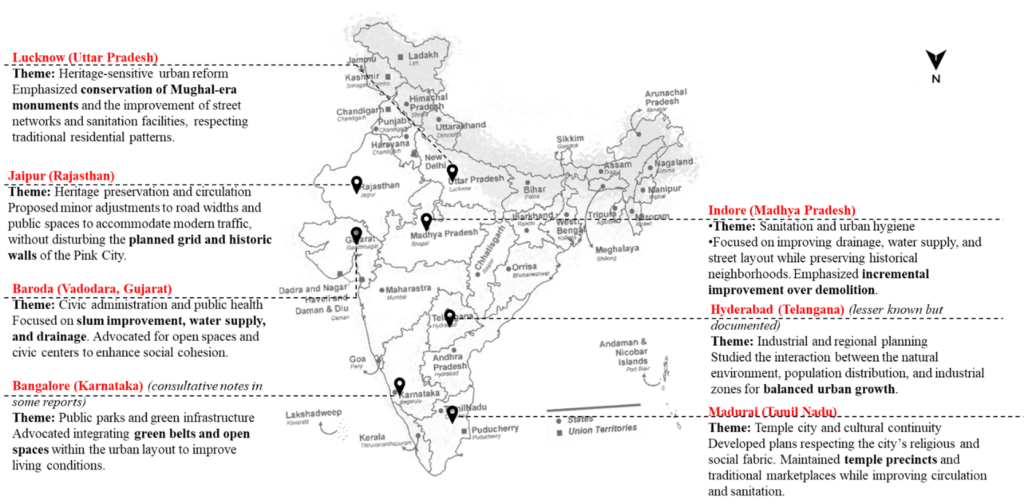
He opposed large-scale demolition and instead proposed incremental improvements—better sanitation, selective street widening, and preservation of community life. His India work stands out as an early model of culturally sensitive and humane planning.
Education as Urban Infrastructure
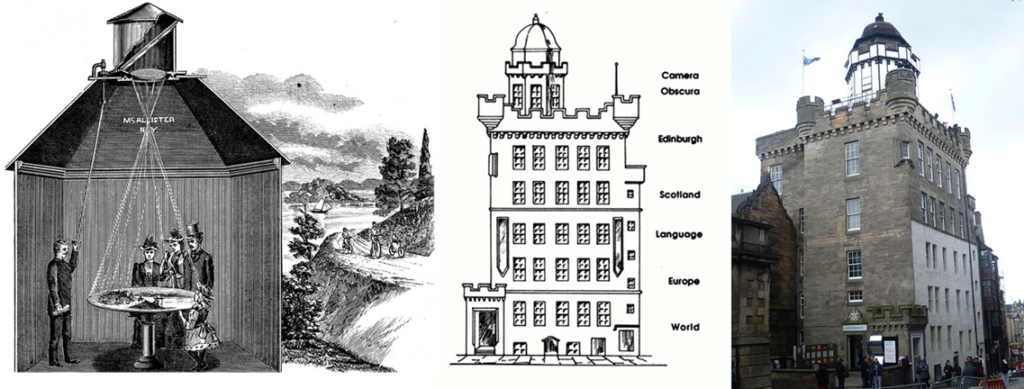
For Geddes, education was as critical as roads or buildings. His Outlook Tower in Edinburgh functioned as an urban observatory, teaching citizens to understand their city’s geography, economy, and culture. He believed informed citizens were essential to healthy cities—a lesson still relevant for planning education today.
Why Geddes Matters Now
In an age defined by rapid urbanisation, climate change, and cultural homogenisation, Patrick Geddes’s ideas feel strikingly contemporary. His insistence on local knowledge, ecological balance, and human well-being offers a powerful alternative to technocratic and purely market-driven urbanism.
Rather than asking how cities can grow faster, Geddes taught us to ask how they can grow wiser.
“By leaves we live.”
Also Read: Frank O. Gehry: The Architect Who Reimagined Possibility
References
- Geddes, P. (1904). Civics: As applied sociology. London, UK: Williams & Norgate.
- Geddes, P. (1906). The Outlook Tower. Edinburgh, UK: Patrick Geddes & Colleagues.
- Geddes, P. (1911). Cities in evolution. London, UK: Williams & Norgate.
- Geddes, P. (1915). Cities in evolution: An introduction to the town planning movement and to the study of civics. London, UK: Williams & Norgate.
- Geddes, P. (1917). Town planning reports on Indian cities. Madras, India: Government Press.
- Hall, P. (2002). Cities of tomorrow: An intellectual history of urban planning and design in the twentieth century (3rd ed.). Oxford, UK: Blackwell Publishing.
- King, A. D. (1976). Colonial urban development: Culture, social power and environment. London, UK: Routledge.
- Meller, H. (1990). Patrick Geddes: Social evolutionist and city planner. London, UK: Routledge.
- Tyrwhitt, J. (1947). Patrick Geddes in India. London, UK: Lund Humphries.
- Welter, V. M. (2002). Biopolis: Patrick Geddes and the city of life. Cambridge, MA: MIT Press.