
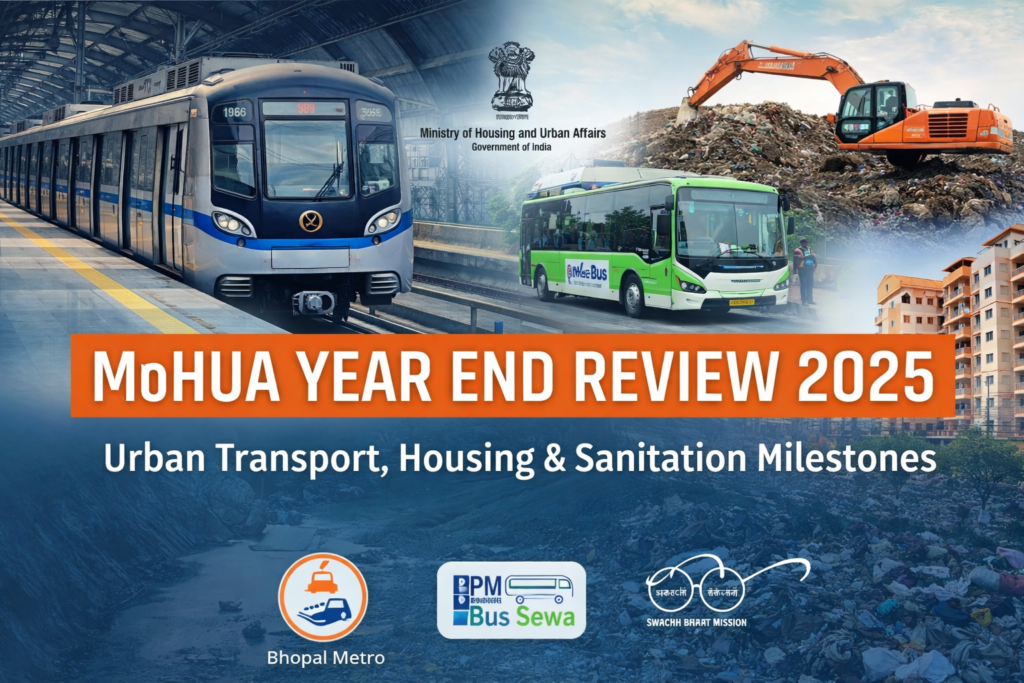
New Delhi: The Ministry of Housing and Urban Affairs (MoHUA) has released its Year End Review 2025, outlining significant progress across urban transport, housing, sanitation, and infrastructure development as part of India’s long-term urban transformation agenda.
Urban Transport Expands Nationwide
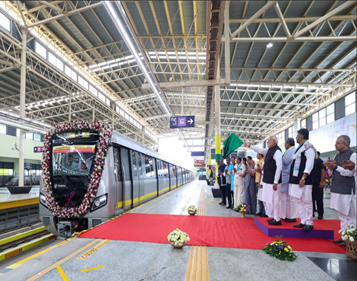
In 2025, metro rail infrastructure crossed a historic milestone, with India’s operational metro network surpassing 1,090 km, now serving 26 cities, up from 23 earlier. During the year, metro projects worth ₹25,932 crore, covering 84.57 km, were sanctioned, while 85.62 km of new metro lines became operational. Notably, the Bhopal Metro’s Orange Line Priority Corridor was inaugurated in December, marking a key step for Tier-2 city mobility.
Reforms in the sector included amendments to metro accident compensation rules, rollout of National Common Mobility Card, QR-based ticketing, and indigenous development of platform screen doors.
PM-eBus Sewa Scheme Gains Momentum
Urban bus transport also saw a major push under the PM-eBus Sewa Scheme, with 3,622 electric buses sanctioned in 2025. The scheme was expanded to include clusters of smaller towns with populations between 3–40 lakh, enabling wider participation. Infrastructure support worth ₹60.73 crore was approved, covering civil depots and power facilities across multiple cities.

Also Read: Third Regional Meeting of Urban Development Ministers of North-Central States Held in Bhopal
Swachh Bharat Mission: Focus on Circular Economy
Under Swachh Bharat Mission–Urban, Jaipur hosted the 12th Regional 3R and Circular Economy Forum for Asia-Pacific, where the Jaipur Declaration (2025–2034) was adopted to promote circular economy practices.

The Swachhata Hi Seva 2025 campaign witnessed massive public participation, with over 18.5 crore citizens involved nationwide. The Ministry also launched the Dumpsite Remediation Accelerator Programme (DRAP), targeting remediation of 1,428 dumpsites, aiming for “Zero Dumpsites by 2026.”
Urban Housing and Social Inclusion
Under Pradhan Mantri Awas Yojana – Urban 2.0, 1.22 crore houses have been sanctioned, with 1.14 crore grounded so far. A nationwide outreach campaign, Angikaar 2025, focused on last-mile delivery to vulnerable urban households. The launch of a Unified RERA Portal further strengthened transparency in the real estate sector.
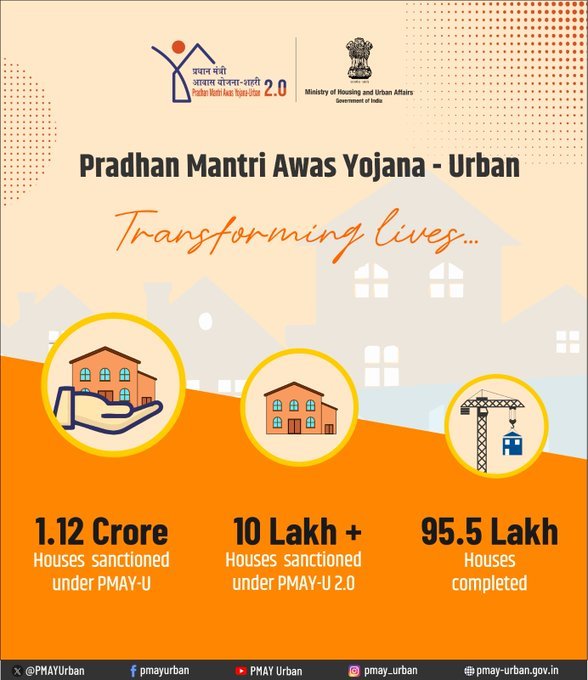
Source: MoHUA / PMAY-Urban – X
Meanwhile, PM SVANidhi continued to support street vendors, benefitting over 70 lakh vendors, disbursing loans exceeding ₹15,000 crore, and promoting digital inclusion through UPI-linked credit and incentives.

Also Read: National Urban Conclave 2025: A Defining Moment in India’s Urban Transition
AMRUT 2.0 and Smart Cities
Under AMRUT and AMRUT 2.0, projects worth ₹33,287 crore were awarded in 2025, with 33 lakh water tap connections and 20 lakh sewer connections delivered. Over 7,480 acres of water bodies were rejuvenated, alongside the creation of new green spaces.
Smart Cities initiatives focused on social infrastructure, waste management, and urban resilience, complemented by national conclaves and regional ministerial consultations to align states with the vision of Viksit Bharat 2047.
Outlook
MoHUA’s Year End Review 2025 reflects a strong emphasis on integrated urban development, combining mobility, housing, sanitation, and governance reforms. As India continues rapid urbanisation, the Ministry’s multi-sectoral approach signals a shift toward more inclusive, sustainable, and resilient cities in the coming decade.