

India’s bridges are far more than physical structures spanning rivers and valleys; they are powerful symbols of engineering ambition, architectural ingenuity, and national integration. From turbulent seas and seismic mountain zones to remote riverine landscapes, these bridges demonstrate how infrastructure can overcome geography, climate, and logistical adversity to connect people, regions, and economies.
Across the country, several landmark bridge projects stand out for their scale, technological sophistication, and transformative impact on mobility and regional development.
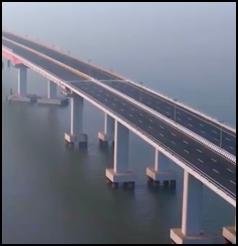
One of the most prominent examples is the Atal Bihari Vajpayee Sewri–Nhava Sheva Atal Setu, popularly known as the Mumbai Trans Harbour Link (MTHL). Stretching 16.5 km across the Arabian Sea with an additional 5.5 km of land connectivity, it is India’s longest sea bridge. Developed to decongest Mumbai’s island city, the project introduces advanced construction techniques and safety systems, significantly reducing travel time and accident risks for daily commuters. Approved at a cost of ₹17,843 crore, the bridge was completed despite disruptions caused by the COVID-19 pandemic, underlining the resilience of India’s infrastructure delivery mechanisms. Beyond mobility, the MTHL is expected to boost tourism, trade, and industrial growth across the Mumbai Metropolitan Region.
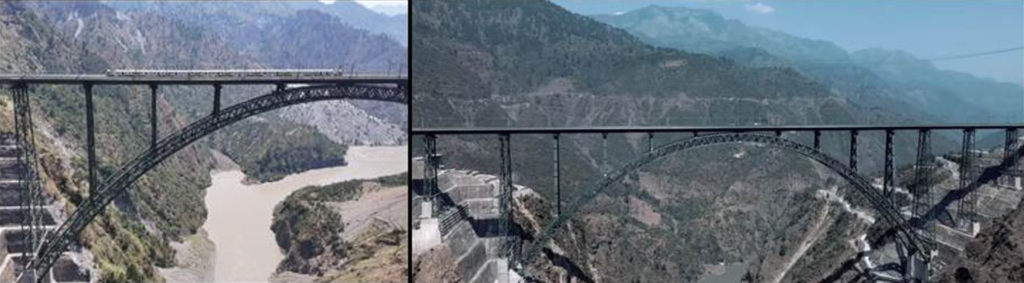
In the Himalayan region, the Chenab Rail Bridge represents a historic milestone in global bridge engineering. Rising 359 metres above the Chenab River, it is the world’s highest railway arch bridge and a critical component of the Udhampur–Srinagar–Baramulla Rail Link (USBRL). Designed to withstand wind speeds of up to 260 kmph and engineered for a lifespan of 120 years, the 1,315-metre-long steel arch structure stands taller than the Eiffel Tower. Built at a cost of ₹1,486 crore, the bridge will significantly reduce travel time between Katra and Srinagar, with Vande Bharat trains expected to complete the journey in approximately three hours, enhancing both civilian mobility and strategic connectivity.
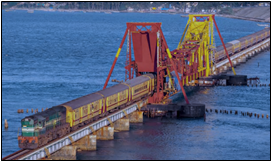
Another notable achievement is the New Pamban Bridge, India’s first vertical lift railway sea bridge, connecting Rameswaram with the mainland. Spanning 2.07 km, the bridge incorporates a 72.5-metre lift span that can rise 17 metres to allow maritime traffic without interrupting rail movement. Constructed at a cost exceeding ₹700 crore, the project overcame harsh coastal conditions, including cyclones, high winds, seismic risks, and corrosive saline environments. The use of stainless steel reinforcement, fully welded joints, and specialised polysiloxane coatings ensures enhanced durability and reduced maintenance, while provisions for a future second railway line reflect forward-looking infrastructure planning.
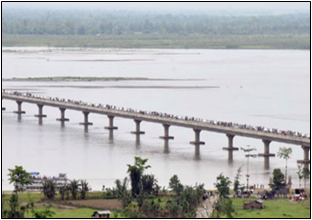
In the Northeast, the Dhola–Sadiya Bridge (Bhupen Hazarika Setu) provides the first permanent road link between Assam and Arunachal Pradesh. Spanning 9.15 km over the Lohit River, the bridge is designed to support 60-tonne military vehicles, adding strategic significance alongside civilian connectivity.
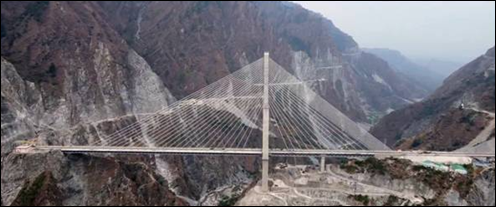
Complementing this is the Anji Khad Bridge, India’s first cable-stayed railway bridge, located in the challenging Himalayan terrain of Jammu and Kashmir. Rising 331 metres above the Anji River valley, its inverted Y-shaped pylon and high-tensile cable system exemplify advanced structural design adapted to seismic and geological constraints.
Collectively, these bridges illustrate how infrastructure in India is evolving beyond utility to become a catalyst for economic growth, regional integration, tourism, and architectural excellence. As India continues its infrastructure expansion, such projects reaffirm the nation’s commitment to building resilient, future-ready systems that respond to both environmental challenges and developmental aspirations.
Also Read: BMC Approves Demolition of Goregaon’s Savarkar Flyover for Coastal Road Double-Decker Bridge