
New Delhi | 3–4 November 2026: The 18th GRIHA Summit 2026 brought together policymakers, architects, urban planners, researchers, industry leaders and sustainability professionals at the India Habitat Centre, New Delhi, on 3 and 4 November 2026. Centred on the theme “Pathways for a Low-Carbon Future: Buildings to Infrastructure,” the summit examined how India can accelerate its transition towards a sustainable built environment through policy interventions, green finance, innovative technologies and climate-responsive planning.
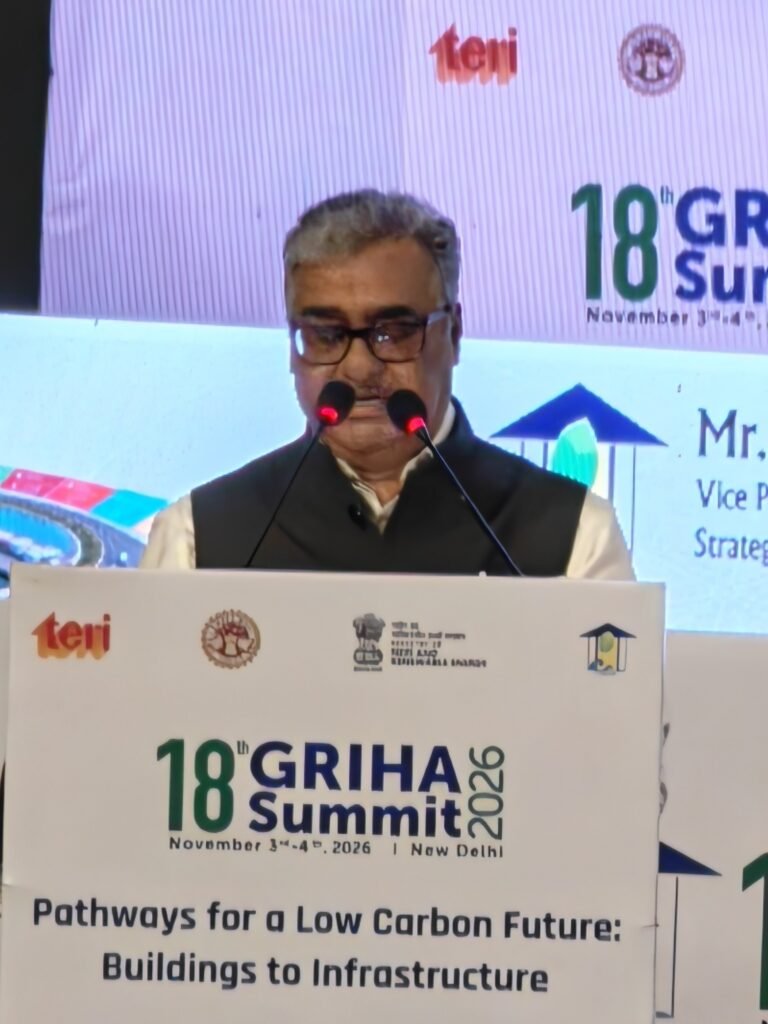
Positioned as a pre-COP31 dialogue on India’s built environment, the summit focused on translating climate commitments into practical outcomes across buildings, cities and infrastructure. The programme featured seven technical sessions, more than 50 speakers and panellists, three exhibition pavilions, over 15 exhibition booths and a fireside chat.
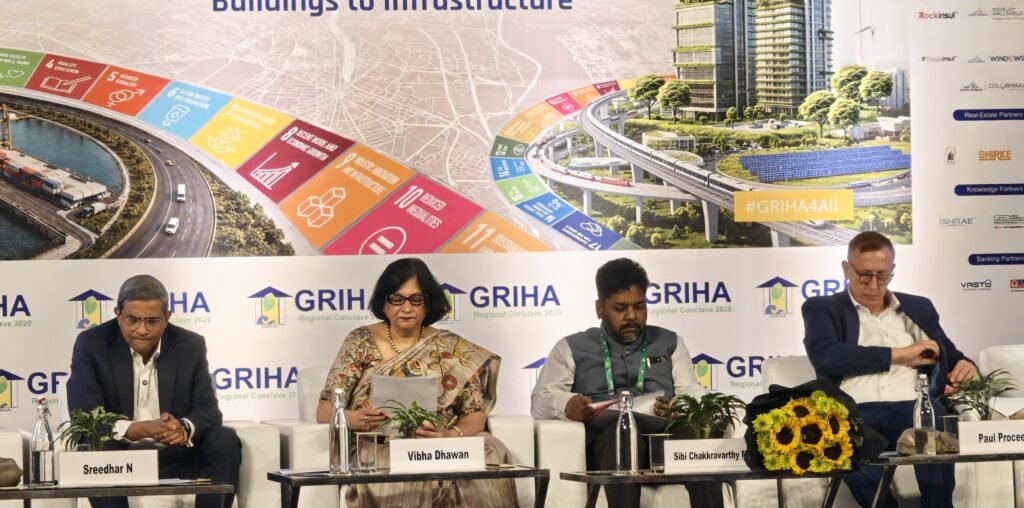
The inaugural session brought together representatives from government, industry and the sustainability sector. Among the prominent participants were Dr Vibha Dhawan, Director General of The Energy and Resources Institute (TERI) and President of GRIHA Council; Mr Sanjay Seth, Vice President and CEO of GRIHA Council; Shri Srinivas Katikithala, Secretary, Ministry of Development of North Eastern Region; Mr Paul Procee, Operations Manager and Acting Country Director, World Bank Group; and Mr Sridhar N., Senior Vice President and CEO – Asia Pacific and India, Saint-Gobain. Representatives of the Government of Madhya Pradesh also participated, reflecting the state’s association with the summit as its state partner.
Connecting policy, finance and the built environment
The summit’s discussions emphasised that decarbonisation cannot be achieved through individual green buildings alone. It requires coordinated action across energy, water, transport, waste management, construction materials and public infrastructure. The opening discussions highlighted the importance of resource-efficient construction, institutional capacity, responsible investment and the wider adoption of sustainable practices.
The programme addressed these interconnected priorities through plenary sessions and thematic tracks. Discussions explored the role of policy and finance in delivering measurable green outcomes, water security in a technology-driven era, low-carbon building envelopes, clean energy transition, inclusive urban development, waste management and climate-resilient infrastructure.
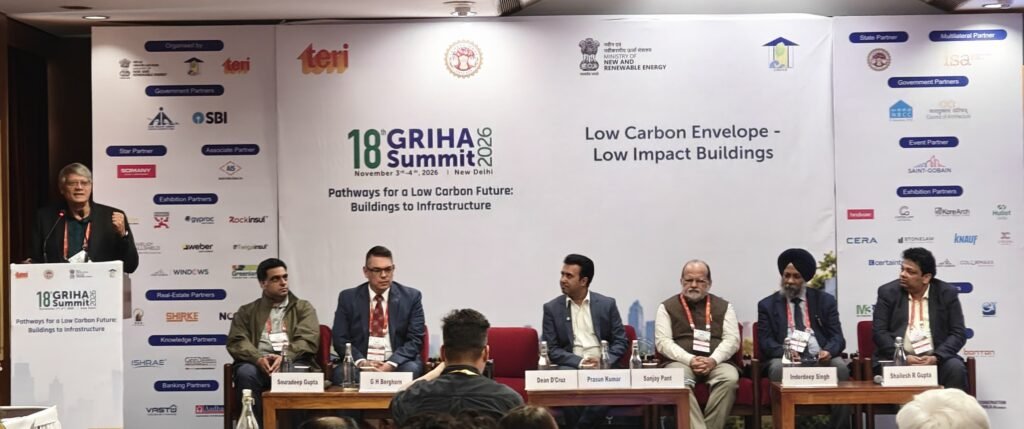
The session “Low Carbon Envelope – Low Impact Buildings” examined how material selection, passive design strategies and performance-driven building envelopes can reduce both operational and embodied carbon. Architect Dean D’Cruz, during his thematic address, reflected on the value of local materials, traditional craftsmanship, reuse of building components and climate-responsive design. Drawing on his professional experience, he highlighted how locally available resources and passive strategies can contribute to environmentally responsible architecture.
Another important discussion, “The Energy Balance: Harmonizing Global Electrification,” examined the challenge of meeting rising electricity demand while maintaining grid reliability, energy security and affordability. Speakers discussed renewable energy integration, energy storage, transmission infrastructure, demand management and the need for supportive policy and financing mechanisms.
Building inclusive and climate-resilient cities
The thematic track “Spaces of Belonging: Bridging the Urban Divide” placed people and equitable access at the centre of urban planning. The discussion addressed gender-sensitive public spaces, accessibility for persons with disabilities, affordable housing, informal settlements and the need for inclusive urban services. It underlined that the quality of a city must also be measured by how safely and independently people can access its public spaces, transport systems and essential facilities.
The session “Elastic Infrastructure: Architecture for the New Age” explored how infrastructure must adapt to intensifying climate and social pressures. The discussion highlighted integrated urban planning, nature-based solutions, wetlands, lakes, mangroves, urban green spaces and permeable surfaces as important elements of urban resilience. Thematic remarks drew attention to the need to move beyond sector-wise planning and consider cities as interconnected ecological, social and economic systems.
The summit also addressed India’s waste management challenges and the transition towards a circular economy, encouraging a shift away from the conventional take-make-dispose approach.
Innovation, student participation and international collaboration
The innovation session, “Ideas to Innovation for Transforming Climate Action 2.0,” brought forward ideas and initiatives addressing environmental challenges through research, technology and community-oriented solutions. Presentations covered areas including environmental biotechnology, nature-based restoration, circular economy approaches and innovative uses of waste materials.
International collaboration was reflected in the ISA-ISUN Design Challenge, conceived by the International Solar Alliance, with support from partner organisations including the Global Energy Alliance for People and Planet, TERI and the Royal Institute of British Architects. The challenge invited students to develop solar-integrated design solutions for Small Island Developing States, specifically Mauritius, Maldives and Fiji. The initiative aimed to encourage young designers to respond to challenges such as rising sea levels, energy access and climate vulnerability through context-sensitive design.
Student engagement was also a significant part of the summit’s wider programme. The GRIHA prelude event, “Brands Powering Responsible Action for a New World,” held on 9 October 2026, brought together more than 500 students and over 70 mentors from more than 20 schools across India for activities celebrating creativity and sustainability.
Arohan exhibition and SPARSH 2.0 showcase sustainable solutions
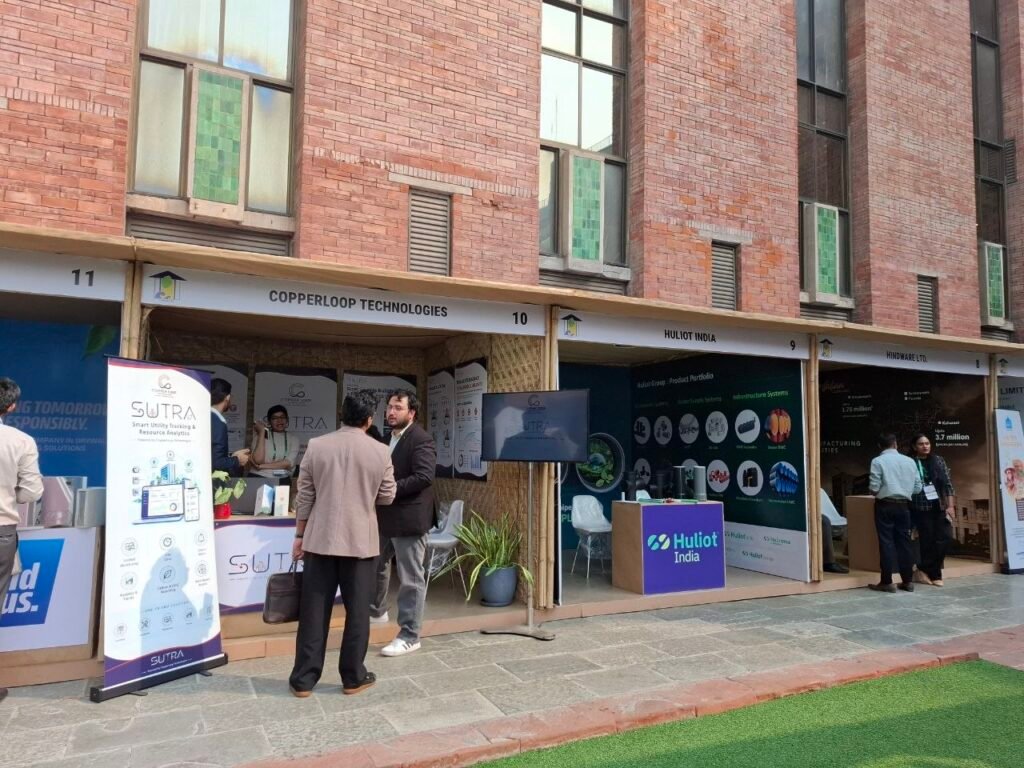
The summit’s exhibition, Arohan, showcased green building products, materials and technologies from participating industry partners. Designed around the idea of rising towards a sustainable, resilient and low-carbon future, the exhibition provided an opportunity for professionals and delegates to engage with emerging solutions for the built environment.
Another key attraction was SPARSH 2.0, a demonstrative building mock-up developed to offer visitors a tangible experience of a low-carbon built environment. The installation showcased approaches involving recycled-content materials and innovative construction technologies, with an emphasis on reducing material wastage, minimising water use during construction and improving construction efficiency.
The summit also featured Indian Streets Reimagined, a design competition organised in collaboration with the Council of Architecture. It invited participants to envision inclusive, climate-responsive and liveable streets, with shortlisted entries displayed at the exhibition area.
As a pre-summit activity, GRIHA Council organised a green building tour of the REC Limited Corporate Office in Gurugram on 31 October 2026. The building, identified as a GRIHA 5-Star-rated project in the summit material, offered participating students and professionals an opportunity to experience sustainable building practices.
GRIHA Awards recognise green building projects and sustainability initiatives
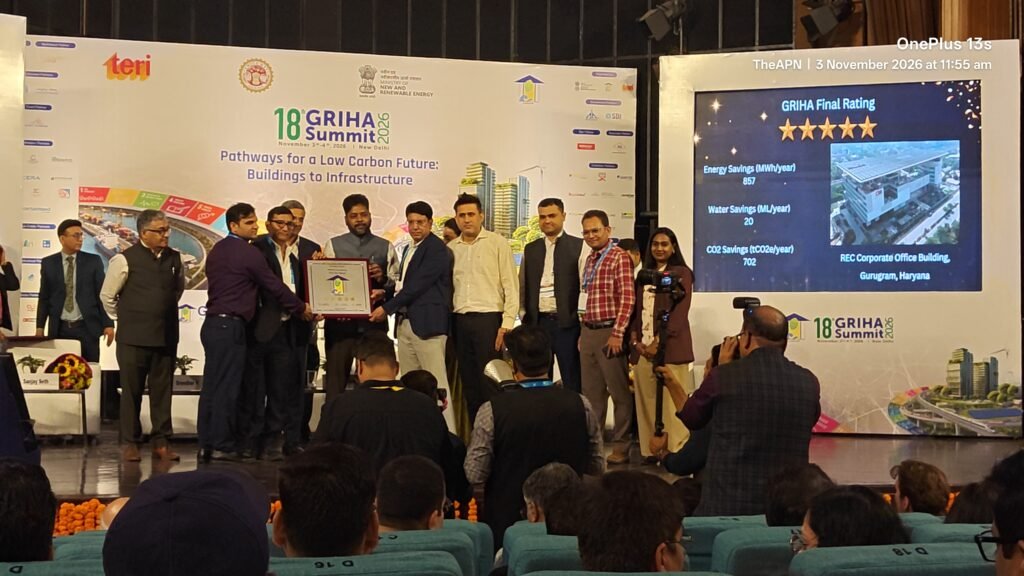
The GRIHA Awards ceremony recognised projects and organisations contributing to the adoption of sustainable practices in the built environment. The award announcements covered projects from a range of sectors, including education, healthcare, commercial development, institutional buildings, public infrastructure and offices.
Among the projects announced during the ceremony were the Central University of Andhra Pradesh; Experion Milestone Centre, Gurugram; REC Corporate Office Building, Gurugram; Advanced Mother and Child Centre at PGIMER, Chandigarh; CBSE Regional Office Building, Rohini, Delhi; Manipal Academy of Higher Education, Phase 1, Bengaluru; Mother and Child Hospital at Guwahati Medical College and Hospital; and the Office Building of Punjab National Bank at IT Park, Dehradun.
Other announced projects included RITES RTO Building, Lucknow; North Karanpura Super Thermal Power Project, Jharkhand; Unity One Elegant Mall, Delhi; New Academic Block at IIT Madras; World Trade Center at Nauroji Nagar, New Delhi; Uttar Pradesh State Institute of Forensic Science, Lucknow; and the Teaching Hospital at Shri Jagannath Medical College and Hospital, Puri, among others.
The ceremony also included Special Mention Awards recognising organisations and industry partners for their contribution to sustainability. The organisations named during this segment included Indian Oil Corporation Limited (IOCL), Bharat Heavy Electricals Limited (BHEL) – Power Sector, GS Express Private Limited, NS Associates Private Limited, NBCC India Limited, Public Works Department, Madhya Pradesh, Shri Gautam Construction Company Limited, Sunil Kumar Agarwal LLP, NCC Limited and KMV Projects.
The summit material also highlighted the GRIHA Council’s engagement with the Madhya Pradesh Public Works Department. Capacity-building initiatives included 28 training programmes across the state, with participation from more than 500 PWD officials and panel stakeholders. Such initiatives underline the importance of strengthening institutional knowledge and technical capacity to support sustainable public infrastructure.
Strengthening collaboration for a low-carbon future
The 18th GRIHA Summit 2026 reinforced the need to connect building-level sustainability with larger urban and infrastructure systems. Its discussions highlighted that a low-carbon future will depend not only on technological innovation but also on effective policy, accessible finance, institutional coordination, responsible material choices and community participation.
By bringing together government institutions, industry representatives, academia and the professional community, the summit provided a platform for exchanging ideas and building collaborations across the built-environment sector. The exhibition, technical sessions, student initiatives and award recognitions collectively reflected the growing importance of sustainability in India’s development agenda.
As an official media partner of the 18th GRIHA Summit 2026, The Architecture and Planning News (TheAPN) was part of the summit’s media network, engaging with the event and its participating stakeholders. The summit offered an opportunity to connect with organisations and professionals working towards sustainable materials, green technologies and climate-responsive development.
The central message emerging from the two-day event was clear: achieving a low-carbon future requires moving from isolated green interventions towards an integrated approach in which buildings, infrastructure, cities and natural systems work together.
Also Read: 17th GRIHA Summit 2025: Innovation, Climate Action & Excellence in Green Building
Join our WhatsApp Channel for fastest updates: Join now